 St. Petersburg Roofing
 Snell Isle's Waterfront Setting Puts Extra Demands on Siding
Snell Isle sits closer to open water than most St. Petersburg neighborhoods, with homes lining canals and shoreline that connect out to Tampa Bay. That location is part of what makes the neighborhood desirable, but it also means the exterior of every home here works harder than a house sitting inland. Salt-laden air moves off the water constantly, humidity stays high most of the year, and whatever a Gulf storm season sends this way arrives with very little to slow it down first. Siding on a Snell Isle home isn't just about curb appeal — it's the wall system's first and most exposed layer of defense, and it needs to be chosen and installed with that in mind.
We install siding across Pinellas County, but jobs in waterfront neighborhoods like Snell Isle get treated differently from the start. The material has to hold up to conditions that are genuinely tougher than average, and the installation details that get overlooked on an easier job are exactly the ones that fail first here.
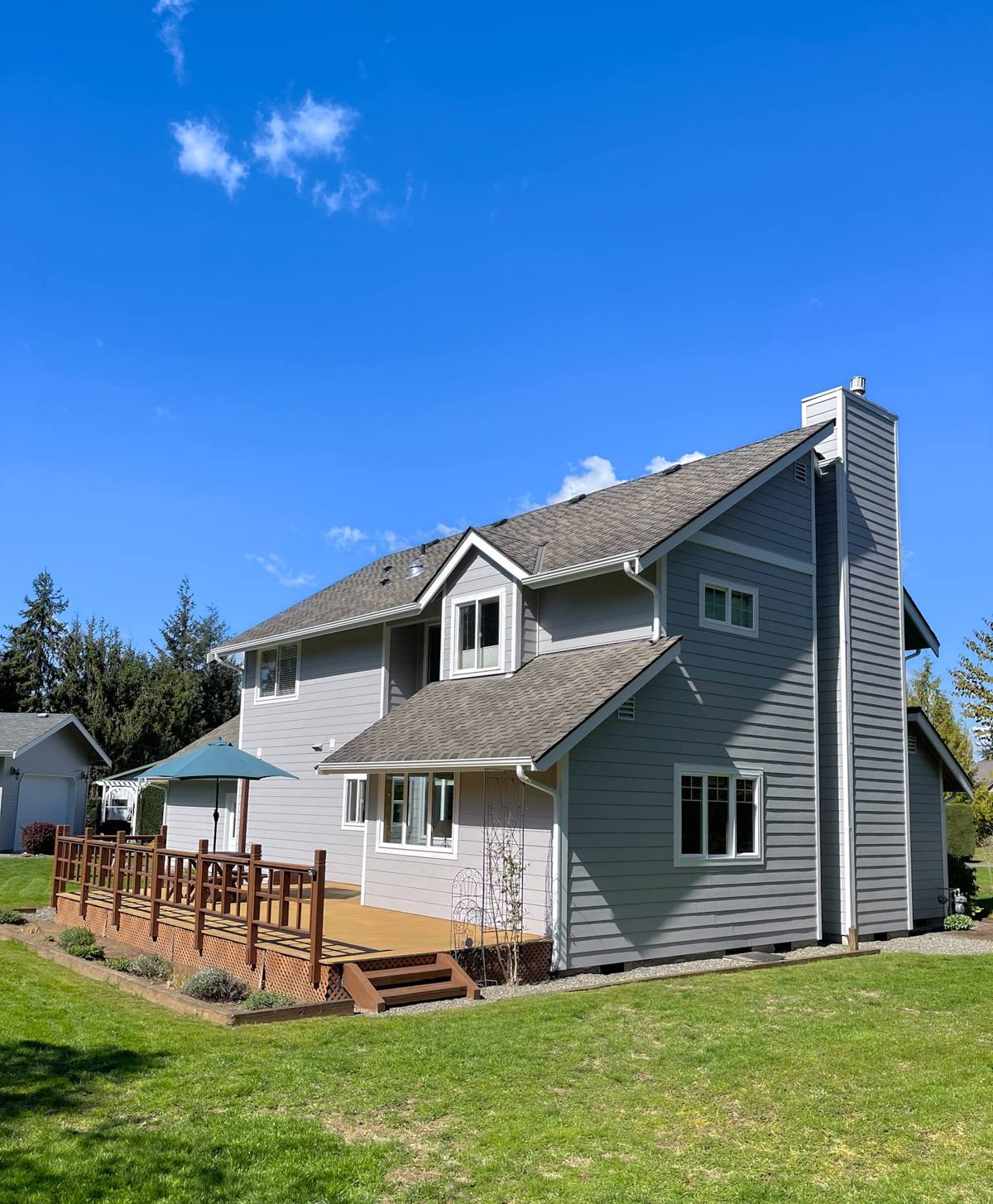
What Salt Air, Sun, and Storms Actually Do to Siding
Salt air and constant moisture
Salt in the air settles on every exterior surface, and on a canal-front or bay-adjacent lot it never really stops. It accelerates corrosion in exposed fasteners and metal trim, and it speeds up the breakdown of lower-grade finishes and adhesives. Materials that rely on site-applied paint or a thin factory coating tend to show chalking, fading, and edge deterioration years before they would in a drier, saltier-free inland setting.
Year-round UV load
St. Petersburg gets strong, direct sun for most of the year, and UV breaks down pigments and surface coatings over time. Siding with a weak factory finish fades unevenly, especially on south- and west-facing walls, and that fading is one of the most common reasons homeowners end up repainting siding well before it's actually worn out structurally.
Wind-driven rain and hurricane-force wind loads
Rain in this part of Florida rarely falls straight down during a storm — it comes in sideways, driven by wind, and it finds any gap in flashing, caulking, or lap joints. Add in the hurricane-force winds Pinellas County sees during active storm seasons, and the fastening schedule and flashing details behind the siding matter as much as the siding material itself. A product and installation that aren't matched to these loads don't just look bad over time — they let water into the wall assembly, which is a far more expensive problem than the siding alone.
Why We Only Install James Hardie Fiber Cement
We don't install vinyl siding, LP SmartSide, Cemplank, Allura, or primed wood products like spruce or cedar lap. That's a deliberate standard, not a lack of options. Each of those products has legitimate selling points — vinyl is inexpensive and low-maintenance in mild climates, engineered wood products install quickly, and other fiber cement brands compete on price. But none of them hold up the same way against the specific combination of salt air, sustained heat, UV, and storm-driven wind and rain that a Snell Isle home deals with year after year.
Vinyl can warp and become brittle with age and heat exposure, and its color is baked through a thin material that has real limits in intense, near-constant sun. Engineered wood siding is wood-based at its core, which means it's more sensitive to sustained moisture exposure than a cement-based product, and any breach in its coating opens the door to swelling and rot. Other fiber cement brands can be reasonable products, but we've standardized on one manufacturer so our crews install one system, to one spec, every time — which is where we've seen installation quality actually hold up over the life of a warranty.
James Hardie fiber cement is non-combustible, dimensionally stable in heat and humidity, and finished at the factory with ColorPlus Technology — a baked-on finish that resists fading and chipping far better than field-applied paint. Hardie also engineers specific product formulations for different climate zones, which matters a great deal on a property that sits this close to the water.
The Hardie Product Lines That Fit a Home Like This
Hardie's HZ5 formulation is engineered for hot, humid, high-moisture climates — the Gulf Coast and Florida specifically — with a moisture and mold-resistant composition built for exactly the conditions Snell Isle sees. That's the line we work from by default on St. Petersburg homes.
| Product | Typical Use | Why It Fits This Climate |
|---|---|---|
| HardiePlank Lap Siding | Primary wall cladding | Most common choice; wide color and texture range, factory ColorPlus finish resists salt and UV fade |
| HardieShingle | Accent gables, dormers | Adds architectural detail without switching to a different material system |
| HardiePanel | Modern/vertical siding sections | Clean lines for contemporary facades, same fiber cement durability |
| HardieTrim | Corner boards, fascia, window trim | Matches the wall material's moisture and UV resistance instead of mixing in wood trim that will fail sooner |
| ColorPlus Technology finish | Applied to all of the above | Factory-cured finish holds color and resists chipping far longer than site-applied paint in salt air and full sun |
What "correct installation" actually involves
The material is only half the equation. A Hardie installation that's actually built to spec includes:
- A proper starter strip and consistent reveal so water sheds correctly down the wall
- Manufacturer-specified gaps at butt joints and trim, sealed with the right sealant — not caulked solid where it should float
- A fastening pattern matched to the local wind zone, not a generic schedule
- Correct flashing at every window, door, and penetration, installed before the siding goes on, not patched around it after
- Factory-cut edges sealed or back-primed where the manufacturer requires it
- Ventilation and drainage behind the siding so any moisture that does get past the surface can escape
Skip any one of these and you can end up with a wall that looks right for a year or two and then starts showing streaking, staining, or soft spots at the trim — problems that trace back to installation, not the material.
Our Process, Start to Finish
- On-site assessment — we look at the existing siding, sheathing, and any signs of past water intrusion before quoting anything
- Substrate check — if there's rot or moisture damage behind the current siding, that gets identified and priced separately so there are no surprises mid-job
- Written scope and product selection — profile, reveal, trim style, and ColorPlus color chosen and documented up front
- Permitting — pulled through the appropriate St. Petersburg/Pinellas County process before any work starts
- Tear-off and repair — old siding removed, damaged sheathing replaced, house wrap and flashing installed correctly
- Installation to spec — Hardie's fastening, gapping, and flashing details followed throughout, matched to local wind requirements
- Final walkthrough — we go over the finished job with you before calling it complete
What Drives the Cost of a Siding Job
Every home is different, and we don't quote a job without seeing it, but the same handful of factors move the price on almost every estimate we write:
| Factor | Why It Matters |
|---|---|
| Tear-off vs. new construction | Removing and disposing of old siding adds labor that a bare-wall install doesn't require |
| Sheathing condition | Rot or water damage found underneath has to be repaired before new siding goes on |
| Home size and wall complexity | More corners, dormers, and trim details mean more cutting and labor time |
| Product line and profile | Lap width, shingle accents, and trim upgrades price differently than a straightforward plank job |
| Access and site constraints | Waterfront lots with tight side yards or canal-adjacent setbacks can affect staging and equipment access |
| Story height | Multi-story walls require more scaffolding and safety setup than single-story work |
Signs Your Siding Needs Attention Now
- Cracking, warping, or visibly buckled panels anywhere on the exterior
- Paint that's peeling, chalking heavily, or fading unevenly by wall exposure
- Soft spots when you press on the siding, especially near the bottom courses or around trim
- Rust streaks or corrosion around fasteners and metal trim
- Visible gaps or separation at butt joints, corners, or window trim
- A musty smell or discoloration on interior walls that back up to exterior siding
- Rising cooling bills that don't match any other change to the home
Any one of these on its own might be minor. Several at once, especially on a home that's dealt with a few storm seasons of wind-driven rain, usually means the wall assembly behind the siding needs a closer look.
Why Hiring a Crew That Already Works Snell Isle Matters
Siding installation in a neighborhood like this isn't the same job as siding installation fifteen miles inland. A crew that regularly works Snell Isle and the surrounding St. Petersburg waterfront knows the wind-load and fastening requirements Pinellas County inspectors expect, has already handled the access challenges that come with canal-front and tight-lot properties, and understands that homes here tend to carry more architectural character worth matching rather than covering over. That local familiarity shows up in fewer surprises during tear-off, a smoother permitting process, and a finished job that actually accounts for what this specific location will throw at it for the next several decades.
If your Snell Isle home's siding is showing its age, or you're planning ahead for storm season, we'd be glad to take a look and walk you through what a correctly installed James Hardie system would involve for your home. Reach out for a free, no-pressure estimate using the form below.