 St. Petersburg Roofing
 Siding Repair Built for a Barrier Island Climate
St. Pete Beach sits right on the Gulf, which means every exterior surface on a home here works harder than the same surface would ten miles inland. Salt-laden air settles on siding day and night, intense UV bakes it for most of the year, and when a tropical system or a fast-moving summer storm rolls through, wind-driven rain gets forced sideways into every seam, joint, and fastener point. Siding repair on the beach isn't just patching a dented panel — it's addressing what caused the damage in the first place, because that same cause is still sitting there after the repair unless it's handled correctly.
We work on homes throughout St. Pete Beach and the surrounding Pinellas County coastline regularly, so we're not guessing at what this environment does to a house. We see the same failure patterns repeat: caulking that gave out under UV exposure, fastener corrosion from salt exposure, water intrusion behind panels that were never properly flashed, and paint or coating failure from constant sun. Understanding those patterns is what separates a repair that lasts from one that fails again in a year or two.
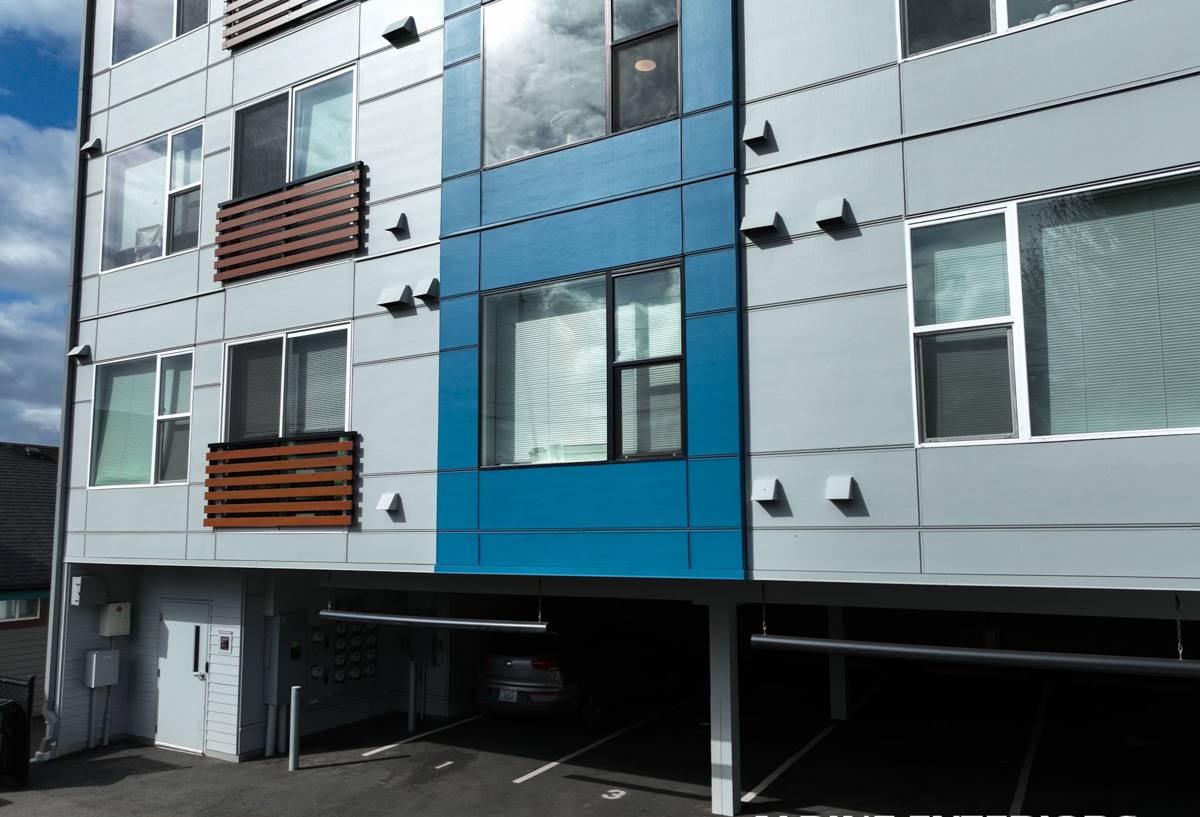
What Makes Siding Damage Different on St. Pete Beach
Salt Air Accelerates Everything
Airborne salt is corrosive to metal fasteners, trim pieces, and any exposed hardware. On homes a few blocks from the water, we routinely find corroded nails or staples well before the siding material itself has failed — and once a fastener corrodes, it loses holding power, panels loosen, and water finds a way behind them. Salt exposure also breaks down caulk and sealant faster than it would inland, which is often the real root cause when a homeowner calls about a "leak" that seems to come from nowhere.
Wind-Driven Rain Finds the Gaps
Florida rain rarely falls straight down during a storm — it gets pushed sideways by wind, and on a barrier island that wind is stronger and more constant than areas further from the coast. That means seams, corners, and penetrations (hose bibs, light fixtures, vents) take on water pressure that vertical rain never would. A repair that only addresses the visible crack or gap without checking how water actually moves across that wall during a storm is a repair that will need to be redone.
Year-Round UV Exposure
Pinellas County sun is intense nearly twelve months a year. UV breaks down caulking, fades and chalks lower-quality paint finishes, and can cause some siding materials to warp or crack over time as they expand and contract with heat. Repairs that use mismatched or lower-grade materials will visibly age faster and differently than the surrounding siding, which is one more reason material choice matters as much as workmanship.
Common Siding Repair Needs We See in This Area
- Storm-damaged panels: cracked, dented, or blown-off sections after high wind events
- Water staining or soft spots near window and door trim, usually from failed flashing or sealant
- Corroded or backed-out fasteners causing loose or rattling panels
- Caulk and sealant failure at seams, corners, and penetrations
- Impact damage from debris during storms
- Discoloration, chalking, or fading from prolonged sun exposure
- Bubbling, peeling, or bowing panels, which often signal moisture trapped behind the siding
What a Correct Repair Actually Involves
A siding repair that holds up on the beach has to go beyond swapping out the damaged piece. Here's what we check and address on every repair call:
- Diagnose the real cause. Cracked siding is a symptom. We look at whether the crack came from impact, from fastener movement, from moisture cycling, or from a flashing failure upstream. Replacing the panel without fixing the cause just buys time.
- Inspect what's behind the siding. If there's any sign of water intrusion, we check the house wrap or weather barrier and the sheathing underneath before closing anything back up. Repairing over hidden rot or saturated sheathing is a waste of a homeowner's money.
- Match the material correctly. Patch repairs using the wrong thickness, texture, or finish stand out visually and can behave differently in heat and moisture than the surrounding panels, which creates new stress points.
- Use fasteners rated for coastal exposure. Given how fast standard fasteners corrode this close to the Gulf, using appropriately rated fasteners on every repair is non-negotiable, not an upgrade.
- Reseal and re-flash properly. Any seam, corner, or penetration disturbed during the repair gets sealed and flashed to shed water the way it was designed to, not just caulked over.
- Color-match the finish. On repairs where the existing siding has factory-applied color, we work to match it as closely as possible so the repair doesn't stand out as a visible patch.
Repair vs. Replacement: How We Help You Decide
Not every damaged section needs full replacement, but not every repair is worth doing either. We walk homeowners through this honestly rather than defaulting to the more expensive answer.
| Factor | Repair Usually Makes Sense | Replacement Should Be Considered |
|---|---|---|
| Extent of damage | Isolated to a few panels or a small area | Damage spread across multiple elevations |
| Underlying moisture | No sign of trapped water or sheathing damage | Rot, mold, or saturated sheathing found behind siding |
| Age of existing siding | Siding is relatively young and in good condition elsewhere | Siding is near or past its expected service life |
| Material availability | Matching material/color is still available or close enough | Discontinued profile or faded color makes matching impossible |
| Storm history | First occurrence of this type of damage | Repeated failures in the same areas after past repairs |
Why We Only Install James Hardie Fiber Cement
When a repair calls for new material, or when a homeowner decides full replacement makes more sense, we install James Hardie fiber cement exclusively. This isn't a brand preference — it's a standard we hold to because of what this specific climate does to siding over time. Fiber cement is non-combustible, holds up to wind-driven rain and salt air far better than wood-based or vinyl alternatives, and doesn't warp, rot, or become brittle in the heat the way some other materials do over the years.
James Hardie's ColorPlus factory finish is baked on and warranted against fading and peeling, which matters enormously somewhere with this much year-round UV exposure — a site-applied paint job simply can't hold up the same way against constant sun. Hardie also engineers specific product lines (their HZ5 line, for example) for higher-moisture, higher-humidity climates like Florida's, which is exactly the kind of climate-specific engineering that a beach community needs. Combined with a strong transferable warranty, it's the material we're comfortable standing behind on homes exposed to this much wind, salt, and sun.
Our Repair Process
- On-site inspection. We look at the damaged area and the surrounding siding, checking for signs the problem extends further than what's visible.
- Honest diagnosis. We explain what caused the damage and whether it's isolated or part of a broader issue, in plain language.
- Written scope and estimate. You know exactly what's being repaired, what materials are used, and what it costs before any work starts.
- Repair or replacement. We remove and replace only what needs it, matching material and finish as closely as possible.
- Sealing and flashing check. Every disturbed seam and penetration gets properly sealed to shed water correctly going forward.
- Final walkthrough. We show you the completed work and answer any questions before we consider the job done.
Why Hiring a Crew That Already Works St. Pete Beach Matters
Coastal siding repair isn't the same skill set as general siding work. A crew that mostly works inland neighborhoods may not immediately recognize the signs of salt-driven fastener corrosion, or may under-spec sealants and fasteners for this level of exposure because it's not what they deal with day to day. Working this stretch of the Pinellas County coastline regularly means we know what to check for before it becomes a bigger problem, and we're not learning the local climate's effect on materials on your project.
There's also a practical side: response time matters after a storm. A local crew that already knows the area can get eyes on storm damage faster and prioritize the repairs that are actually urgent — like exposed sheathing or active water intrusion — versus cosmetic damage that can wait.
What to Check Before Hiring Anyone for Siding Repair
- Do they carry proper licensing and insurance for exterior work in Florida?
- Will they give you a written diagnosis of what caused the damage, not just a quote to patch it?
- Do they check behind the siding for moisture or sheathing damage before closing the repair?
- Do they use fasteners and sealants rated for coastal/salt-air exposure?
- Can they realistically match your existing siding's material, texture, and color?
- Do they have experience specifically with barrier island or immediate coastal properties?
If you're dealing with damaged, loose, or water-stained siding on your St. Pete Beach home, we're happy to take a look and give you an honest assessment of what's actually going on — no pressure, no upsell. Reach out for a free estimate using the form below.