 St. Petersburg Roofing
 Why Seminole Homes Take a Beating on Their Siding
Seminole sits close enough to the Gulf and Boca Ciega Bay that salt air is a constant, low-grade stressor on anything mounted to the outside of a house. Add in Pinellas County's exposure to hurricane-force wind gusts, months of intense subtropical UV, and the wind-driven rain that comes sideways during summer storms, and you've got a climate that finds every weakness in a siding system within a few years, not a few decades. Homes here don't fail because owners neglected them — they fail because the siding installed on them was never engineered for this specific combination of stressors in the first place.
We work Seminole regularly, which means we're not guessing at what holds up here. We see the same failure patterns on the same style of homes — 1960s and '70s block construction with wood-frame additions, newer builds with OSB sheathing, waterfront and near-waterfront lots — and we've built our process around what those specific homes need to survive another twenty Florida summers.
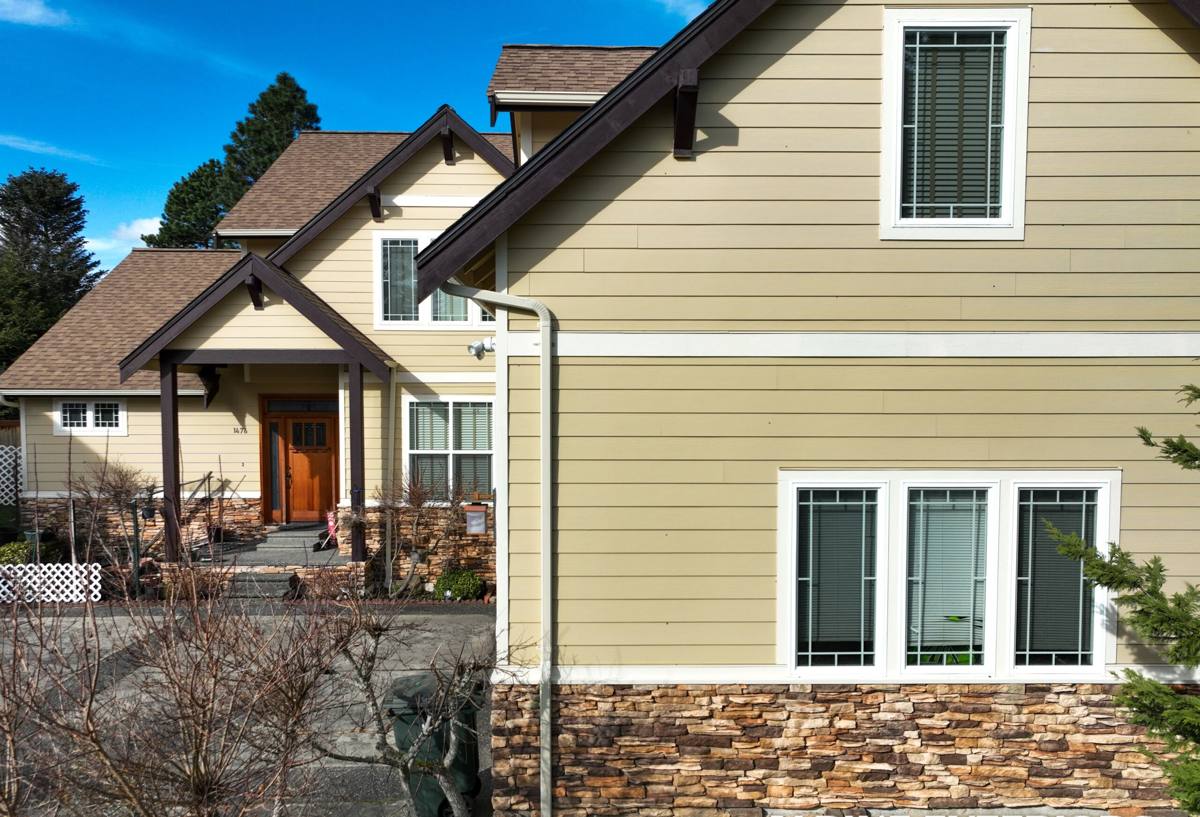
What Seminole's Climate Actually Does to Siding
Wind
Sustained tropical-storm and hurricane winds don't just push on a wall — they create suction on the leeward side that pulls siding away from the substrate. Fastening pattern, fastener type, and panel engineering all matter more here than in most of the country. A siding product rated for general use elsewhere can be undersized for what a Pinellas County wall assembly needs to withstand.
UV
Florida gets more direct sun hours per year than almost anywhere in the continental U.S. Paint film on siding breaks down under that kind of exposure — pigments fade, the finish chalks, and eventually the substrate underneath is exposed to moisture it was never meant to see unprotected.
Wind-driven rain
Rain that's being pushed sideways at 40-60 mph doesn't behave like rain falling straight down. It gets forced up under laps, into fastener holes, and behind trim if those details weren't built with that scenario in mind. Most siding failures we investigate aren't the siding material failing — they're water finding a path the installation didn't seal against.
Salt air
Airborne salt accelerates corrosion on fasteners, flashing, and any exposed metal, and it also degrades certain finishes faster than inland exposure would. Seminole's proximity to the water means this factor is more relevant here than it would be for a home twenty miles inland.
Why James Hardie Is the Product We Standardize On
We install James Hardie fiber cement siding exclusively — we don't install vinyl, LP SmartSide, or other fiber cement brands. That's a deliberate standard, not a lack of options. Fiber cement resists the moisture-driven rot that wood-based products are vulnerable to in this humidity, and it doesn't soften, warp, or melt under sun exposure the way vinyl can. James Hardie also builds a version of its product specifically engineered for high-humidity, high-moisture climates — the HZ5 line — which is what we spec for Seminole and the rest of the Tampa Bay area.
The ColorPlus factory finish is the other piece of the equation. It's baked on in a controlled environment rather than sprayed on-site, which gives it better UV resistance and a longer service life before repainting than field-applied paint achieves. For a climate that puts this much UV stress on a finish year-round, that difference matters more here than it would in a milder climate.
| Product Line | Best Fit | Why It Matters for Seminole |
|---|---|---|
| HZ5 (Hardie Zone 5) | Humid, high-moisture coastal climates | Engineered moisture and impact resistance for Gulf Coast conditions |
| Standard HZ10 | Drier, colder climates | Not the correct spec for Pinellas County — we don't install it here |
| ColorPlus Finish | Any exterior application | Factory-cured finish holds color and integrity far longer under Florida UV than field paint |
What a Correct Installation Actually Involves
The siding material is only part of the equation. Most of the siding failures we get called out to inspect in this area trace back to installation shortcuts, not product defects. A correct James Hardie install on a Seminole home includes:
- Proper starter strip and clearance from grade, decks, and roof lines so water has somewhere to go instead of wicking into the bottom edge of the panels
- Correct fastener type, spacing, and embedment depth — Florida's wind-load requirements are stricter than a lot of the country, and under-fastened siding is one of the most common causes of wind-related failure we see
- Proper flashing and integration at every window, door, and penetration, sealed to shed wind-driven rain rather than trap it
- Rain screen or drainage plane behind the panels where the wall assembly calls for it, so any moisture that does get behind the siding can drain and dry instead of sitting against the sheathing
- Correctly caulked and painted cut edges — factory ColorPlus finish protects the face of the board, but any field cut exposes raw fiber cement that needs to be sealed
- Panel joints staggered and gapped per manufacturer spec, not tight-butted, to allow for the material's normal expansion and contraction
Skip any one of these and the wall can look fine for a year or two before a hidden problem shows up as staining, soft trim, or a panel that's come loose in a storm.
How Our Process Works on a Seminole Job
1. On-site assessment
We walk the exterior with you, check the condition of the existing siding and sheathing, and look specifically for moisture damage, prior repair patches, and any areas where past work wasn't done to spec. This is also when we confirm what substrate is under the current siding, since that affects fastening and prep.
2. Scope and product spec
We put together a written scope that specifies HZ5 panels, the ColorPlus color and profile you've chosen, and the flashing and drainage details the job needs based on what we found in the assessment — not a generic spec copied across every job.
3. Tear-off and substrate prep
Old siding comes off, and we inspect and repair any sheathing or framing damage before a single new panel goes up. Installing over compromised substrate just locks a problem behind a new wall.
4. Weather barrier and flashing
Housewrap or the specified weather-resistive barrier goes on, followed by flashing at every window, door, and penetration point. This step is where wind-driven rain resistance actually gets built — it doesn't come from the siding panels alone.
5. Panel installation
Panels go up to Hardie's fastening schedule for our wind zone, with joints staggered and properly gapped, and every field-cut edge caulked and painted before it's closed in.
6. Final inspection and walkthrough
We walk the finished job with you, check caulk lines, trim, and paint touch-up, and confirm everything matches the scope before we call it done.
Cost Factors for a Seminole Siding Job
Every home is different, but the same variables drive price on most jobs in this area. We'll give you exact numbers after an on-site assessment — broad ranges without seeing the house aren't useful to you.
| Factor | How It Affects Cost |
|---|---|
| Substrate condition | Rotted sheathing or framing found during tear-off adds repair scope before new siding goes on |
| Home size and complexity | More corners, gables, and window/door penetrations mean more flashing and cut work |
| Siding profile chosen | Lap, shingle, and panel styles carry different material and labor costs |
| Existing siding removal | Multiple layers of old material or difficult removal (stucco, old wood lap) adds labor |
| Trim and accessory work | Fascia, soffit, and trim replaced alongside siding versus reused as-is |
Why Hiring a Crew That Already Works Seminole Matters
A crew that installs siding across a wide mix of climates has to relearn local conditions on every job. A crew that works Pinellas County and the broader St. Petersburg area regularly already knows the wind-load requirements, the moisture behavior of the housing stock here, and which details actually get tested by a real Gulf Coast storm season instead of a spec sheet. That's not a marketing point — it shows up in fastening decisions, flashing details, and how a job holds up three hurricane seasons later.
We also know this area's permitting requirements and inspection expectations, which keeps the job moving instead of stalling on paperwork a crew unfamiliar with the county might not anticipate.
Signs Your Current Siding Isn't Holding Up
- Soft or spongy spots when you press on the siding, especially near the bottom edge or around windows
- Visible staining or streaking that keeps returning after cleaning
- Panels that have bowed, cracked, or come loose, particularly after a windy season
- Paint that's chalking heavily or peeling rather than just fading
- Gaps opening up at trim, corners, or joints that weren't there a year or two ago
Any of these can mean water is already behind the siding, which is worth having looked at before it becomes a bigger repair.
Get a Free Estimate
If you're weighing a siding replacement for a Seminole home, we're happy to come take a look, walk you through what we find, and put together a straightforward, no-pressure estimate — no upsell script, just what the house actually needs. Use the form below to get started.