 St. Petersburg Roofing
 Why Siding Choice Matters More in Gulfport
Gulfport sits close to Boca Ciega Bay, which means homes here take a steady diet of salt-laden air on top of everything else Pinellas County throws at an exterior — intense year-round UV, sudden downpours pushed sideways by wind, and the occasional direct hit from a tropical system. Siding in this neighborhood isn't just cosmetic. It's the layer standing between your framing and a coastal climate that doesn't let up for six months and then goes quiet for the other six.
We install fiber cement siding for homeowners throughout Gulfport and the surrounding St. Petersburg area, and we do it with one product line only: James Hardie. This page covers what that actually means for a Gulfport home — what the climate demands, what a correct installation looks like, and why the crew doing the work matters as much as the material itself.
What Salt Air, Sun, and Wind-Driven Rain Do to Siding
Salt Air
Proximity to the bay means airborne salt settles on exterior surfaces even on calm days. Salt is corrosive to exposed metal fasteners and trim, and it accelerates the breakdown of coatings and caulking that aren't built for it. Siding that relies on a painted-on finish, rather than a factory-baked one, tends to chalk and fade faster in this environment.
UV Exposure
Florida sun is relentless. Pigments fade, some plastics and composites become brittle over years of exposure, and any siding with a thin surface coating will show wear well before its expected lifespan is up. This shows up as chalking, color shift, or a siding surface that looks tired long before it's structurally failing.
Wind-Driven Rain
Storms here rarely deliver rain straight down. Wind pushes water sideways and up under laps, around trim, and into any gap in flashing or caulk. Siding systems that swell, wick moisture, or trap water behind the surface are the ones that fail from the inside out — often without visible warning until rot or mold is already established.
Wind Load
Hurricane-force gusts test every fastener and every lap. Siding that isn't rated and installed for wind exposure can lift, crack at the edges, or blow off outright during a storm, which is exactly when you need your envelope intact.
Why We Standardize on James Hardie
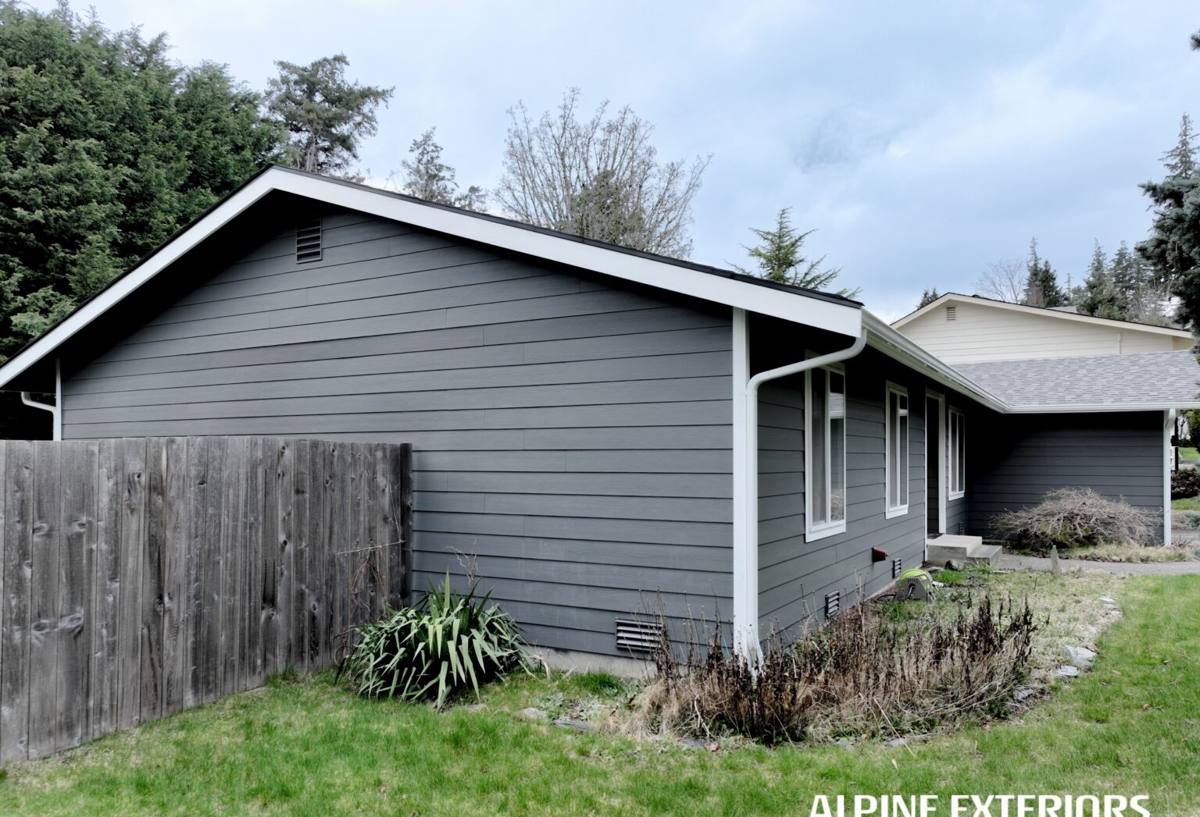
We install fiber cement exclusively, and specifically James Hardie, because it's engineered for exactly the conditions Gulfport deals with. It's non-combustible, it doesn't rot, and Hardie's ColorPlus finish is baked on at the factory rather than field-applied — which means better fade and chalk resistance than a job-site paint job, and no repainting cycle every few years just to keep it looking right.
Hardie also builds region-specific HZ5 product formulations engineered for high-humidity, moisture-heavy climates like ours. That's not a marketing detail — it affects how the board handles moisture cycling over a Florida summer. We don't install vinyl, LP SmartSide, Cemplank, Allura, or primed wood siding. Each of those has a legitimate place in the market, but none of them match fiber cement's combination of durability, moisture behavior, and finish longevity in a coastal Gulf climate, and we'd rather install one product exceptionally well than spread our expertise across several we don't fully stand behind.
How Fiber Cement Compares for a Gulfport Home
| Factor | Vinyl Siding | Wood / LP SmartSide | James Hardie Fiber Cement |
|---|---|---|---|
| Salt air resistance | Can become brittle over time | Vulnerable without diligent upkeep | Engineered for humid, coastal exposure |
| UV / fade resistance | Fades and chalks with age | Paint fades, needs recoating | Factory ColorPlus finish resists fade |
| Moisture / rot risk | Low rot risk, but can trap moisture behind panels | Wood-based core can swell or rot if compromised | Won't rot; not wood-based |
| Wind performance | Can crack or blow off in high gusts | Depends on installation quality | Rated for high-wind installation when done to spec |
| Fire resistance | Combustible | Combustible | Non-combustible |
| Typical repaint cycle | Doesn't take paint well | Every 5-8 years | ColorPlus finish: 15+ years before repaint needed |
This isn't about any one product being bad — it's about which system holds up with the least maintenance burden in a specific climate. For Gulfport's mix of salt, sun, and storms, fiber cement is where we land every time.
What a Correct Installation Involves
Fiber cement siding is only as good as the installation behind it. Most of the problems we see on older siding jobs in this area trace back to shortcuts taken during install, not the product itself. A correct job includes:
- Proper weather-resistive barrier and house wrap installed and lapped correctly before any siding goes on
- Flashing at every window, door, and penetration — the single most common failure point in wind-driven rain climates
- Correct fastener type, spacing, and penetration depth, matched to Hardie's published installation specs
- Minimum clearance maintained between siding and grade, roofing, and decks to prevent wicking
- Caulking only where Hardie's instructions call for it — over-caulking traps moisture rather than keeping it out
- Proper lap and joint treatment to shed wind-driven rain instead of channeling it inward
- Painted or factory-finished cut edges sealed to prevent moisture intrusion at every cut
Hardie's warranty is tied to installation done to their specification. Skip any of the above and you can have a legitimate product on the wall that still fails early — which is why we treat the install process itself as the deciding factor in how the siding performs over the next few decades.
Our Process for a Gulfport Siding Project
1. On-Site Assessment
We look at the existing siding or sheathing, check for any moisture damage or rot that needs addressing before new siding goes on, and evaluate flashing, trim, and penetrations. Covering up an existing problem with new siding just delays a bigger repair.
2. Product and Line Selection
We walk through Hardie's plank, shingle, and panel lines and help you land on the profile and ColorPlus finish that fits the home and the neighborhood's character, without pushing a specific look.
3. Prep and Tear-Off
Old siding comes off, sheathing is inspected and repaired as needed, and a new weather-resistive barrier goes on before a single piece of Hardie board is installed.
4. Installation to Manufacturer Spec
Flashing, fastening, clearances, and joint treatment are done to Hardie's published specifications, not shortcuts — this is what keeps the warranty valid and the assembly performing through hurricane season after hurricane season.
5. Final Walkthrough
We go over the finished job with you, check trim and caulk lines, and make sure everything is sealed and finished the way it should be before we call it done.
Maintenance in a Coastal Pinellas Climate
One of the practical advantages of Hardie's ColorPlus finish in a place like Gulfport is how little upkeep it asks for compared to painted wood or fading vinyl. A periodic rinse to clear off salt residue and general grime is typically enough. You're not on a repainting schedule, and you're not watching for the swelling or soft spots that come with a wood-based product exposed to humidity and occasional flooding. That said, no siding is maintenance-free — caulk lines, trim, and flashing should still get a visual check after major storms, since those are the components most likely to need attention over time, even when the siding itself is holding up fine.
What to Look for in a Gulfport Siding Contractor
- Familiarity with local wind and moisture conditions specific to the Gulfport / St. Petersburg area, not just generic Florida experience
- Willingness to explain their flashing and moisture-management approach in plain terms, not just "we install siding"
- Manufacturer training or certification on the specific product line they're installing
- A clear explanation of what their warranty covers versus what the manufacturer's warranty covers
- References or completed work you can actually see, not just a sales pitch
- No pressure to upsell you into a cheaper product line to win the bid
A siding job done wrong doesn't usually announce itself right away. It shows up two or three years later as a soft spot behind a window, a lifted panel after a storm, or a color that's already chalking. Hiring a crew that's worked in this specific coastal environment — not just "Florida" in general, but the salt-air, wind-exposed conditions around the bay — is what keeps that from happening on your home.
Ready to Talk About Your Gulfport Home
If your siding is showing its age, or you're planning ahead for storm season, we're happy to take a look and walk you through what James Hardie fiber cement would involve for your specific home. Reach out for a free, no-pressure estimate using the form below — we'll assess the job, answer your questions honestly, and give you a straightforward picture of the work and the cost before anything is decided.