 St. Petersburg Roofing
 Why Pinellas Park Homes Need Siding Built for This Climate
Pinellas Park sits in the middle of a peninsula that takes a beating from every direction. Homes here deal with hurricane-force wind gusts during tropical systems, wind-driven rain that gets forced sideways into wall assemblies, intense UV exposure nearly every day of the year, and a steady dose of salt-laden air blowing in off both Tampa Bay and the Gulf. Any one of those on its own is manageable. Together, over years, they're what separates siding that lasts two decades from siding that fails in five.
The most common siding failures we see on Pinellas County homes aren't dramatic storm damage — they're slow. Paint that chalks and fades under UV long before the manufacturer's finish warranty says it should. Seams and butt joints that let wind-driven rain behind the cladding, where it sits against sheathing and framing until rot sets in. Panels that swell, delaminate, or lose their shape after repeated humidity cycling. By the time it's visible from the curb, the damage underneath is usually further along than it looks.
Fiber cement siding, installed correctly, resists all of that. It doesn't expand and contract with humidity the way wood does, it won't feed mold or termites, and it holds a factory finish through UV exposure far better than field-applied paint. That's why it's the product we install — but the material is only half the story. How it goes on the wall is what actually determines whether a Pinellas Park home gets 30 years out of its siding or ends up redoing sections in year eight.
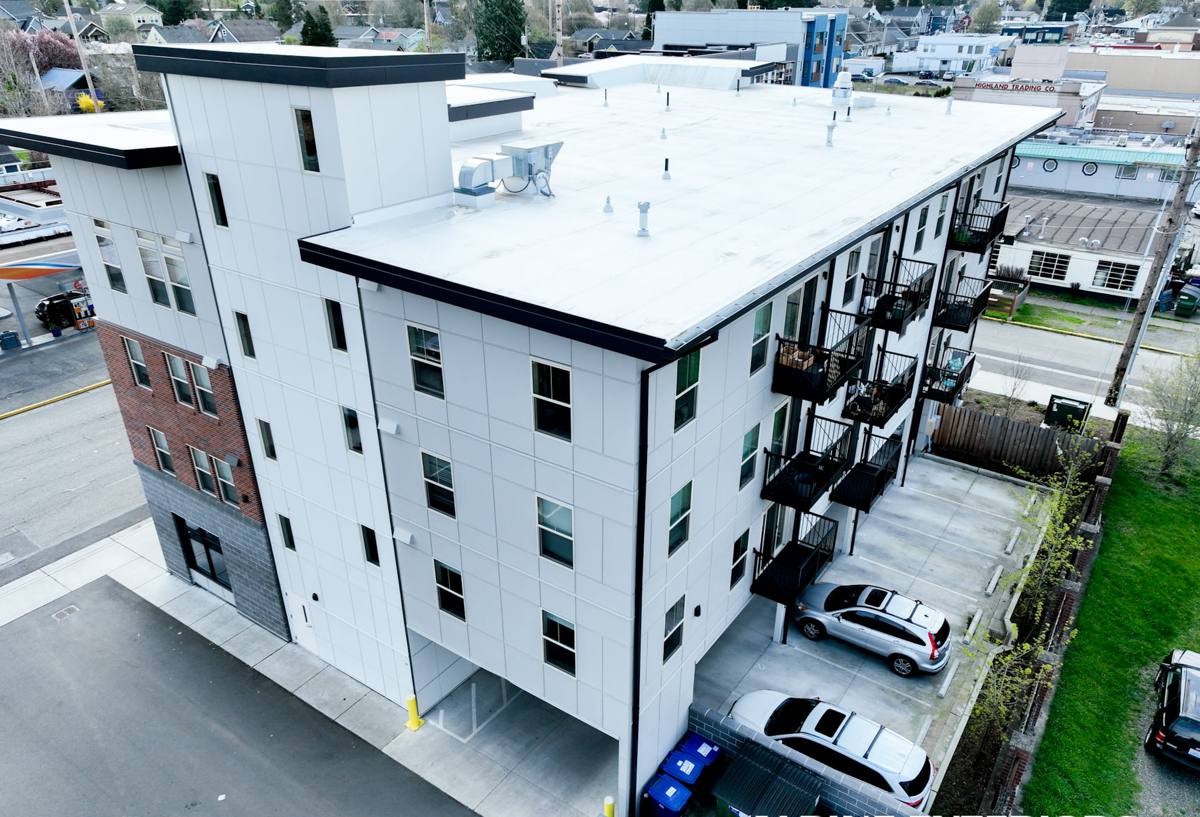
What Correct Fiber Cement Siding Installation Actually Involves
Fiber cement is a forgiving material in the sense that it's dense, stable, and impact-resistant. It is not forgiving of sloppy installation. Most of the siding failures homeowners blame on the product are actually installation errors — gaps left too tight, fasteners driven wrong, flashing skipped to save time. On a home exposed to Pinellas County's wind and rain patterns, those shortcuts show up fast.
Flashing and Moisture Management
Every penetration in the wall — windows, doors, hose bibs, light fixtures, vents — needs proper flashing and sealant integrated with a weather-resistant barrier behind the siding. Water that gets past the cladding has to have somewhere to go besides into the wall cavity. This matters more here than in drier climates, because wind-driven rain during a tropical system doesn't fall straight down — it drives sideways and upward under eaves and around trim, finding any gap that was left unsealed.
Fastening and Clearances
James Hardie specifies exact fastener types, spacing, and penetration depth for each product line and each wind exposure zone. Panels also need proper clearance from rooflines, decks, and grade — typically a minimum gap to keep the siding from sitting in standing water or trapped moisture. Nailing too tight, using the wrong fastener, or closing up those clearances to make a job look cleaner are common corner-cuts that don't cause problems on day one, but do a few humid summers later.
The ColorPlus Factory Finish
James Hardie's ColorPlus finish is baked on at the factory under controlled conditions, which gives it better UV and fade resistance than siding painted on-site after installation. For a home getting near year-round Florida sun, that's the difference between color that holds for 15 years and paint that needs touch-up in five. Field-painted or unfinished siding options exist, but they push the UV-resistance burden back onto site-applied paint, which is exactly the weak point Pinellas Park's sun exposure finds first.
Why We Install James Hardie and Nothing Else
We made a deliberate decision to install only James Hardie fiber cement siding — not vinyl, not LP SmartSide, not Cemplank, Allura, or primed wood. That's not a marketing position, it's an installation standard. Hardie's HZ product lines are engineered specifically for climate zones like ours, with formulations built to resist moisture and humidity cycling rather than a one-size-fits-all national product. The ColorPlus finish, the fiber cement composition (non-combustible, unlike engineered wood products), and the transferable warranty backing it all give us a product we're comfortable standing behind on a coastal Florida home for the long haul. Other products have real strengths — cost, weight, ease of handling — but the trade-offs in moisture behavior, maintenance burden, or warranty structure are ones we're not willing to install and then walk away from.
Our Installation Process for Pinellas Park Homes
Every job starts with an on-site assessment, not a phone estimate. We look at the existing siding or substrate, check for moisture damage or rot at penetrations and butt joints, and evaluate wall orientation — a west-facing wall taking direct afternoon sun and prevailing wind gets different attention than a shaded, protected elevation.
- Remove existing siding and inspect sheathing for hidden moisture or rot damage before covering anything back up
- Repair or replace compromised sheathing — never install new siding over a wall assembly with existing problems
- Install a weather-resistant barrier and integrate flashing at every window, door, and penetration
- Install James Hardie panels or planks to manufacturer fastening specs, with correct clearances at rooflines, decks, and grade
- Finish trim, caulking, and touch-up work, then a final walkthrough with the homeowner
We don't skip the sheathing inspection step, even though it slows the job down. Covering a moisture problem with new siding just hides it for a few more years — it doesn't fix it.
Signs Your Current Siding Is Failing
Homeowners often live with early warning signs for a year or two before calling, because the damage isn't obvious from the street. Worth checking for:
- Soft or spongy spots when you press on siding near the bottom edge or around window trim
- Visible gaps, cracking, or separation at butt joints and corners
- Paint that's chalking, peeling, or fading unevenly, especially on sun-exposed walls
- Bubbling or warping, particularly on wood or engineered wood siding
- Rising utility bills that could point to a compromised building envelope
- Visible mold, mildew, or staining that keeps coming back after cleaning
Any one of these on its own might just need a repair. Several together, especially on a home more than 15-20 years old, usually mean it's time for a real inspection.
Comparing Siding Materials for Pinellas County Conditions
| Factor | James Hardie Fiber Cement | Vinyl | Wood / Engineered Wood |
|---|---|---|---|
| Wind resistance | Engineered for high-wind zones, rigid panel | Can crack or blow off in high gusts | Rigid but vulnerable at seams and fasteners |
| Moisture / humidity behavior | Doesn't absorb or swell; resists rot | Doesn't absorb, but traps moisture behind it if installed poorly | Prone to swelling, rot, and moisture damage over time |
| UV / fade resistance | Factory ColorPlus finish holds color for years | Fades and can become brittle with age | Field-applied paint fades faster, needs recoating |
| Fire resistance | Non-combustible | Combustible | Combustible |
| Maintenance burden | Low — periodic cleaning and inspection | Low, but limited repair options once damaged | High — regular painting, sealing, pest monitoring |
| Typical lifespan when installed correctly | 30+ years | 20-30 years | 10-20 years, climate-dependent |
No material is maintenance-free, and none of them perform well if installed poorly. But for a wall that has to handle salt air, sideways rain, and full sun exposure most of the year, fiber cement's combination of moisture stability and UV-resistant finish is why it's become the standard choice for coastal Florida homes.
Maintenance and Long-Term Care
James Hardie siding is low-maintenance, not no-maintenance. A rinse-down once or twice a year removes salt residue and airborne grime before it builds up — this matters more for Pinellas Park than it would inland, given the proximity to the bay and Gulf. Caulking at trim and penetrations should get a visual check annually, since caulk is the one component that does age faster than the panels themselves. Beyond that, an occasional look at ground-level clearance — mulch, landscaping, or debris that's crept up against the bottom edge over the years — keeps the material away from standing moisture it was never meant to sit in.
Why a Crew That Already Works Pinellas Park Matters
Installation quality is the biggest variable in how long siding lasts, and installation quality comes down to the crew, not just the brand on the product. A crew that regularly works in Pinellas Park and the surrounding St. Petersburg area already knows the wind exposure categories that apply locally, what Pinellas County's permitting and inspection process expects, and how salt air and humidity actually behave on homes here versus a generic installation manual. That local repetition is what catches the small details — a flashing detail at a stucco transition, a fastener spacing call for a particular wall height — that a crew unfamiliar with the area might miss on their first pass.
When you're vetting a siding contractor, a few questions separate the crews who do this right from the ones who don't:
- Do they inspect and repair sheathing before installing new siding, or just cover what's there?
- Can they explain their flashing and moisture-barrier approach in specific terms, not just "we seal everything"?
- Are they installing to the manufacturer's written fastening and clearance specs for this wind zone?
- Do they pull the required permits and schedule inspections, rather than treating that as optional?
- Will they put the warranty terms — both product and labor — in writing before work starts?
If a contractor can't answer those clearly, that's worth knowing before they're on the roof, not after.
If your Pinellas Park home has siding showing its age, or you're planning ahead of the next storm season, we're happy to take a look and give you a straightforward assessment. Reach out for a free, no-pressure estimate — no obligation, just an honest read on where your home stands.