 St. Petersburg Roofing
 Decks in Old Northeast Work Harder Than Most
Old Northeast sits close to the water, under a heavy tree canopy, on some of the older housing stock in St. Petersburg. That combination is tough on an outdoor structure. Decks here deal with salt-laden air drifting in off Tampa Bay, deep shade that keeps wood damp long after a storm passes, and full Florida sun in the open patches between the oaks. Add in Pinellas County's hurricane season, and a deck that isn't maintained or repaired correctly starts failing in ways that aren't always obvious from the surface.
We repair decks throughout St. Petersburg, but Old Northeast has its own pattern of problems: older framing built to older codes, ledger boards attached to homes that have settled or been renovated over the decades, and decking that's been through more UV cycles and more wind-driven rain than a deck built ten years ago in a newer subdivision. A repair here has to account for what the structure has actually been through, not just what it looks like today.
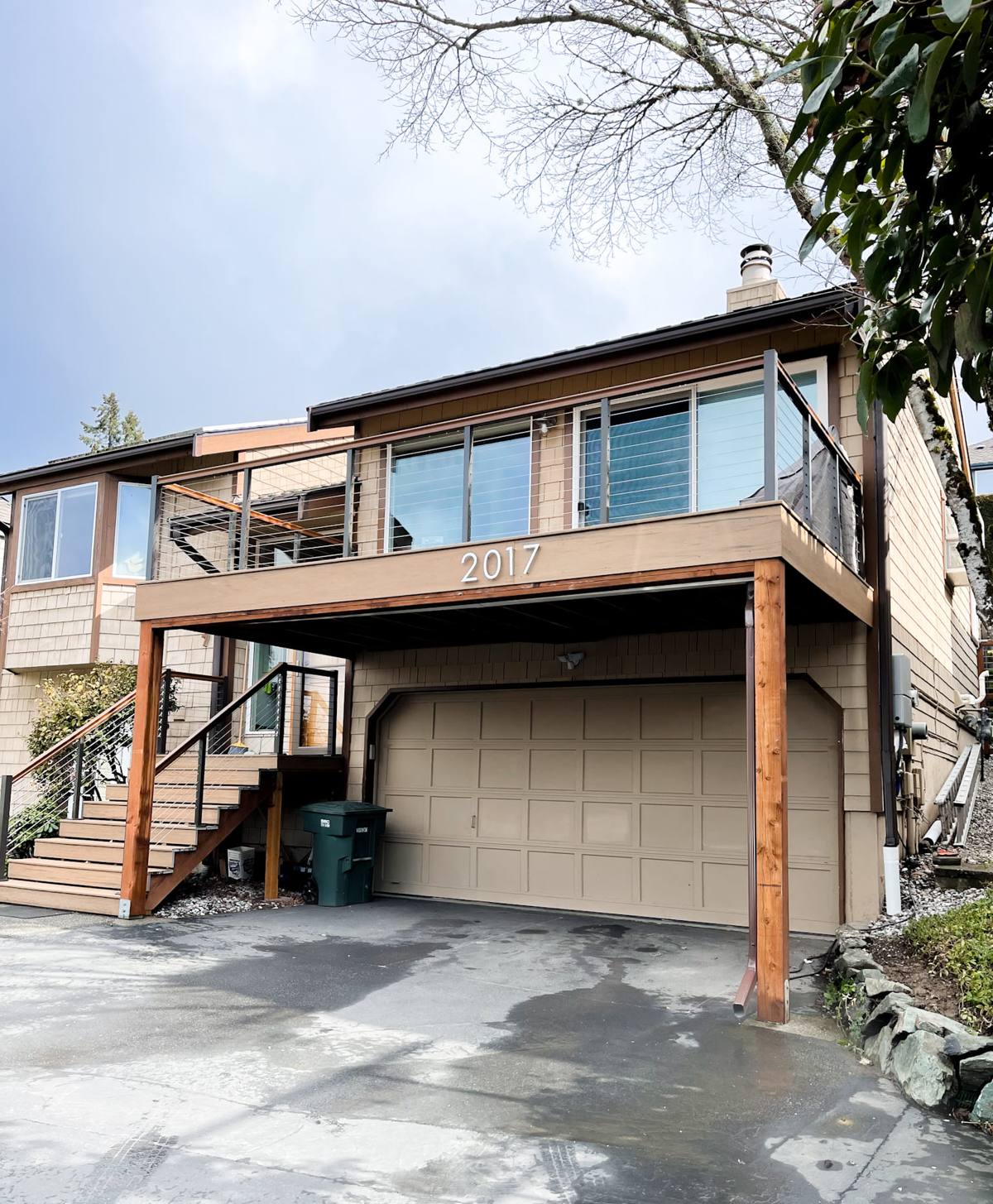
What Hurricane Wind, UV, and Salt Air Actually Do to a Deck
Each of these stresses attacks a different part of the structure, and they compound each other over time.
Wind-Driven Rain and Storm Loads
Hurricane-force gusts don't just push on a deck — they drive rain sideways, into joints, under flashing, and behind ledger boards where it can't dry out. Repeated storm cycles also rack a structure, loosening fasteners and stressing connections between the deck and the house.
Year-Round UV Exposure
Florida's sun is intense in every season, not just summer. UV breaks down the lignin in wood fiber, causing graying, splintering, and surface checking. It also degrades sealants and finishes faster than manufacturers' timelines suggest, which is why a deck that looked fine at the two-year mark can look rough by year four if it wasn't recoated.
Salt Air
Proximity to Tampa Bay means airborne salt settles on everything, including deck hardware. Salt accelerates corrosion in fasteners, brackets, and any exposed metal connectors — often from the inside of a joint, where you can't see it until a board or railing starts to move.
Shade and Moisture
The same tree canopy that makes Old Northeast attractive also keeps decks damp longer after rain. Areas with less airflow and more shade are where we most often find rot, mildew staining, and soft spots, even on structures that are otherwise in decent shape.
Signs Your Deck Needs Repair, Not Just a Cleaning
A pressure wash and a fresh coat of stain can make a tired deck look better without fixing what's actually wrong underneath. Here's what tells us a deck needs real repair work:
- Boards that flex, bounce, or feel soft underfoot
- Visible gaps opening up between decking boards or at the ledger board
- Railings or posts that wobble when pushed
- Rust streaks around fasteners or metal connectors
- Wood that's gone gray and splintery, or that holds moisture and feels spongy
- Stairs that feel less solid than they used to, or treads that have shifted
- Visible daylight or gaps where the deck meets the house
- Mildew or dark staining concentrated in shaded sections
Any one of these on its own might be minor. Several together usually mean the structure needs attention beyond the surface.
What a Correct Deck Repair Actually Involves
A repair that only replaces what's visible from above often misses the problem. We work from the structure out.
Framing and Structural Repairs
Joists, beams, and posts carry the load. If any of these have soft spots, splitting, or rot — especially near ground contact or where they meet the house — they get sistered, reinforced, or replaced before anything else happens. A deck that looks fine on top but has a compromised joist underneath is a safety issue, not a cosmetic one.
Ledger Board Attachment
The ledger board connects the deck to the house, and it's one of the most common failure points we find, particularly on older homes. Improper flashing, corroded fasteners, or a ledger that was never properly through-bolted can let water in behind the board where it rots quietly for years. We check this connection on every repair, even when it isn't the reason the homeowner called.
Decking Board Replacement
Individual boards that are cracked, cupped, or rotted get replaced rather than patched. We match spacing and fastening to the rest of the deck so repaired sections don't stand out or trap water differently than the surrounding boards.
Railings, Guards, and Stairs
Railings take a lot of abuse — leaned on, gripped, exposed to the same UV and salt as the deck floor. Loose posts, cracked balusters, and undersized connections get rebuilt to hold up under real weight, not just look solid.
Fasteners and Hardware
This is where salt air does the most damage. We use fasteners and structural connectors rated for coastal, exterior exposure rather than standard interior-grade hardware. It costs a little more up front and it's the difference between a repair that lasts and one that starts rusting through in a couple of seasons.
Repair or Replace? What Actually Decides It
Homeowners often ask us to just "fix what's broken," and sometimes that's the right call. Other times, the honest answer is that a full or partial rebuild costs less over time than chasing repairs on a structure that's failing in multiple places. Here's how we think through it:
| Factor | Leans Toward Repair | Leans Toward Replacement |
|---|---|---|
| Framing condition | Solid, isolated soft spots | Widespread rot in joists or beams |
| Age of structure | Under 10-15 years | Original construction is decades old |
| Ledger board | Sound, properly flashed | Improperly attached or water-damaged |
| Extent of damage | A few boards, one railing section | Damage spread across most of the deck |
| Code compliance | Meets current railing/guard standards | Built to outdated spacing or height rules |
| Budget goal | Extend usable life a few more years | Want a long-term, low-maintenance solution |
We'll give you a straight answer on which side of this a given deck falls on — including when repair is clearly the smarter money.
Materials: Our Standard for Coastal Repairs
For structural framing, we use pressure-treated lumber rated for ground contact where applicable, since it holds up better against the moisture cycles this area sees. For decking surfaces, both quality pressure-treated wood and composite boards have a place, and the right choice depends on the homeowner's priorities.
Wood costs less initially and can be refinished, but it needs regular sealing and inspection to hold up against this much UV and humidity — skip that maintenance for a season or two and it shows. Composite decking costs more up front and doesn't need staining, but it still needs correctly spec'd fasteners and proper ventilation underneath, since trapping moisture against any composite board causes its own problems. We won't install composite over framing that isn't ventilated correctly, because that's a maintenance headache we'd rather prevent than have a customer discover in two years. Whichever material fits your deck, our standard is the same: rated for exterior coastal exposure, installed to shed water rather than trap it.
Our Repair Process
- Inspection: We check the whole structure — framing, ledger, fasteners, decking, and railings — not just the spot you called about.
- Written assessment: You get a clear explanation of what's actually wrong, what's optional, and what shouldn't wait.
- Permitting, if required: Structural repairs in St. Petersburg and Pinellas County can require permits depending on scope. We handle that so you don't have to track it down.
- The repair itself: Framing and structural work first, then decking, railings, and hardware, using materials rated for this climate.
- Final walk-through: We check the repaired areas with you and make sure everything is solid before we call it done.
Why It Matters That We Already Work in Old Northeast
A deck repair crew that's worked in this neighborhood knows what to expect before the ladder goes up: the age range of the housing stock, the way tree cover concentrates moisture damage in certain areas of a deck, and how salt exposure from the bay tends to hit hardware before it hits the wood itself. That familiarity means fewer surprises mid-project and a more accurate estimate from the start.
It also means we're not learning Pinellas County's permitting process or St. Petersburg's inspection expectations on your project. We've been through it before, which keeps a repair moving instead of stalling on paperwork.
Keeping a Repaired Deck in Good Shape
A correct repair buys you years, but a little upkeep protects that investment against this area's climate:
- Rinse off salt residue and debris periodically, especially after storms
- Reseal or restain wood decking on the schedule the product calls for — don't stretch it because it "still looks fine"
- Keep an eye on shaded sections where moisture lingers longest
- Check railings and stair connections for looseness once or twice a year
- Trim back vegetation that keeps a section of deck constantly damp or shaded
- Address small issues — a loose board, a hairline crack — before the next storm season, not after
If your deck in Old Northeast is showing wear, moving underfoot, or you're just not sure whether it needs a repair or something more, we're glad to take a look. Request a free, no-pressure estimate using the form below and we'll tell you honestly what we find.