 St. Petersburg Roofing
 Building Decks for Crescent Lake's Older Homes and Mature Lots
Crescent Lake is one of St. Petersburg's older, more established neighborhoods, and that shows up in the deck work we do there. Lots tend to be smaller and shadier than newer subdivisions, tree canopy is thicker, and a lot of the housing stock is bungalow and mid-century construction with additions and outdoor living spaces added over the decades. That combination changes how a deck should be designed and built compared to a wide-open new-construction lot. Framing has to work around root systems and drainage patterns that have been settling for fifty-plus years, and the finished deck usually needs to tie into an older house structurally and visually without looking bolted on.
We build decks in Crescent Lake and the surrounding St. Petersburg neighborhoods regularly, so we already know the general rhythm of this area's lots, drainage, and permitting — we're not learning it on your job.
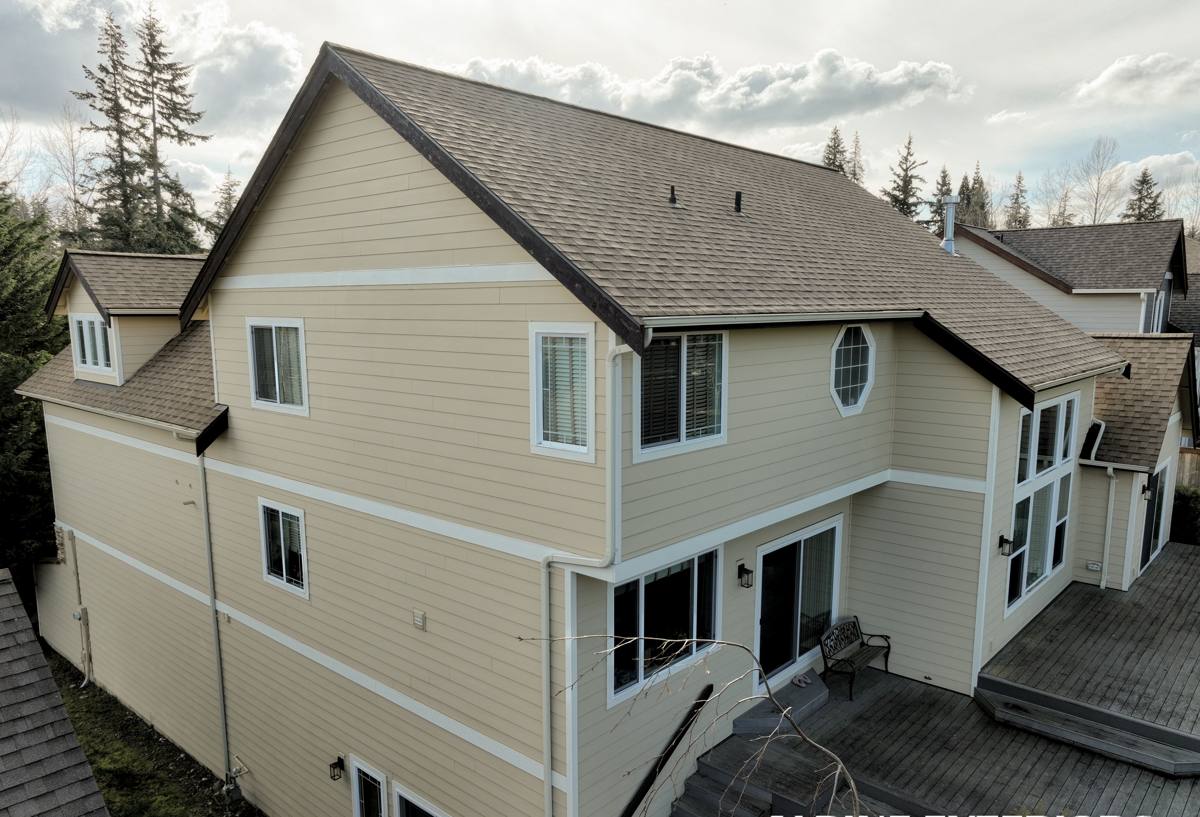
What Pinellas County Climate Does to a Deck
St. Petersburg sits on a peninsula, and every deck built here deals with the same four stressors, whether it's in Crescent Lake, Old Northeast, or Shore Acres:
- Hurricane-force wind: Gusts don't just push on a deck — they get underneath it, pull at ledger connections, and rack rail systems. Fastening and structural connections matter more here than in inland states.
- Intense, near-constant UV: Florida sun degrades unprotected wood fiber and breaks down cheaper composite capping faster than it would in a milder climate. Finish quality and material grade aren't cosmetic choices — they're durability choices.
- Wind-driven rain: Rain here doesn't fall straight down. It drives sideways into ledger connections, fastener heads, and end grain, which is exactly where rot and corrosion start if flashing and sealing weren't done right.
- Salt air: Even a few miles inland from Tampa Bay, airborne salt accelerates corrosion on fasteners, brackets, and any exposed metal hardware. Standard interior-grade hardware fails faster here than the fastener aisle at a big-box store implies.
None of these are dramatic on any single day. They're cumulative — a deck built to a lower standard doesn't fail in year one, it fails around year five or six, right when a homeowner assumed it still had a decade left.
Deck Types That Fit Crescent Lake Homes
Rear Living Decks
The most common request we get in this neighborhood is a rear deck that extends usable living space off the back of an older home — often replacing a smaller original wood deck or a slab patio that no longer fits how the homeowner uses the yard.
Elevated and Multi-Level Decks
Because lot grading and slab heights vary a lot on older streets, we build a fair number of elevated or stepped-level decks to work with the existing grade instead of fighting it, especially where a walkout door sits well above yard level.
Screened and Covered Deck Additions
Given the sun and rain patterns here, a growing share of Crescent Lake deck projects include a screen enclosure or roof cover built at the same time, so the space is usable in July afternoons and not just spring mornings.
Material Choices: What Actually Holds Up Here
Every material option has real trade-offs in this climate. We'll walk through budget, maintenance tolerance, and how long you plan to stay in the house before recommending one.
| Material | Upfront Cost | Maintenance | How It Handles This Climate |
|---|---|---|---|
| Pressure-treated pine | Lowest | Sealing every 1-2 years | Good structural value; needs consistent sealing against UV and wind-driven rain or it grays and checks early |
| Composite decking | Mid to high | Occasional cleaning, no sealing | Handles UV and moisture well; capped composite resists salt-air corrosion better than fastener-heavy wood systems |
| Tropical hardwoods (e.g. ipe) | High | Periodic oiling to hold color | Naturally dense and rot-resistant, but requires correct fastening — undersized or wrong-grade hardware corrodes fast in salt air |
| PVC decking | High | Low | Fully synthetic, doesn't absorb moisture, very stable in sun and salt exposure, but installation-sensitive around expansion gaps |
We don't push one material as the "right" answer for every house. A pressure-treated deck maintained on schedule can last for decades; a composite deck installed with the wrong fastening pattern or without proper ventilation underneath can develop problems just as fast as poorly built wood. The material matters less than whether it's engineered and installed correctly for this coastal climate.
What a Correctly Built Deck Actually Involves
A deck that survives Pinellas County weather is built right below the surface, in places most homeowners never inspect until something's wrong. The parts that matter most:
Ledger Attachment
Where a deck attaches to the house is the single most common failure point in poorly built decks nationwide, and it's worse here because wind-driven rain drives moisture straight into that seam. Correct flashing at the ledger board — not just caulk — is what keeps water out of the house rim joist for the life of the deck.
Footings and Framing
Footing depth and post spacing need to match Florida Building Code wind and load requirements, not a generic national span chart. Older Crescent Lake lots also sometimes have inconsistent soil fill from decades of past additions, so we verify footing bearing on site rather than assuming.
Fasteners and Hardware
Hot-dip galvanized or stainless structural hardware is not optional near Tampa Bay. Standard zinc-coated hardware corrodes faster in salt air, and a corroded joist hanger is a hidden structural problem, not a cosmetic one.
Rail and Guard Systems
Guardrails have to meet code load requirements and be fastened to resist lateral wind pressure, not just standing weight — this is a common corner cut on lower-bid deck jobs.
Drainage Under the Deck
On shaded, mature lots, poor under-deck drainage leads to standing moisture and faster wood decay. We grade and, where useful, add a drainage system underneath so water isn't sitting against framing after every storm.
Permitting in St. Petersburg
Most deck construction in St. Petersburg requires a building permit, and inspections check footing depth, structural connections, and guardrail compliance against the Florida Building Code's wind-load provisions for our region. Skipping permitting isn't a shortcut — it's a liability you inherit at resale, and it can affect what your insurer will cover if there's storm damage down the line. We handle the permit process as part of the job so you're not the one chasing inspection scheduling.
Our Deck Building Process
- On-site assessment: we walk the lot, check grade, existing structure, tree root interference, and how the deck should tie into the house.
- Design and material selection: we go over layout, elevation, and material trade-offs based on your budget and maintenance preference.
- Permit filing: we prepare and submit the permit package to the City of St. Petersburg.
- Site prep and footings: footings are dug and poured to code-required depth for our soil and wind conditions.
- Framing: ledger, posts, beams, and joists go in with correctly rated, corrosion-resistant hardware.
- Decking, rails, and finish work: surface material and guard systems are installed and fastened per code.
- Final inspection and walkthrough: we schedule the city inspection and walk the finished deck with you before calling the job done.
Keeping a Deck Sound Through Florida Storm Seasons
What you do after the build matters almost as much as the build itself. A simple annual checklist keeps small issues from becoming structural ones:
- Check ledger flashing and the house connection point for gaps or soft wood each spring.
- Inspect fastener heads and hardware for rust streaking, especially after summer storm season.
- Reseal wood decking on schedule — don't wait for visible graying, which means UV damage has already started.
- Clear leaf litter and debris from between boards and under the deck to prevent trapped moisture, especially under mature tree canopy.
- Test rail stability by hand periodically — looseness is often the first sign of a fastening issue, not a design one.
- After any named storm, do a quick visual check of posts and footings for movement before resuming normal use.
Why a Local Crew Matters for This Job
Deck building isn't a one-size-fits-all trade, and Crescent Lake's mix of older homes, established trees, and varied lot grading rewards a crew that's already dealt with those conditions. A contractor who mostly builds on flat, new-construction lots elsewhere in the state can still build a technically sound deck, but they're solving problems here for the first time on your dime. Working this neighborhood regularly means we already know how St. Petersburg's permitting office reviews deck submittals, what soil and grading surprises show up on older lots, and which fastening and material choices actually hold up against Tampa Bay's salt air instead of just looking good on install day.
If you're planning a new deck or replacing one that's past its useful life, we'd be glad to take a look and put together a straightforward estimate — no pressure, no inflated scope, just an honest read on what your home and yard actually need. Reach out using the form below to get started.