 St. Petersburg Roofing
 Siding in Crescent Lake Has to Work Harder Than Siding Almost Anywhere Else
Crescent Lake sits in one of St. Petersburg's older, established neighborhoods, built around the park and lake that give the area its name. Homes here face a combination of stresses that few materials handle well over the long haul: intense year-round UV that bakes paint and finishes, wind-driven rain that gets pushed sideways into wall assemblies during summer storms, salt-laden air drifting in off Tampa Bay and the Gulf, and the real possibility of hurricane-force winds during the season. Any siding product installed in Pinellas County is going to be tested by all four of those factors, usually within the first year.
That combination is why we treat siding work in Crescent Lake differently than a generic siding job somewhere inland. The product, the fastening pattern, the flashing details, and the finish all need to be chosen with this specific climate in mind — not just "siding that looks good," but siding that's engineered to stay attached, stay sealed, and stay looking like it did on day one.
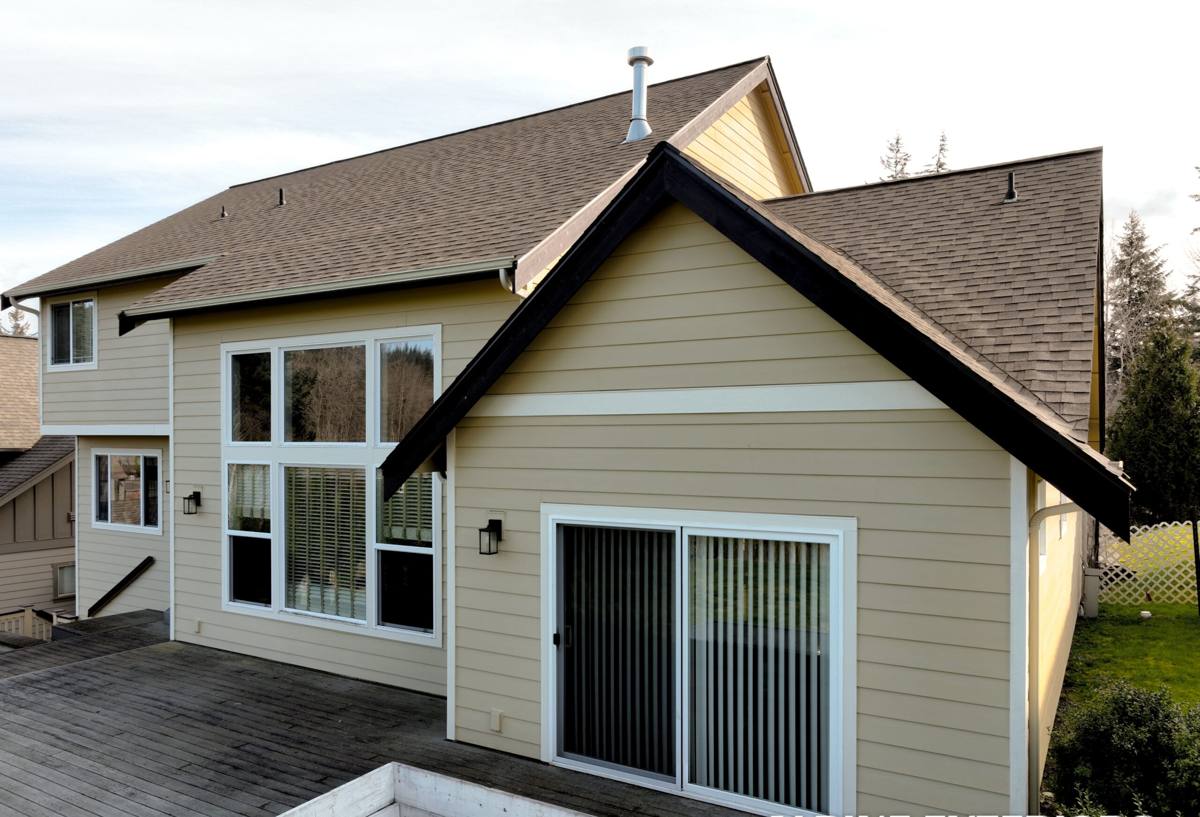
What Crescent Lake's Housing Stock Means for a Siding Project
Crescent Lake is one of St. Petersburg's older in-town neighborhoods, and it shows in the housing stock — a mix of early-to-mid-20th-century bungalows, Mediterranean and mid-century homes, alongside newer renovations and infill construction. That mix matters for siding work in a few practical ways:
- Older homes often have wall assemblies, sheathing, or trim details that don't match modern construction — a proper tear-off has to account for what's actually behind the existing siding, not what a spec sheet assumes.
- Some sections of Crescent Lake carry historic-designation status or sit within an area where the city or a neighborhood association reviews exterior changes. It's worth confirming with the City of St. Petersburg or your HOA before finalizing colors or profiles, since that can affect what's allowed.
- Mature tree canopy in parts of the neighborhood adds shade (which helps with UV) but also means more debris, moisture retention along shaded walls, and sometimes limited access for equipment and staging.
None of this is a dealbreaker — it just means the estimate and installation plan should reflect the actual house in front of us, not a generic template.
Why We Only Install James Hardie Fiber Cement — Not Vinyl, Not Wood, Not Other Fiber Cement Brands
We made a decision a long time ago to install one product on Pinellas County homes: James Hardie fiber cement siding. We don't install vinyl, wood, engineered wood products like LP SmartSide, or other fiber cement brands. That's not a marketing line — it's a standard we hold because of what this climate does to alternatives over time.
| Material | Salt Air / Coastal Exposure | UV & Fade Resistance | Moisture Behavior | Wind Performance |
|---|---|---|---|---|
| Vinyl siding | Can become brittle and discolored faster near the coast | Fades and chalks over time; color is not repaired, only covered | Sheds water on the surface but panels can warp or buckle in heat | Lower impact and wind ratings than fiber cement in most product lines |
| Untreated wood / cedar | Absorbs salt-laden moisture, accelerating rot | Needs regular refinishing to hold color and protect the surface | Prone to swelling, cupping, and rot without diligent upkeep | Performance depends heavily on fastening and ongoing maintenance |
| Engineered wood (e.g., LP SmartSide) | Wood-strand core is vulnerable if edges or seams aren't perfectly sealed | Factory finishes vary; edge and cut-end sealing is critical | Moisture intrusion at unsealed cuts can lead to swelling | Generally solid, but long-term moisture management is installer-dependent |
| James Hardie fiber cement | Non-combustible, cement-based composition resists salt-air degradation | ColorPlus factory finish is baked on and warrantied against fading | Engineered to handle humidity and wind-driven rain when installed to spec | HZ5 product line engineered for high-wind, high-moisture climates |
Every product on that list has legitimate uses somewhere. In Pinellas County, next to open water, with hurricane season built into the calendar every year, we've found that James Hardie's fiber cement is the one that consistently holds up without asking the homeowner to babysit it.
HardieZone and Why It Matters Here
James Hardie engineers its siding for specific climate zones under its HardieZone system, and Pinellas County falls into the HZ5 zone — the category built for hot, humid, high-moisture regions. That's not a marketing label; it affects the actual composition and moisture-management engineering of the boards you're putting on the house. Installing an HZ5-engineered product on a St. Petersburg home, instead of a generic siding line, is one of the more meaningful decisions in the whole project.
What a Correct Installation Actually Involves
Fiber cement is only as good as the installation behind it. A large share of the siding failures we get called out to inspect trace back to installation shortcuts, not the product itself. On a Crescent Lake home, a correct James Hardie installation includes:
- A proper water-resistive barrier installed over the sheathing, lapped correctly, with all penetrations sealed before a single board goes up.
- Flashing at windows, doors, and roof-to-wall intersections — the details that determine whether wind-driven rain stays out or finds a path in.
- Correct fastener type, spacing, and placement per James Hardie's published installation specifications, not a generic nailing pattern.
- Proper clearances at grade, roofline, and any adjoining decks or patios so water can't wick into the bottom edge of the siding.
- Caulking and sealant only where James Hardie's instructions call for it — over-caulking traps moisture just as easily as gaps let it in.
- Painted or factory-finished cut edges (ColorPlus touch-up product on job-cut ends) so no raw fiber cement is left exposed to the weather.
Skip any one of these and you can end up with a product that looks right for a year or two but fails early at the seams — exactly where salt air and wind-driven rain do the most damage.
Our Process for Crescent Lake Siding Projects
1. On-Site Assessment
We walk the exterior, check the condition of the existing siding, sheathing, and trim, and note anything specific to the house — shaded walls, drainage issues, prior water intrusion, or areas exposed to prevailing wind. For older Crescent Lake homes, this step also flags anything unusual behind the existing siding before we quote the job.
2. Product and Color Selection
We walk through the relevant James Hardie product lines and ColorPlus finish options, keeping in mind any neighborhood or historic-review considerations that might apply to your specific block.
3. Written Scope and Timeline
You get a clear, written scope covering removal of the old material, any sheathing repair needed, the specific Hardie products and accessories being used, and a realistic timeline — Florida's rain patterns can shift a schedule, and we'd rather tell you that up front.
4. Installation to Manufacturer Spec
Installation follows James Hardie's published specifications for the HZ5 zone, including fastening, flashing, and clearance details — not shortcuts to save a day of labor.
5. Final Walkthrough and Warranty Registration
We walk the finished job with you, and register the installation so the manufacturer's product warranty and our workmanship coverage are both properly on file.
Signs Your Current Siding Is Past Its Useful Life
Coastal Pinellas County conditions tend to show wear in fairly consistent ways. If you're noticing any of the following on a Crescent Lake home, it's worth having it looked at before small problems become structural ones:
- Paint that's peeling, bubbling, or chalking faster than it used to, especially on walls facing prevailing wind and salt air
- Soft spots, visible warping, or boards that flex when pressed
- Cracking or splitting at seams, corners, or around window and door trim
- Visible gaps or separation where boards meet trim, often a sign flashing has failed
- Musty odors or discoloration on interior walls that back up to exterior siding
- Siding that's noticeably faded or chalky compared to when it was installed
What Drives Cost on a Fiber Cement Project
We don't publish blanket per-square-foot pricing because it genuinely depends on the house, but these are the factors that move a Crescent Lake estimate up or down:
| Factor | Why It Affects Cost |
|---|---|
| Home size and wall complexity | More square footage, gables, and dormers mean more material and more cutting and fitting |
| Condition of existing siding and sheathing | Rot or water damage found during tear-off may require sheathing repair before new siding goes on |
| Siding profile and trim package | Lap width, shake-style accents, and trim boards each carry different material and labor costs |
| Access and staging | Mature landscaping, tight lot lines, or limited driveway access can add setup time and equipment needs |
| Historic or HOA review requirements | Approval processes for color or profile in certain Crescent Lake blocks can add time, though not always cost |
| Painted vs. factory ColorPlus finish | ColorPlus finish costs more up front but removes the recurring cost of repainting |
Why Local Experience in This Neighborhood Matters
Any licensed contractor can order James Hardie siding. What matters more is whether the crew showing up has actually worked in Pinellas County long enough to understand how St. Petersburg's building and wind codes apply to a real project, how to sequence a job around Florida's rain patterns, and what tends to be hiding behind the walls of an older Crescent Lake home before the tear-off even starts. A crew that's worked this neighborhood before isn't guessing at any of that — they've already priced, permitted, and installed on homes like it.
That local familiarity also shows up in smaller ways: knowing which blocks may have review requirements for exterior changes, planning around narrow lots and mature trees, and being straightforward about what a house actually needs instead of upselling a package that doesn't fit it.
If your Crescent Lake home is due for new siding, we're happy to take a look and walk you through what James Hardie's HZ5 product line would mean for your specific house — no pressure, no obligation. Use the form below to request a free estimate.