 St. Petersburg Roofing
 Why Coquina Key Decks Take a Different Kind of Beating
Coquina Key sits on the water, and that changes what a deck has to survive. Between the salt-laden air coming off the canals and Tampa Bay, the intense Florida sun overhead nearly every day of the year, and the wind-driven rain that blows in sideways during storm season, a deck built here is working harder than one built ten miles inland. Add the occasional hurricane-force wind event, and it's clear why a deck that would hold up fine in a drier, cooler climate can start failing within a few years in St. Petersburg.
We've built and repaired enough decks around Pinellas County to know which shortcuts show up first — usually within 18 to 36 months — as cupped boards, rusted fasteners, loose railings, or soft spots where moisture got trapped and never fully dried out.
Salt Air and Waterfront Exposure
Many homes in Coquina Key back up to canals or open water, which means salt air isn't an occasional visitor here — it's a constant. Salt accelerates corrosion on anything metal: nails, screws, joist hangers, railing brackets. Standard hardware-store fasteners that would last for years in an inland neighborhood can start staining and weakening in a fraction of that time this close to the water.
UV Exposure and Board Movement
St. Petersburg gets sun nearly every day of the year, and that constant UV exposure dries out and breaks down wood fibers, fades finishes, and causes boards to cup, twist, or check (crack along the grain) faster than in cloudier climates. Composite and PVC boards resist UV damage better than wood, but even those products vary in how well they hold their color and structure over a decade-plus of Florida sun.
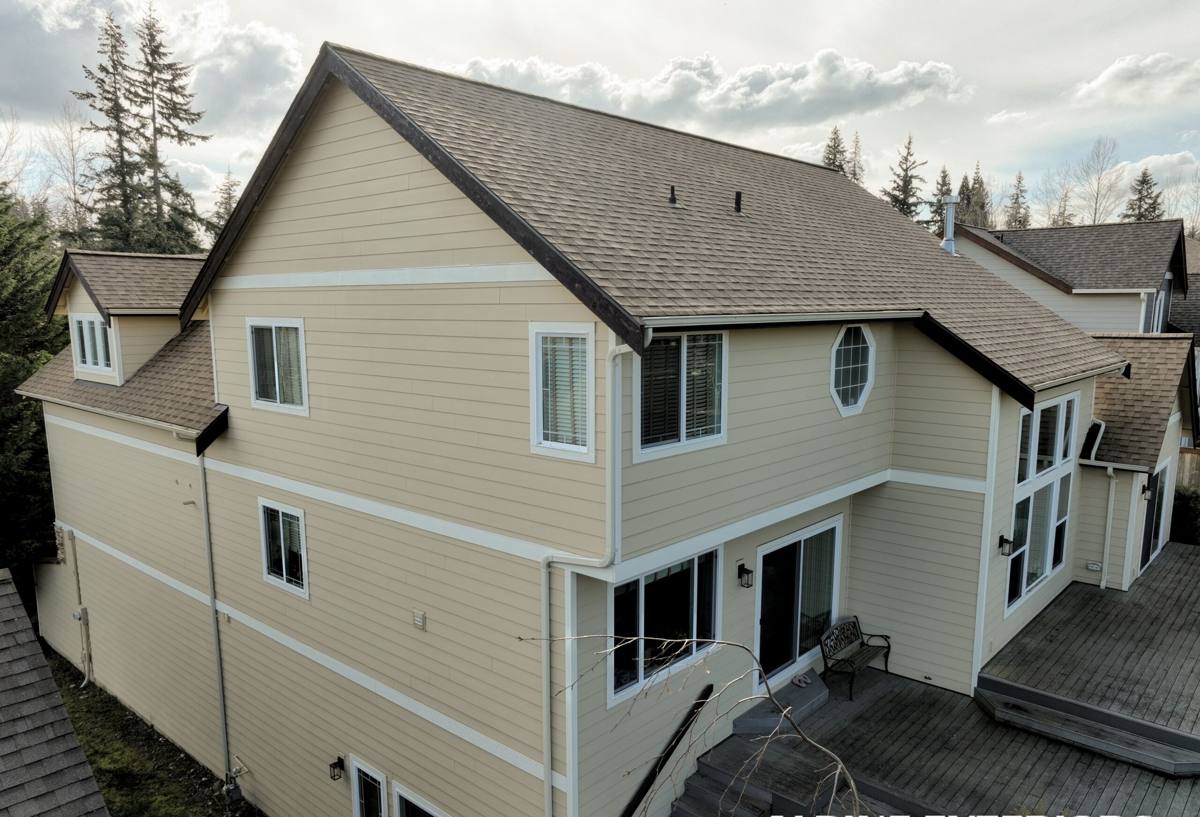
What a Correctly Built Deck Looks Like Here
A deck that's going to last in this climate isn't just about picking a nice-looking board. Most of what determines whether a deck lasts 10 years or 25 happens below the decking surface, in parts homeowners rarely think about until something fails.
Framing and Fasteners
We frame with lumber rated for ground contact and coastal exposure, and we fasten with stainless steel or heavy hot-dip galvanized hardware — not the lighter mill-galvanized fasteners that look fine on day one but start rusting within a couple of seasons near salt water. Joist hangers, structural screws, and post bases all matter here; a deck is only as strong as its weakest connection, and connections are exactly where corrosion attacks first.
Ledger Attachment and Footings
The ledger board — where the deck attaches to the house — is one of the most common failure points on any deck, and it's especially important to flash and seal correctly in a climate with this much wind-driven rain. Water that gets behind an improperly flashed ledger will rot the rim joist and the wall framing behind it long before the decking itself shows any sign of trouble. Footings need to be sized and set for local soil conditions, which near canals and open water can mean sandier, less stable ground than you'd find further inland — something we account for at the design stage, not after a footing has already settled unevenly.
Wind and Uplift
Florida's building code accounts for wind loads considerably higher than most of the country, and Pinellas County enforces those requirements at permitting and inspection. That means proper joist hanger connections, correctly spaced and anchored posts, and railing systems that won't rack or loosen under sustained wind. A deck built to code isn't a formality — it's the difference between a structure that rides out a tropical storm and one that doesn't.
Railings, Stairs, and Code Requirements
Railing and stair details are where a lot of older or DIY-built decks fall out of code without the owner ever realizing it. Guard rail height, baluster spacing (to prevent a small child from slipping through), and stair rise-and-run all have specific requirements, and they get checked at inspection. Beyond the code minimums, railing hardware on a waterfront deck deserves the same corrosion-resistant treatment as the framing underneath it — a loose or corroded railing bracket is one of the more dangerous failures because it's not always visible until someone leans on it.
Choosing the Right Decking Material
There's no single "best" decking material — it depends on budget, how close you are to the water, and how much maintenance you're willing to do. Here's how the common options actually perform in a St. Petersburg, canal-adjacent environment:
| Material | Upfront Cost | Salt/Moisture Resistance | Maintenance | Realistic Lifespan Here |
|---|---|---|---|---|
| Pressure-treated pine | Lowest | Fair — needs sealing | Annual cleaning and resealing | 10-15 years |
| Tropical hardwood | High | Very good naturally | Periodic oiling to maintain color | 20-25+ years |
| Capped composite | Mid-High | Excellent | Occasional washing | 20-30 years |
| PVC | High | Excellent | Occasional washing | 25-30+ years |
Pressure-treated pine is still a reasonable choice if you're on a budget and willing to reseal it every year or two — skip that maintenance in this climate and it will show fast. Tropical hardwoods look great and hold up well naturally but come at a premium and still need periodic oiling to keep their color from graying out. Composite and PVC boards cost more upfront but need the least attention, which matters if you're not looking to spend a weekend every spring sanding and sealing a deck a few hundred feet from saltwater.
What Actually Drives Cost
Beyond the decking material itself, the biggest cost factors are size, height off the ground (multi-level or elevated decks need more structural framing and railing), the complexity of the footprint, and whether stairs, built-in seating, or a pergola are part of the plan. We'll walk through these trade-offs with you during the site visit so there aren't surprises once the proposal is in hand.
Permits and Waterfront Considerations
Deck construction in St. Petersburg requires a permit, and homes in Coquina Key close to canals or seawalls sometimes have additional considerations — setback requirements from the water, flood zone construction standards, or restrictions tied to a seawall or dock. We pull the required permits, coordinate inspections, and build to the wind and structural loads the Florida Building Code requires for this area. Skipping the permit process might save a little time upfront, but it creates real problems later — from failed inspections at resale to insurance claims that get denied because the structure was never properly permitted in the first place.
Common Problems We See on Coquina Key Decks
When we're called out to inspect or repair an existing deck in this neighborhood, a handful of issues come up over and over:
- Rust staining and weakened fasteners on decks built with standard, non-coastal-rated hardware
- Cupped or split boards on wood decks that went too long between resealing
- Mold and mildew buildup in shaded, low-airflow areas underneath the deck
- Soft or spongy spots near the ledger board where flashing failed and water got behind the house wall
- Loose railing posts from corroded connectors that were never rated for salt exposure
Most of these are preventable with the right materials and detailing at the time of construction — they're rarely something that shows up overnight, which is part of why they get missed until the damage is already significant.
Our Process
- Site visit and consultation. We look at your yard, your home's structure, sun and wind exposure, and how close you are to water or a seawall, then talk through what you actually want to use the space for.
- Design and material selection. We help you weigh the material trade-offs above against your budget and maintenance appetite, and design a layout that fits your property.
- Permitting. We handle the permit application and the engineering documentation required for the structure and wind loads.
- Construction. Framing, ledger flashing, footings, decking, and railings — built with corrosion-resistant hardware throughout.
- Inspection and walkthrough. We schedule the required inspections and walk the finished deck with you before calling the job done.
Maintaining Your Deck in This Climate
Even the best-built deck needs some upkeep in this environment. A little attention a couple of times a year goes a long way toward avoiding expensive repairs down the road:
- Rinse salt residue off the deck surface and hardware every few weeks if you're near open water or a canal
- Check fastener heads and railing connections annually for corrosion or loosening
- Reseal wood decking on the schedule recommended for the specific wood species — don't wait until it looks dry and gray
- Keep gutters and downspouts clear so runoff isn't dumping extra water onto or under the deck
- Clear debris from between boards so moisture isn't trapped against the frame
- Inspect the ledger board area after major storms for signs of water intrusion
Why Local Experience Matters
A deck builder who hasn't worked this specific stretch of coastline doesn't always know which fastener grade actually holds up on a canal-front lot, or how a particular yard's drainage behaves after a heavy summer downpour. We've built and repaired decks throughout Coquina Key and the surrounding St. Petersburg area, so we're familiar with the permitting process through Pinellas County and the City of St. Petersburg, the setback and flood zone questions that come up on waterfront lots, and the framing and fastener choices that hold up against salt air and hurricane-season winds instead of failing early. That local familiarity is the difference between a deck that needs major work in five years and one that's still solid in twenty-five.
If you're thinking about a new deck or want a straight opinion on whether an existing one is still sound, we're happy to take a look. Reach out for a free, no-pressure estimate using the form below — we'll walk the property, answer your questions, and tell you plainly what your project actually needs.