 St. Petersburg Roofing
 Composite Decking Built for Roser Park's Conditions
Roser Park sits close to downtown St. Petersburg, with mature tree canopy, a mix of historic bungalow-style homes, and lots that often slope toward the ravine running through the neighborhood. That combination — shade, humidity trapped under a canopy, and older housing stock — makes deck material choice more consequential here than in a wide-open new-build subdivision. A deck in Roser Park deals with less direct sun in spots but more standing moisture, leaf litter, and organic debris than a deck out in the open. Add in Pinellas County's baseline climate load — hurricane-force wind gusts, intense year-round UV where the canopy does open up, wind-driven rain, and salt air carried in off Tampa Bay — and you've got a short list of real requirements, not marketing points.
Composite decking earns its place in this environment because it doesn't absorb water the way wood does, doesn't need annual sealing, and holds up to UV exposure without the surface checking and splintering that raw lumber develops after a few Florida summers. It's not maintenance-free — nothing outdoors here is — but it's a material that matches what this neighborhood actually throws at a deck.
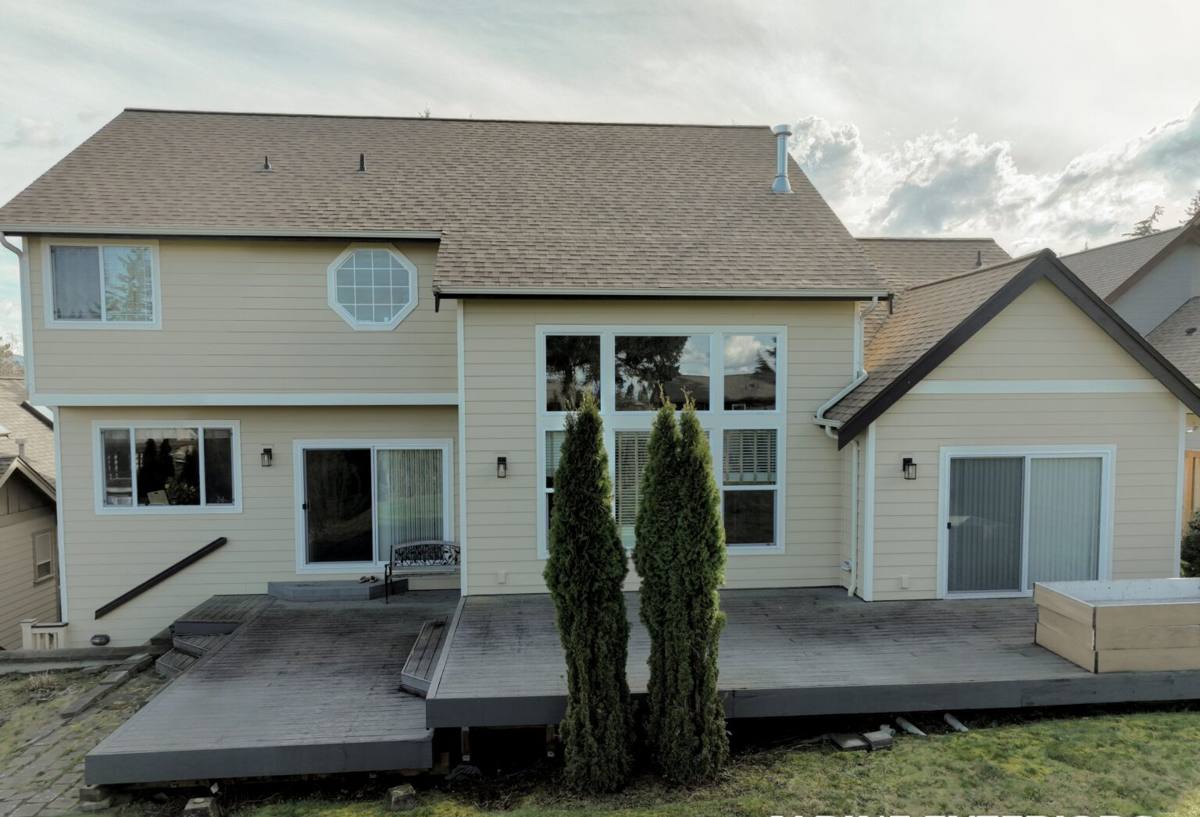
What Roser Park Homes Specifically Need From a Deck
Shade and Moisture Retention
Tree cover is a mixed blessing. It cuts down on peak UV exposure, which is good for surface longevity, but it also means decks here dry out slower after rain. Leaves and pollen collect between boards and in ground-level fastener heads, holding moisture against the structure longer than a deck in full sun would experience. That changes what "correct installation" looks like — spacing, ventilation, and drainage matter more when a deck sits under a canopy than when it sits in open sun.
Sloped and Older Lots
A lot of the housing stock near the ravine and on the neighborhood's rolling terrain was built decades before current code and decking products existed. Ledger attachment points, foundation conditions, and grade all need to be assessed on their own terms rather than assumed from a standard new-construction template. We don't treat an older Roser Park property the same way we'd treat a flat slab in a newer part of the county.
Storm and Wind Exposure
Even with tree cover, St. Petersburg homes are still built to withstand hurricane-force wind events, and a deck is a structural add-on to the house — its ledger connection, joist hangers, and post footings all need to hold up to the same wind loading the rest of the property is rated for. A deck that looks fine day-to-day but was framed light on fasteners or footings is a liability the first time a serious storm comes through.
Composite vs. Wood vs. PVC — Honest Trade-Offs
Every decking material has a real trade-off. Here's how the common options stack up for a shaded, coastal-adjacent Pinellas County lot like the ones in Roser Park.
| Material | Moisture Behavior | Maintenance | Typical Lifespan (Local Conditions) |
|---|---|---|---|
| Pressure-Treated Wood | Absorbs water, prone to cupping/splitting under shade + humidity | Annual sealing/staining required | 10-15 years with upkeep |
| Composite (capped) | Water-resistant shell, minimal absorption | Periodic washing, no sealing | 25-30+ years, manufacturer-backed |
| PVC | Fully water-resistant | Low; can show flex/expansion issues in heat | 25-30+ years |
We install capped composite as our standard recommendation for shaded, humid lots because it resists the moisture retention that untreated or even pressure-treated wood struggles with under a canopy, without the price premium of full PVC systems. Wood still has a place for homeowners who want that specific look and are committed to the maintenance schedule — that's a legitimate choice, just one with a different upkeep burden than composite.
What a Correct Composite Deck Installation Actually Involves
Composite boards are only as good as what's underneath them. A deck that fails early in this climate almost always failed at the framing or fastening stage, not because the decking material itself gave out.
- Ledger board flashed and sealed correctly against the house to stop water intrusion at the attachment point
- Joists spaced to the composite manufacturer's spec — composite typically needs tighter joist spacing than wood, especially on angled or picture-frame patterns
- Hidden fastener systems or manufacturer-approved screws rated for coastal/humid exposure, not generic hardware
- Proper airflow beneath the deck so trapped moisture and leaf debris don't sit against the substructure
- Stainless steel or coated hardware throughout — galvanized alone doesn't hold up long-term against salt air this close to the bay
- Board gapping set correctly for composite's expansion and contraction in Florida's heat swings
- Footings sized and set to the depth and bearing capacity the structure and local wind exposure actually require
Skipping any of these doesn't show up on day one. It shows up two or three years in, as soft spots, board movement, or fastener staining — and by then it's a repair job instead of a install-it-right job.
Our Process, Start to Finish
1. On-Site Assessment
We look at the actual lot — grade, existing structure if there is one, tree coverage, drainage path, and the house's ledger condition. This is where sloped Roser Park lots and older framing get flagged early instead of discovered mid-project.
2. Straightforward Proposal
You get a scope and price that spells out material, framing approach, hardware, and timeline — no vague allowances that turn into change orders later.
3. Permitting
Deck work in St. Petersburg and Pinellas County generally requires permitting and inspection. We handle that process rather than leaving it to the homeowner, and we don't cut corners to avoid it.
4. Build
Demo of any existing structure (if applicable), framing, ledger flashing, joist layout, decking installation, and hardware — built to the spec discussed up front, not a downgraded version of it.
5. Final Walkthrough
We walk the finished deck with you, check board gapping, fastener finish, railing security if railings are part of the scope, and confirm everything matches what was proposed.
What Drives Cost
| Factor | Why It Matters |
|---|---|
| Square footage and shape | Picture-frame borders, angles, and multi-level decks take more labor and material than a simple rectangle |
| Height and railing requirements | Elevated decks on sloped lots need more substantial framing, footings, and code-required railing |
| Substructure condition | Older homes may need ledger repair or additional structural work before decking can go on |
| Composite tier | Entry-level capped composite vs. premium multi-tone lines carry a real price spread |
| Site access | Tight, tree-lined lots can slow material staging and demo compared to open-access properties |
We won't quote a number without seeing the site — anyone who does is guessing, and guesses turn into disputes later.
Maintenance Reality in Coastal, Shaded Conditions
Composite cuts maintenance dramatically compared to wood, but "low maintenance" isn't "no maintenance," especially under tree cover near the bay. Expect to rinse off leaf debris, pollen, and organic buildup periodically so it doesn't stain the board surface or clog drainage gaps. Salt air can leave a light film on hardware and railings over time, so an occasional wash-down keeps metal components looking and performing as intended. None of this compares to annual sanding, staining, and sealing that wood decks demand — it's a different, much lighter category of upkeep.
What to Check Before Hiring a Deck Contractor Here
- Do they pull permits and schedule inspections, or suggest skipping that step?
- Do they specify joist spacing and fastener type for composite, or treat it like generic lumber framing?
- Do they use stainless or coated hardware appropriate for salt-air exposure, or standard galvanized?
- Can they explain how they'll handle your specific lot's slope, shade, or drainage?
- Do they carry current liability insurance and workers' comp coverage?
- Will they put the scope, material tier, and hardware in writing before work starts?
Why Local Experience in This Neighborhood Matters
A contractor who's worked on Roser Park's older homes and sloped, tree-covered lots already knows what to look for at the ledger, how the grade typically runs, and what drainage problems tend to show up under canopy cover. That's the difference between a deck that's designed for the property it's actually built on and one that's built from a generic template and hopes for the best. St. Petersburg's climate doesn't forgive shortcuts — humidity, salt air, and storm season find every weak point eventually.
If you're considering a composite deck for a Roser Park property, we're glad to walk the site with you and put together a straightforward, no-pressure estimate — fill out the form below to get started.