 St. Petersburg Roofing
 St. Pete Beach's Barrier-Island Climate and What It Does to Siding
St. Pete Beach sits on a narrow strip of land with the Gulf on one side and the Intracoastal on the other, which means every exterior surface on these homes takes a harder hit than siding installed further inland in Pinellas County. Salt-laden air corrodes fasteners and metal trim faster here. Wind-driven rain gets forced sideways into seams and laps that would stay dry on a calmer street. Intense, near-constant UV breaks down cheaper coatings and plastics over time. And when a tropical system or hurricane comes through, this is one of the first places in the county to feel sustained high winds and flying debris. Siding on a St. Pete Beach home isn't decorative — it's the first line of defense for the wall assembly behind it, and it needs to be treated that way from the first fastener to the last bead of caulk.
This page is about one job in one place: installing James Hardie fiber cement siding correctly on a St. Pete Beach home. We're not going to give you a generic rundown of siding options — we only install James Hardie, and we'll explain what that means for a home this close to the water.
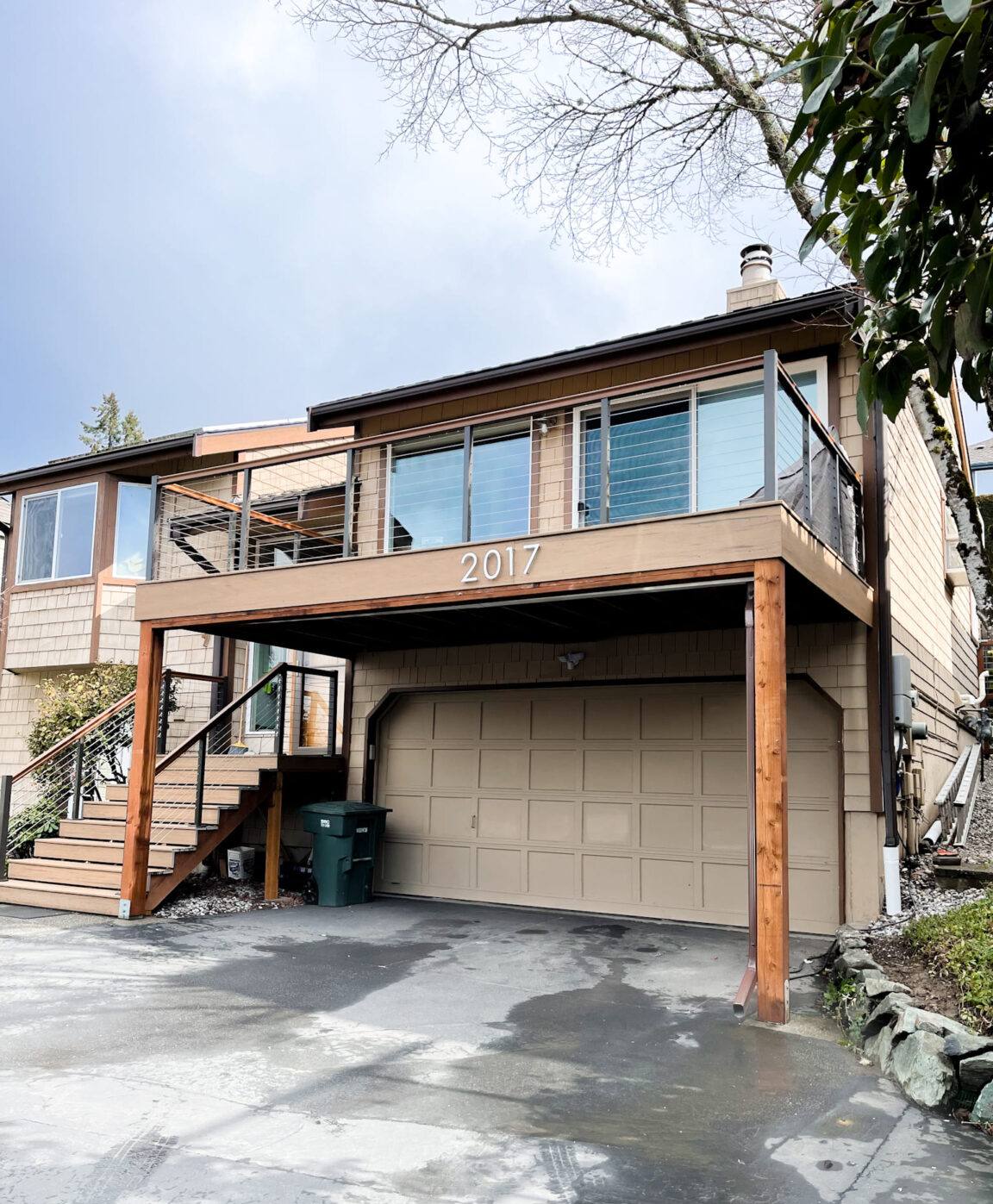
Why We Only Install James Hardie Fiber Cement Here
We made a deliberate decision to install one siding system and stand behind it, rather than offer a menu of products with very different long-term outcomes. On a barrier island like St. Pete Beach, that decision matters more than it would somewhere with a milder climate. Vinyl siding softens and can distort in sustained high heat and direct sun, and its seams and clips are more vulnerable in high wind. Wood-based products like primed spruce or cedar need a maintenance commitment — repainting, sealing, watching for moisture intrusion — that most homeowners underestimate until the coating starts to fail in salt air. James Hardie fiber cement is non-combustible, doesn't rot, resists cracking and swelling from moisture, and holds up to UV without the coating breaking down the way it does on lower-cost products.
The HZ5 Product Line Built for Florida's Coast
James Hardie engineers its products by climate zone, and homes in our part of Florida fall into the HZ5 category — the line formulated for high humidity, heavy rain, and coastal exposure. HZ5 products are treated to resist moisture-related damage that shows up in warm, wet climates, which is exactly the environment St. Pete Beach sits in year-round. This isn't a marketing distinction; it's a different manufacturing formulation than what gets shipped to a dry, cold-winter climate, and it's the version we install on every job in this area.
ColorPlus Factory Finish vs. Field-Applied Paint
James Hardie's ColorPlus finish is baked on at the factory under controlled conditions, which gives it better fade resistance and adhesion than paint applied on site after installation. In direct, intense Gulf Coast sun, that difference shows up faster than it would in a milder climate — a field-painted finish is more likely to chalk, fade unevenly, or need a repaint years before a ColorPlus finish will. We install ColorPlus siding on the large majority of jobs here for exactly that reason, and we'll walk you through the color and texture options during your estimate.
What a Correct James Hardie Installation Involves Here
Fiber cement siding is only as good as the installation behind it. James Hardie's product warranty itself is tied to following their installation instructions, and on a coastal home the margin for error is smaller. Here's what we treat as non-negotiable on every St. Pete Beach project.
Moisture Management and Flashing Details
Everything starts with the water-resistive barrier and flashing underneath the siding, not the siding itself. Correct laps, properly flashed window and door openings, and a drainage plane that lets any moisture that does get behind the siding find its way back out are what actually keep a wall assembly dry. On a home that regularly takes wind-driven rain, skipping or rushing this step is where problems start years later — usually invisible until there's rot or damage to the sheathing behind the siding.
Fastening, Clearances, and Substrate Prep
James Hardie specifies fastener type, spacing, and penetration depth for a reason — under-driven or over-driven nails, or the wrong fastener in a high-wind zone, compromise how the siding performs when it matters most. We also hold the manufacturer's required clearances from roof lines, decks, and grade, and off any hard surfaces, so water has somewhere to go instead of wicking up into the bottom edge of the boards. Corroded or undersized fasteners are a common failure point on older coastal installations, and it's an easy thing to get wrong if a crew isn't used to building for salt air.
Trim, Soffit, and Transitions
The places where siding meets trim, corner boards, soffits, and roofline are where most real-world leaks originate — not the flat field of siding itself. We detail these transitions with the same care as the main wall areas, using compatible trim and sealants rated for exterior, coastal exposure, and we don't rely on caulk alone to do a flashing detail's job.
Our Process, Start to Finish
Every project follows the same basic sequence, though the specifics depend on your home's construction and current siding condition.
- Free on-site estimate: we look at the existing siding, sheathing condition where visible, trim, and any problem areas, and give you a written scope.
- Removal of existing siding and inspection of the sheathing and water-resistive barrier underneath, with repairs addressed before anything new goes on.
- Installation of a compliant weather-resistive barrier and flashing at every penetration, window, door, and transition.
- Installation of James Hardie HZ5 siding per manufacturer fastening and clearance specifications.
- Trim, corner, and soffit work, sealant at transitions, and a final walk-through with you before we consider the job done.
What Drives the Cost of a St. Pete Beach Siding Project
Every home is different, but the same handful of factors move the price up or down on almost every job we quote in this area.
| Factor | Why It Matters |
|---|---|
| Home size and number of stories | More square footage and taller walls mean more material, labor, and staging or lift equipment. |
| Condition of existing sheathing | Rot or moisture damage found once old siding comes off adds repair scope before new siding can go on. |
| Siding profile and plank width | Lap width, shingle-style panels, and board-and-batten each install at different rates and material costs. |
| ColorPlus vs. primed-for-paint | Factory-finished ColorPlus costs more upfront but avoids a full-house paint job later. |
| Trim, soffit, and fascia scope | Replacing or repairing trim alongside the siding adds cost but keeps the whole exterior consistent. |
| Access and site conditions | Narrow lots, tall dune-side elevations, or landscaping close to the house can add labor time. |
We'll walk through each of these with you during the estimate so you know exactly what's driving your number, not just a total.
Why a Crew That Already Works St. Pete Beach Matters
Permitting and Wind-Load Requirements
Pinellas County and the City of St. Pete Beach enforce Florida's high-velocity coastal construction standards, and exterior work on homes this close to the Gulf typically requires permitting and inspection. A crew that pulls permits here regularly knows the local process, the inspection expectations, and how the wind-load requirements apply to siding attachment — that's not something you want a crew figuring out for the first time on your house.
HOA and Community Standards
Several communities along St. Pete Beach have architectural review or color approval requirements. Knowing that going in — and having color samples and documentation ready — keeps your project from stalling partway through waiting on paperwork nobody anticipated.
Questions to Ask Before You Hire Anyone for This Job
- Are you a James Hardie-certified or preferred installer, and can you explain why that matters for the warranty?
- Will you inspect and document the sheathing condition before installing new siding, not just cover it up?
- What fastener type and flashing details will you use, specifically for a coastal wind-exposure home?
- Do you pull the required local permits yourself, or is that left to the homeowner?
- Can you provide a written scope that specifies HZ5 product and ColorPlus vs. primed finish?
- How do you handle transitions at trim, soffit, and roofline — the areas most likely to leak?
If a contractor can't answer these clearly, that's worth knowing before they're on your roofline and walls.
Maintaining Hardie Siding on a Barrier Island Home
James Hardie siding is low-maintenance compared to wood or vinyl, but "low-maintenance" doesn't mean "no maintenance" in a salt-air environment. A rinse of the exterior a couple of times a year clears off salt residue and airborne grit before it accumulates. Checking caulking at trim and window transitions annually — and having it renewed when it starts to crack or pull away — protects the flashing details underneath from ever being tested. Beyond that, correctly installed HZ5 James Hardie siding with a ColorPlus finish is built to go a long time without needing attention, which is the whole point of choosing it for a coastal home in the first place.
If you're weighing a siding project on a St. Pete Beach home, we're happy to take a look, walk you through what we'd actually do differently for this location, and put together a clear, no-pressure estimate — no obligation to move forward.