 St. Petersburg Roofing
 Roser Park Decks Face a Different Set of Problems
Roser Park is one of St. Petersburg's older neighborhoods, and a lot of the homes here still carry framing, additions, and outdoor structures that were built or rebuilt decades ago under very different standards than what Florida requires today. When we get called out for deck repair in this part of the city, we're rarely looking at a brand-new structure with one isolated problem. We're usually looking at a deck that's absorbed years of Pinellas County weather with hardware, flashing, and connections that were never rated for it.
The climate here does real, measurable damage to exterior wood and its hardware. Hurricane-force wind gusts load every fastener and connection point on a deck, and if a ledger board or post base was under-fastened to begin with, that's where failure shows up first. Year-round UV exposure breaks down wood fibers, dries out finishes, and accelerates checking and splitting faster than it would in a milder climate. Wind-driven rain during summer thunderstorms and tropical systems pushes water sideways into end grain, fastener holes, and ledger connections — the exact spots that are hardest to inspect and easiest to ignore. And salt air drifting in off Tampa Bay corrodes standard fasteners and hardware over time, even on inland lots that aren't anywhere near the water.
Roser Park adds one more variable most other neighborhoods don't have to the same degree: a heavy, mature tree canopy. That shade keeps deck surfaces damp longer after every rain, which is good for fungal growth and rot and bad for lumber life. Leaf litter, seed pods, and debris also collect in board gaps and along ledger flashing, holding moisture against the structure exactly where you don't want it sitting.
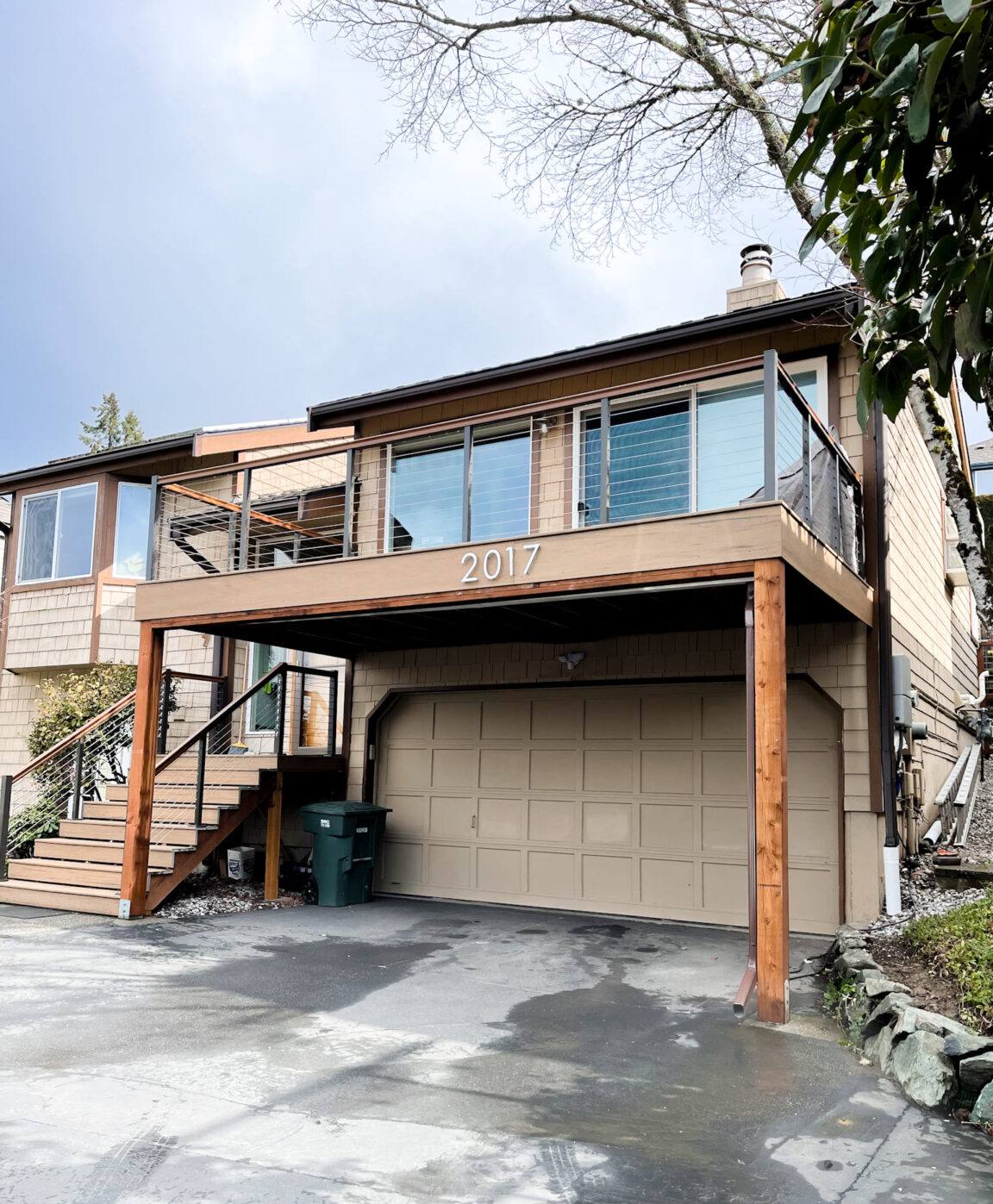
Signs Your Deck Needs Attention
Most deck failures don't happen without warning. The warning signs are just easy to write off as normal wear until they aren't. Walk your deck and check for these before assuming a quick board swap will fix it:
- Boards that feel soft, spongy, or springy underfoot, especially near the house or stair landing
- Rust streaks around fasteners, or fastener heads that have popped up or corroded away
- A visible gap, dark staining, or separation where the deck meets the house at the ledger board
- Railings or posts that wobble or flex when you lean on them
- Stairs that feel bouncy or shift side to side under weight
- Discoloration, black or green staining, or a musty smell in shaded areas of the deck
- Gaps between deck boards that have widened noticeably since the deck was built
- Any visible sag in the deck surface or framing below
Any one of these on its own might just mean a localized repair. Several at once, or anything involving the ledger board or main support posts, is a structural question that needs a proper inspection before anyone touches a saw.
What a Correct Repair Actually Involves
The Ledger Board Connection
The ledger board — where the deck attaches to the house — is the single most common point of catastrophic deck failure, and it's also the connection most likely to be hiding a problem behind a coat of paint or stain. A correct repair means pulling back decking or siding as needed to actually see the connection: proper flashing to keep water from tracking behind the ledger, lag screws or through-bolts rated for the load (not just deck screws or nails), and confirmation that the house framing behind the ledger is sound enough to carry the load in the first place.
Fasteners and Hardware
In a coastal Florida climate, the fasteners matter as much as the lumber. Standard electro-galvanized screws and joist hangers corrode faster here than they will inland or up north, and once a fastener starts rusting, it loses holding strength long before it looks obviously bad. We use hot-dip galvanized or stainless-steel hardware rated for coastal exposure on structural connections — joist hangers, post bases, and ledger fasteners — because replacing a corroded fastener is a lot cheaper than replacing a deck.
Framing, Posts, and Footings
Rot at the base of a support post or around a footing rarely stays contained. We check posts where they meet grade or concrete, joists for soft spots or splitting, and footings for movement or cracking. A repair that swaps out visible boards but leaves compromised framing underneath isn't a repair — it's a delay.
Guardrails and Stairs
Railings and stairs take direct abuse from hands, weather, and use, and they're also where local code is strictest for good reason. Any rail or stair work gets brought up to current baluster spacing and height requirements, not just patched to match whatever was there before.
Wood or Composite: What We Consider When Repairing or Replacing Decking
| Factor | Wood Decking | Composite / PVC Decking |
|---|---|---|
| UV resistance | Fades and dries out; needs regular sealing or staining | Color-stable capstock resists fading, no staining needed |
| Moisture behavior | Absorbs and releases moisture with weather; can cup or split if not sealed | Doesn't absorb water the way wood does; less prone to splitting |
| Maintenance | Periodic sealing, staining, and fastener checks | Occasional washing; no sealing or staining required |
| Repair approach | Individual boards can be sourced and matched fairly easily | Matching older discontinued composite colors can be harder |
| Upfront cost | Generally lower material cost | Generally higher material cost, often offset by lower upkeep |
| Best fit | Homeowners who don't mind a maintenance routine and want a traditional look | Homeowners who want to minimize upkeep in a shaded, humid setting |
We don't push one material over the other as a default. In a heavily shaded lot like a lot of Roser Park properties have, composite decking's resistance to moisture cycling is a real advantage, but a well-maintained wood deck with the right fasteners and enough sealing discipline will also hold up fine. The honest answer depends on how much upkeep you want to sign up for.
Permits, Codes, and Inspections
Deck work in St. Petersburg is governed by the Florida Building Code and reviewed through the City of St. Petersburg's permitting process, and Pinellas County's coastal wind requirements are part of what any structural work has to meet. Whether a specific repair needs a permit depends on its scope: swapping a handful of deck boards is typically treated differently than replacing a ledger board, footings, or a significant portion of the framing. As a general rule, if the repair touches the structure that carries the load — framing, ledger, posts, footings — assume a permit and inspection are part of the job, not an optional extra.
Railing height and baluster spacing requirements also apply any time a rail is repaired or replaced, even if the rest of the deck is untouched. Skipping that step to save time is exactly how a deck ends up out of code without the homeowner realizing it until a home sale inspection flags it.
How We Approach a Deck Repair in Roser Park
- Assessment. We inspect the full structure — ledger, framing, posts, footings, decking, and rails — not just the spot you called about, because the visible problem is often a symptom of something underneath it.
- Honest recommendation. We'll tell you plainly if a targeted repair is the right call or if enough of the structure is compromised that repair costs are starting to approach replacement. We're not incentivized to talk you into more work than the deck needs.
- Written scope and estimate. You get a clear breakdown of what's being repaired, what materials and hardware are being used, and what it costs before any work starts.
- Permitting, where required. If the scope calls for a permit, we handle that process rather than leaving it to you to navigate the city's requirements.
- The work itself. On Roser Park's brick streets and tighter historic lots, that also means staging materials and equipment sensibly and being mindful of mature trees and root zones on the property — not just doing the repair, but doing it without leaving a mess behind on a narrow street.
- Final walkthrough. We walk the finished repair with you, point out what was done, and answer questions before we call it complete.
Keeping a Repaired Deck in Good Shape
A correct repair buys you years, but Florida weather doesn't stop working on your deck once we leave. A little seasonal attention keeps small issues from becoming the next repair call:
- Sweep leaf litter and debris out of board gaps regularly, especially under heavy tree canopy
- Check fasteners and hardware once or twice a year for early rust or loosening
- Reseal or restain wood decking on the schedule the product calls for — don't wait for visible graying
- Look at the ledger connection after major storms for any new gaps or staining
- Keep gutters and downspouts near the deck clear so runoff isn't draining directly onto or under it
Why It Matters to Hire a Crew That Already Works This Neighborhood
Roser Park isn't a cookie-cutter subdivision, and deck work here isn't either. Narrow brick streets change how materials and equipment get staged. Older homes often have framing behind the ledger that doesn't match modern lumber dimensions, which changes how that connection needs to be handled. Mature trees mean root zones to work around and shade patterns that affect how a deck dries after rain, which we factor into material recommendations. A crew that's already done this work in the neighborhood isn't guessing at any of that — we've seen how these specific homes were built and what tends to go wrong with them, which means fewer surprises once we open things up and a repair that's sized correctly from the estimate stage.
If you've got a deck in Roser Park that's showing any of the signs above, or you just want an honest read on where it stands, we're happy to take a look. The estimate is free, there's no pressure to act on it right away, and you'll get a straight answer about what the deck actually needs — just fill out the form below to get started.