 St. Petersburg Roofing
 Board & Batten Siding in Roser Park: Built for the Look, Engineered for the Climate
Roser Park is one of St. Petersburg's oldest residential neighborhoods, and it looks the part — bungalow and Craftsman-style homes on tree-shaded, gently sloped lots, many of them close to a century old. Board and batten siding shows up often in this kind of architecture because the vertical lines and crisp shadow reveal suit the porches, gables, and simple massing of early-1900s homes. It's a siding profile that reads as historic and intentional rather than generic.
The problem is that Roser Park's climate hasn't gotten any easier on exterior materials since those homes were built. St. Petersburg sits on a peninsula exposed to hurricane-force wind events, punishing year-round UV, wind-driven rain that gets pushed sideways into wall assemblies, and salt-laden air moving in off Tampa Bay and the Gulf. Whatever goes on these homes has to hold its shape, its color, and its seal against moisture for decades — not just look right on installation day.
This page is specifically about board and batten siding, on homes in Roser Park, done in James Hardie fiber cement. We're not going to cover lap siding, shingle siding, or other neighborhoods here — just what this one job actually requires when it's done right in this one place.
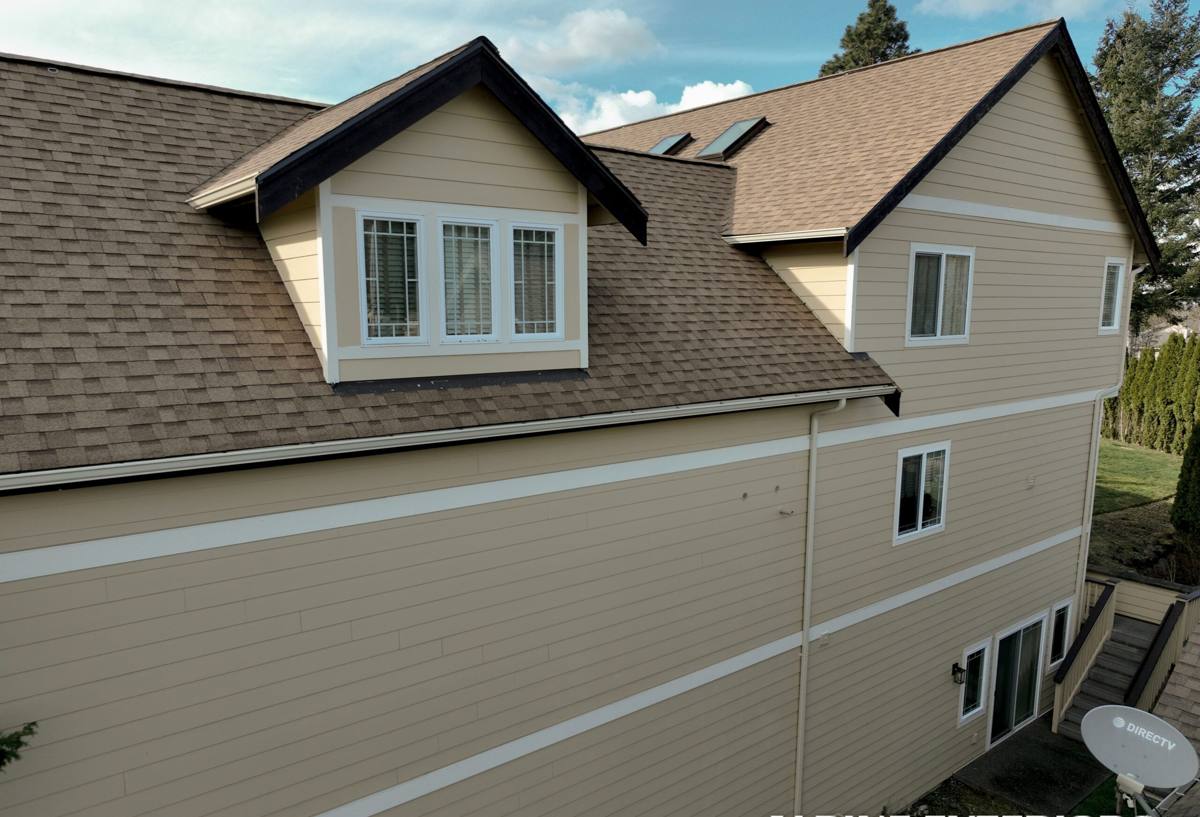
Why Board & Batten Fits Roser Park's Architecture
Board and batten is a vertical siding pattern: wide boards (or panels) installed with narrow battens covering the seams between them. It has deep roots in American farmhouse and craftsman construction, which is part of why it pairs so naturally with Roser Park's older housing stock. Homeowners here typically choose it for one of a few reasons:
- Matching or restoring a historic exterior look on a bungalow, cottage, or farmhouse-style home
- Accenting gables, dormers, or a front-facing feature wall while the rest of the home keeps horizontal lap siding
- A full-elevation or whole-house look for a more distinct, less "cookie-cutter" exterior on a street where character matters
Because Roser Park is a historic district, homeowners are often also weighing how a siding change reads next to neighboring homes and, in some cases, how it interacts with any applicable historic-character guidelines for the area. That's a conversation worth having with your contractor and the city before material selection, not after installation.
Vertical Panels vs. True Board and Batten
There are two ways to achieve the look, and it matters which one goes on your house:
- True board and batten: individual wide boards installed side by side, then battens fastened over each seam. More labor, more fasteners, more seams to detail correctly — but the most authentic depth and shadow line.
- Vertical panel systems with applied battens: a single engineered panel (like James Hardie's vertical siding panels) installed with battens over the panel joints. Fewer seams than true board and batten, faster installation, and — because it's factory-engineered fiber cement — more dimensionally stable in Florida's humidity swings.
Both approaches can look correct from the street. The difference shows up ten and twenty years down the road in how the seams hold up against wind-driven rain and how consistently the surface has aged.
What Roser Park's Climate Actually Does to Siding
It helps to be specific about the forces at work, because they're not the same as what siding faces in most of the country:
Wind and Wind-Driven Rain
Pinellas County sees tropical storm and hurricane conditions on a recurring basis, and board and batten's vertical seams — batten over board, or panel joint under batten — are exactly where wind-driven rain looks for a way in. A batten that isn't fastened and flashed correctly doesn't fail on day one; it fails during the first real wind event that drives rain sideways under it, and by the time you see a stain on an interior wall, water has usually been getting behind the siding for a while.
UV Exposure
Central Florida gets intense sun essentially year-round. Paint film breaks down under sustained UV faster here than in most of the country, which is why field-painted board and batten — wood, primed spruce, or site-finished panels — tends to need repainting on a shorter cycle in St. Petersburg than the can label suggests.
Salt Air
Roser Park isn't beachfront, but it's close enough to Tampa Bay that salt-laden air is a real factor over the life of a siding system. Salt accelerates fastener corrosion and finish degradation, especially on materials that weren't engineered with coastal exposure in mind.
Humidity and Moisture Cycling
Florida's humidity swings put constant expansion-and-contraction stress on siding materials and their seams. Materials that swell, warp, or absorb moisture do it worse here than almost anywhere else in the country.
Why We Install James Hardie Fiber Cement — Not Wood, Vinyl, or LP SmartSide
St. Petersburg Roofing Co installs James Hardie fiber cement siding exclusively. We get asked why fairly often, especially on a project like board and batten where wood is the traditional material and vinyl or engineered wood are often the cheaper quote. Here's the honest breakdown:
| Material | How it holds up here | Why it's a trade-off for Roser Park |
|---|---|---|
| Primed spruce / cedar board and batten | Traditional, authentic look | Absorbs moisture, needs frequent repainting under intense UV, vulnerable to rot and insects in Gulf Coast humidity |
| Vinyl board and batten panels | Low upfront cost | Can distort or fade under sustained heat and UV; rated wind resistance is generally lower than fiber cement; look reads less authentic on a historic home |
| LP SmartSide (engineered wood) | Better than raw wood, lower cost than fiber cement | Wood-fiber core is still moisture-sensitive at cut edges and seams; long-term performance depends heavily on installer sealing every edge correctly |
| James Hardie fiber cement | Non-combustible, engineered for high-humidity climates (HZ10 product line), factory-applied ColorPlus finish | Higher material cost; correct installation still requires proper fastening, flashing, and clearances |
None of these alternative products are "bad" — they all have a legitimate place in the market and each one gets the job done in the right climate and application. Our position is narrower than that: for a coastal Florida climate that combines hurricane wind loads, sustained UV, and salt air, we've standardized on one material system rather than quoting whatever's cheapest, because we don't want to be back at a Roser Park home in five years explaining why the battens are cupping or the paint is chalking.
James Hardie's HZ10 product line is specifically engineered for climates like ours — high humidity, heavy moisture exposure — and the ColorPlus finish is a factory-baked finish rather than a field-applied paint job, which matters enormously given how hard UV works against site-applied paint in this area. It's also non-combustible, backed by a strong transferable warranty, and has a long track record in coastal Gulf climates.
What a Correct Board and Batten Installation Actually Involves
The material is only half the equation. Board and batten fails more often from installation shortcuts than from product defects, because the vertical seam pattern leaves less room for error than lap siding does. A correct installation on a Roser Park home includes:
- A code-compliant water-resistive barrier installed and lapped correctly behind the entire assembly
- Proper flashing at every window, door, and roofline transition — the points where board and batten most commonly leaks if rushed
- Correct fastener type, spacing, and penetration depth to meet the wind-load requirements for our county, not just "close enough"
- Battens fastened into structural framing wherever possible, not just into the board or panel beneath them
- Proper clearance at the base of the wall and any grade or roof-to-wall transitions, so water has somewhere to go instead of wicking into the bottom of the boards
- Caulking and sealant used only where Hardie's installation instructions call for it — over-caulking seams that are designed to manage water, not seal it out, traps moisture instead of shedding it
Our Process for a Roser Park Board and Batten Project
1. On-Site Assessment
We look at the existing wall assembly, any moisture or rot already present, the home's age and construction type, and — for a historic-district home — how the proposed siding will read against the existing architecture and any neighboring homes.
2. Material and Layout Plan
We help you decide between true board and batten and a vertical panel system, board width and reveal spacing, and color, all matched to the home's style rather than a generic default.
3. Tear-Off and Substrate Check
Old siding comes off, and we check the sheathing underneath for water damage before anything new goes up — a step that's easy to skip and expensive to regret, especially on an older home where prior repairs aren't always visible from the outside.
4. Weather Barrier and Flashing
This is the step that actually determines whether the siding keeps water out for the next 30 years, done before a single board goes up.
5. Installation to Manufacturer Spec
Fastening, spacing, and clearances follow James Hardie's published installation requirements for our wind zone — not shortcuts, because that's what keeps the warranty valid and the wall dry.
6. Final Walkthrough
We review the finished job with you, including care and maintenance expectations, before we consider the project done.
Why Hire a Crew That Already Works in Roser Park
Board and batten on a historic bungalow isn't the same job as board and batten on a new-construction accent wall. Older Roser Park homes often have original wood sheathing, settled framing, and prior repairs layered under the existing siding — a crew has to know how to work around that rather than treating every wall like a clean slate. A contractor who's already done this work in the neighborhood also has a realistic sense of how the historic character of the area factors into material and design choices, and isn't guessing at wind and moisture detailing that a coastal Pinellas County home actually needs.
What to Check Before You Hire
- Are they installing true James Hardie product, with proof of Hardie-specific training or certification?
- Do they carry current Florida contractor licensing and insurance, and will they provide proof without being asked twice?
- Can they explain their flashing and fastening approach for board and batten specifically, not just siding in general?
- Do they have experience with older homes and historic-district properties, not just new construction?
- Is the estimate detailed about tear-off, substrate repair, and moisture barrier work — or does it just say "siding installation"?
If you're weighing board and batten for a home in Roser Park, we're happy to take a look and give you a straightforward, no-pressure estimate — what it would take on your specific house, what it would cost, and whether it's the right call for your walls before we ever ask you to commit to anything.