 St. Petersburg Roofing
 What Pinellas Park Siding Is Up Against Every Year
Pinellas Park sits well inside Pinellas County, and even though it's not directly on the water, the same weather that hammers the coastline reaches inland here on the sea breeze and every summer storm system. Homes in this pocket of St. Petersburg deal with a longer, harder combination of stressors than most of the country: hurricane-force winds during storm season, intense UV exposure nearly year-round, wind-driven rain that gets pushed sideways into seams and corners instead of falling straight down, and salt air that travels farther inland than most homeowners assume.
Each of those does something specific to siding. UV breaks down caulk and sealants faster than in cooler climates, and it fades finishes unevenly depending on which elevation gets the harshest afternoon sun. Wind pressure works fasteners loose over time and can pop or bow panels that were installed with a tight fastening schedule to begin with. Wind-driven rain doesn't need a hole to get behind siding — it just needs a gap, a failed seam, or a cracked caulk line, and once it's behind the panel it stays wet longer in Florida's humidity than it would up north. Salt air adds a slow corrosive load on fasteners, trim screws, and any exposed metal flashing, which is often the real reason a repair that looks cosmetic turns out to have a structural cause underneath.
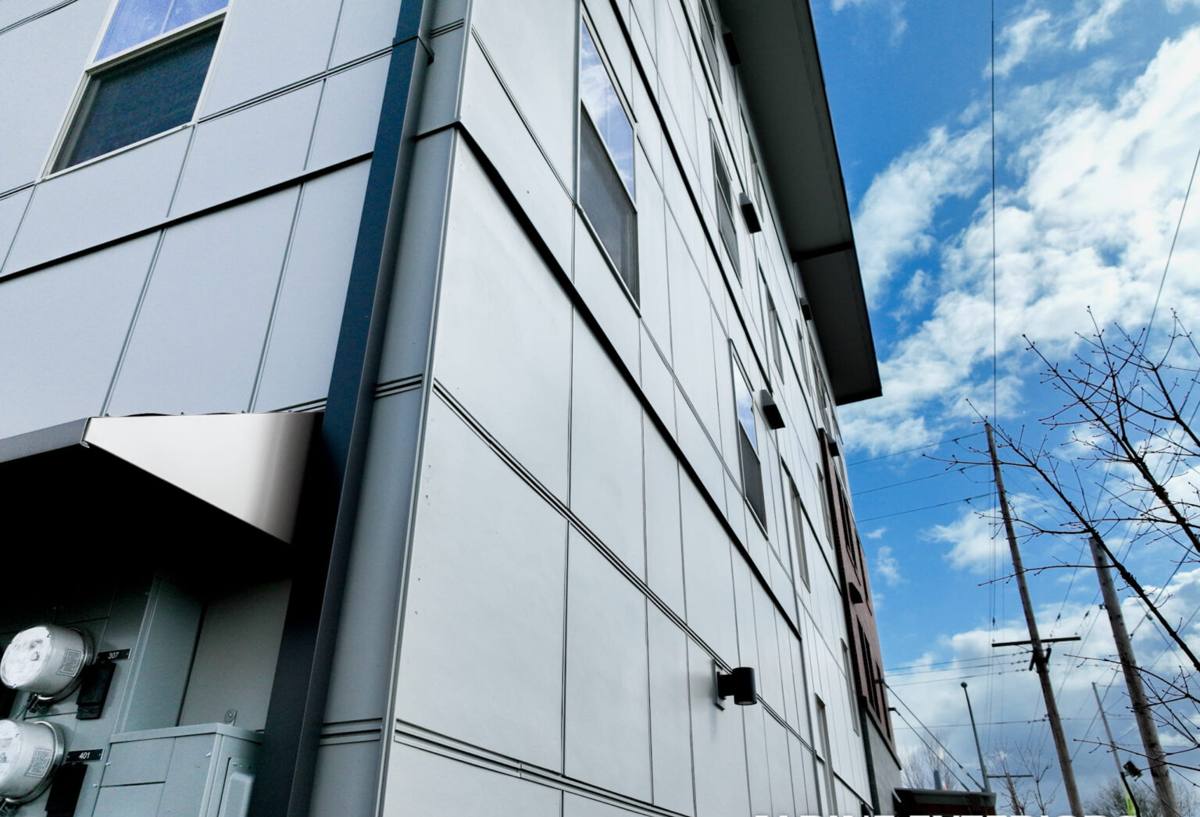
Signs Your Siding Needs Repair, Not a Full Tear-Off
Most of what we get called out for in Pinellas Park is exactly this: localized damage on an otherwise sound wall. Catching it early is what keeps it a repair instead of a much bigger job later.
- Cracked or split panels, especially near corners, window edges, or anywhere a ladder or debris may have hit during a storm
- Soft or spongy spots when you press on the siding — usually a sign of water trapped behind the panel
- Panels that have visibly bowed, shifted, or pulled away from the wall line
- Caulk at seams, trim, and penetrations that has shrunk, cracked, or fallen out entirely
- Staining or streaking just below a seam or fastener, which points to water tracking behind the siding
- Peeling, bubbling, or chalking finish concentrated on one elevation — usually whichever side takes the worst sun and wind-driven rain
- Soft or visibly rotted trim boards at corners, window casings, or the bottom course near grade
- A cluster of damaged or missing panels after a storm, with the rest of the field still intact
If what you're seeing matches this list, the wall assembly underneath is very likely still sound — you're dealing with a defined problem, not a systemic one. Left alone, though, any of these can let moisture reach the sheathing and framing, and that's when a simple repair turns into something bigger.
What a Correct Siding Repair Actually Involves
Diagnosing the cause before touching anything
A patch nailed over a soft spot without knowing why it went soft doesn't fix anything — it just hides the problem for a while. A correct repair starts with pulling the damaged section and looking at what's behind it: the weather-resistive barrier, the flashing at any nearby window, door, or roof-wall intersection, and the fastening pattern that was used originally. In storm-exposed homes, we regularly find fasteners that were over-driven, under-driven, or missed the stud entirely, which is often the actual reason a section failed under wind pressure. We also check whether the sheathing itself has taken on moisture damage before we ever decide whether a fix is purely cosmetic or needs to go deeper.
Matching material, profile, and finish
For fiber cement siding, an honest repair means matching the plank exposure, thickness, and profile of what's already on the wall — not just the color. James Hardie's ColorPlus factory finish is engineered to resist fading better than field-applied paint, but finishes on any home still shift slightly over years of Florida sun. On a visible wall, that can mean planning the patch at a natural break point — a corner, a trim board, a window line — rather than mid-wall, so the transition doesn't stand out. We'll always tell you upfront if a perfect blend isn't realistic and what the honest alternative looks like.
Flashing and fastening built for this wind zone
Pinellas County sits in a high-wind, wind-borne-debris region, and repairs need to be fastened and flashed to match — not just re-hung the way the original installer happened to do it. That means correct drip caps and flashing over openings, a fastening schedule that meets current wind-load requirements, and corrosion-resistant fasteners. Standard fasteners rust and streak fast this close to salt air; stainless or hot-dip galvanized fasteners cost a little more up front and save you from redoing the same repair in a few years.
Repair or Replace? How We Make the Call
Not every damaged section needs a full re-side, and not every "small" repair is actually small once you're behind the panel. Here's the general logic we walk homeowners through:
| Factor | Repair usually makes sense | Replacement usually makes sense |
|---|---|---|
| Extent of damage | Isolated to one or a few panels, or a single elevation | Spread across multiple elevations or into the framing |
| Cause | One-time storm impact or a single flashing failure | Long-term, systemic moisture intrusion at multiple points |
| Age and condition of remaining siding | Mid-life, finish and seams still sound | Nearing or past its service life, finish chalking or failing broadly |
| Original material | Durable material that's performed well otherwise | A product that was never well suited to Gulf Coast exposure |
| Cost over time | Patch cost is a small fraction of a full re-side | Repeated repairs are starting to add up toward replacement cost |
We'll give you a straight answer either way. If a repair is the right call, we're not going to talk you into replacing a wall you don't need to replace.
Why Material Choice Matters Even for a "Small" Repair
We install only James Hardie fiber cement siding, and that standard shapes how we handle repairs, too. Hardie's HZ formulations are engineered specifically for hot, humid climates like Florida's, the material is non-combustible, and the ColorPlus finish is baked on at the factory rather than applied on-site, which matters when a home is getting this much sun and salt exposure. It also carries a strong transferable warranty when installed to spec — something that's much harder to back on a product we didn't choose and don't fully control the installation history of.
When we're called to a home sided in something else — vinyl, LP SmartSide, cedar, primed spruce, or a fiber cement brand like Cemplank or Allura — we'll still repair what's isolated and damaged with a like-for-like patch when that's the honest, cost-effective answer. What we won't do is recommend re-siding a full wall or elevation in a product we don't stand behind for the long run. If a repair area is large enough that an entire section needs to come off anyway, that's the point where we'll walk you through why we'd install Hardie there instead — not because the original product is worthless, but because we've seen how vinyl warps under sustained western sun, how engineered wood products can swell at cut edges when wind-driven rain gets in repeatedly, and how untreated or primed wood siding struggles with rot at grade in this humidity. Those are real trade-offs, not knocks on anyone's home.
Our Siding Repair Process in Pinellas Park
- On-site inspection of the affected elevation, including probing suspect areas and checking behind a sample section if needed
- A written diagnosis and estimate explaining what's causing the damage and what a correct fix involves
- Sourcing matching material — color and profile matching for Hardie ColorPlus panels, or a blend and repaint plan when an exact match isn't realistic
- Removing the damaged section and inspecting the barrier, flashing, and sheathing underneath before anything new goes up
- Installing the repair to manufacturer specifications and current wind-zone fastening requirements
- Cleanup and a final walk-through so you know exactly what was found and what was done
Why a Crew That Already Works Pinellas Park Matters
Siding repair done right in this part of St. Petersburg depends on knowing the local conditions, not just general best practice. That includes Pinellas County's permitting and wind-zone requirements, the exterior-appearance rules that some Pinellas Park neighborhoods and HOAs enforce, and a practical sense of which elevations on local homes typically take the worst afternoon sun and storm-driven rain — so we know where to look first instead of guessing. It also means not waiting weeks on matching material, since a crew that regularly works with James Hardie product in this area already has the relationships to source the right color and profile without dragging out a repair that should take days, not a month.
Keeping Repaired Siding Ahead of the Next Storm Season
A correct repair should hold up, but a little upkeep keeps it that way. Walk the exterior visually before hurricane season each year and after any major storm. Re-caulk seams and trim joints as they age rather than waiting for a gap to show up as a stain. Keep sprinklers from hitting the siding directly, since repeated wetting and mineral buildup accelerate wear right at the base. Keep gutters clear so overflow doesn't add to what wind-driven rain is already throwing at the wall, and rinse accumulated salt film off periodically, especially on elevations facing prevailing winds.
If you're seeing cracked panels, soft spots, or failed caulk on your Pinellas Park home, we're happy to take a look and give you a straightforward, no-pressure estimate — including an honest answer on whether you're looking at a repair or something bigger. Use the form below to get started.