 St. Petersburg Roofing
 What Kenneth City's Climate Does to Exterior Siding Over Time
Kenneth City is a small, tightly built residential community tucked inside Pinellas County, surrounded on nearly every side by St. Petersburg and Pinellas Park. Homes here face the same weather load as the rest of the county: long stretches of intense subtropical sun, humidity that never really lets up, sudden wind-driven downpours through the summer months, and the real possibility of a hurricane-strength wind event during storm season. Add in the salt-laden air that drifts inland off Tampa Bay and the nearby Gulf coast, and exterior siding on a Kenneth City home is working harder than it would almost anywhere outside coastal Florida.
Each of those stresses attacks siding differently. Constant UV exposure breaks down pigments and, on some materials, the substrate itself, leading to fading, chalking, or surface degradation years before a homeowner expects it. Wind-driven rain doesn't just fall — it drives sideways into laps, seams, and fastener penetrations, which means the assembly behind the siding matters as much as the siding itself. Salt air accelerates corrosion on exposed fasteners and trim, and it can leave a fine residue that traps moisture against the wall. And when a tropical system or a strong summer squall line rolls through, it's the fastening pattern and the material's wind rating — not just its appearance — that decide whether it stays put.
Older Housing Stock Means More Homes Are Due
A lot of the homes in this part of Pinellas County were built decades ago, and many have already been re-sided at least once, often with whatever material was cheapest at the time. Between original siding reaching the end of its practical life and older repairs failing, a large share of the replacement calls we get in this area aren't about a single storm — they're about years of gradual weathering finally catching up with the wall.
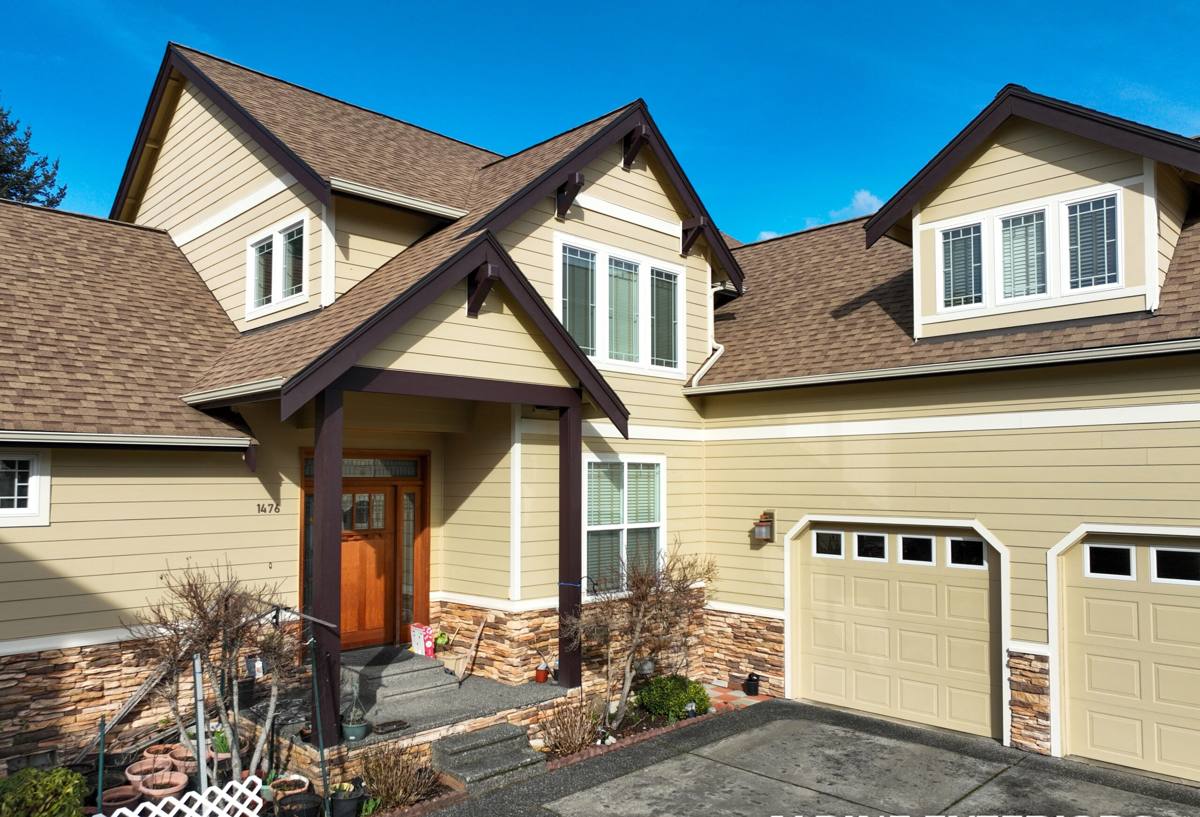
Signs a Kenneth City Home Needs Replacement, Not Another Repair
Patching is the right call for isolated damage on siding that's otherwise sound. Replacement is the right call when the damage is systemic — spread across multiple walls, tied to the material's age, or a sign that moisture has already gotten behind the surface. A few warning signs worth taking seriously:
- Soft, spongy, or spongey-feeling spots when you press on the siding, especially near the bottom of walls
- Visible cracking, warping, bowing, or buckling panels, particularly after a hot summer or a wind event
- Paint that won't hold — repeated peeling or blistering within a couple of years of repainting
- Gaps opening up at seams, corners, or trim where caulking has failed and won't stay sealed
- A musty smell, dark staining, or visible rot near the base of exterior walls
- Rippling, waviness, or panels that have visibly shifted after storms
- Rising cooling costs that track with a wall assembly that's no longer doing its job
- The same repair spot failing again after being patched more than once
Any one of these on its own might just need attention. Several of them together, especially on a home with siding that's already reached fifteen to twenty-five years old, usually means it's more cost-effective to replace the wall system correctly than to keep chasing individual failures.
What a Correct Siding Replacement Actually Involves
Siding replacement done right is not simply pulling off old boards and nailing up new ones. A full tear-off gives a crew the chance to see what's actually happening behind the siding — something that's impossible to evaluate from the outside and impossible to fix by re-siding over a problem. That inspection step is where a lot of future failures get caught early instead of getting sealed inside a wall for another fifteen years.
Why Installation Quality Matters as Much as the Material
The sequence matters: sheathing gets inspected and any rot or moisture damage gets repaired before anything new goes up. A weather-resistant barrier goes on correctly lapped so water sheds outward, not into the wall. Flashing at windows, doors, and any wall penetration has to be detailed properly, because that's where wind-driven rain finds its way in first. Fastener spacing and placement need to follow the manufacturer's specification and the wind requirements for this part of Florida — not a generalized nailing pattern. Finally, trim, caulking, and finish work close out the job. Skip or rush any one of those steps and it doesn't matter how good the siding material is; the wall will still fail at its weakest point during the next hard rain or windstorm.
Why This Company Installs Only James Hardie Fiber Cement
We standardized on one manufacturer's fiber cement system rather than offering a menu of siding brands and materials, and we did that deliberately. James Hardie's fiber cement core is non-combustible and dimensionally stable in a way that holds up to Florida's heat-cool-humidity cycle without the softening, expanding, or warping that some other materials experience. The HZ5 product line is engineered specifically for humid, high-moisture climates like ours, and the ColorPlus finish is baked onto the board at the factory under controlled conditions, which gives it meaningfully better UV and fade resistance than a field-applied paint job. Backed by a strong, transferable manufacturer warranty, it's the system we're comfortable standing behind on a home that's going to spend the next few decades taking on Pinellas County sun, rain, and salt air.
What We Don't Install, and the Honest Trade-Offs Behind That
We get asked about other products regularly, and each one has legitimate strengths — we're not going to pretend otherwise. Here's why we still don't install them:
- Vinyl siding is affordable and easy to install, but it's a petroleum-based material that can soften, warp, or distort in sustained high heat, and lighter-gauge panels are more vulnerable to wind uplift in a serious storm. Color is mixed through the material rather than baked on, and it still fades with years of UV exposure.
- LP SmartSide and other engineered wood products use treated wood strand technology that resists moisture better than raw lumber, but the core is still wood-based. Cut edges, seams, and any gap in the field-applied coating are places where sustained humidity can eventually find a way in, and the maintenance schedule to prevent that has to be kept up consistently.
- Cemplank and Allura are also fiber cement products, similar in core composition to what we install. Standardizing on one manufacturer's full system — siding, trim, fasteners, and finish — lets us guarantee a consistent installation spec and keeps warranty coverage and accessory compatibility straightforward, rather than mixing components across brands.
- Primed spruce and cedar are genuinely attractive, real-wood options, but they carry the highest maintenance burden of anything on this list in a humid, salt-air climate — frequent repainting or resealing, and the greatest long-term exposure to rot and insect damage.
None of that means those products don't have a place somewhere. It means we made a business decision to install one system we can install correctly, warranty confidently, and stand behind for as long as a Kenneth City homeowner owns the house.
How Siding Materials Compare in This Climate
| Factor | James Hardie Fiber Cement | Vinyl | Engineered Wood (LP SmartSide) | Wood (Cedar/Primed Spruce) |
|---|---|---|---|---|
| Wind performance | Strong when installed to spec | Varies with panel gauge | Good with correct fastening | Good, but seams need upkeep |
| Moisture/humidity tolerance | High — non-combustible, engineered for humid climates | High (not moisture-absorbent) | Moderate — wood-based core | Lower — natural wood |
| UV/color retention | Strong — factory-baked finish | Moderate — fades over time | Depends on coating upkeep | Requires regular repainting |
| Maintenance | Low | Low | Moderate | High |
| Typical lifespan | Decades with proper install | Long, but can degrade in heat | Moderate to long with upkeep | Shorter without diligent care |
Cost Factors in a Kenneth City Siding Replacement
Every siding job is priced around the specifics of the house, not a flat per-house number. The factors below drive most of the variation we see between projects in this area:
| Cost Factor | Typical Impact |
|---|---|
| Home size and total wall square footage | High |
| Siding profile and trim details (corner boards, battens, accessories) | Moderate |
| Number of stories and access difficulty | Moderate |
| Condition of sheathing found underneath the old siding | High (variable) |
| Full tear-off, hauling, and disposal of old material | Moderate |
| Factory ColorPlus finish versus field painting | Moderate |
| Permitting and code requirements | Low to Moderate |
We don't quote a job until we've actually looked at the house, because sheathing condition alone can shift the scope significantly once the old siding comes off.
Our Siding Replacement Process
- On-site inspection and a written, itemized estimate before any work is scheduled
- Full tear-off of the existing siding, with sheathing exposed for inspection
- Repair or replacement of any compromised sheathing found underneath
- Installation of a proper weather-resistant barrier with correct flashing at windows, doors, and penetrations
- Installation of James Hardie siding to manufacturer specification and local wind requirements
- Trim, caulking, and finish work closed out to a clean, consistent standard
- Full cleanup and a final walkthrough before the job is considered done
Why a Crew That Already Works in Kenneth City Makes a Difference
Siding installation isn't one-size-fits-all across Florida, let alone across the country. A crew that regularly works in and around Kenneth City already understands the wind exposure this pocket of Pinellas County actually experiences, knows how permitting works through the applicable local building department, and has seen the mix of home ages and construction styles common in the area. That familiarity shows up in small but real ways — fewer surprises once tear-off starts, a more accurate estimate up front, and a crew that isn't learning the region's code requirements on your project.
It also matters for accountability. A local, established company has a reason to stand behind its work years down the road — reputation, repeat business, and proximity all keep that honest. That's a different relationship than hiring an out-of-area or storm-season crew that's gone once the invoice is paid.
If your siding is showing its age, took a beating in a recent storm, or you're just planning ahead for a Pinellas County home that needs to hold up for the long haul, we're happy to take a look and walk you through what we'd recommend. Reach out for a free, no-pressure estimate — there's no obligation, and you'll get a straight answer about what your home actually needs.