 St. Petersburg Roofing
 Building Decks for Historic Kenwood Homes
Historic Kenwood is one of St. Petersburg's older, tree-canopied neighborhoods, full of bungalows and Craftsman-style homes on lots that were platted long before anyone thought about hurricane wind ratings or Florida Building Code deck attachment requirements. When we build a custom deck here, we're not just adding outdoor living space — we're working around mature oak root systems, older foundations, historic-district aesthetic expectations, and a Pinellas County climate that is genuinely hard on wood and fasteners. A deck built the same way you'd build one in a drier, cooler climate simply won't hold up here. This page covers what a correctly built deck in Historic Kenwood actually requires, from material choice to permitting to the details most contractors skip.
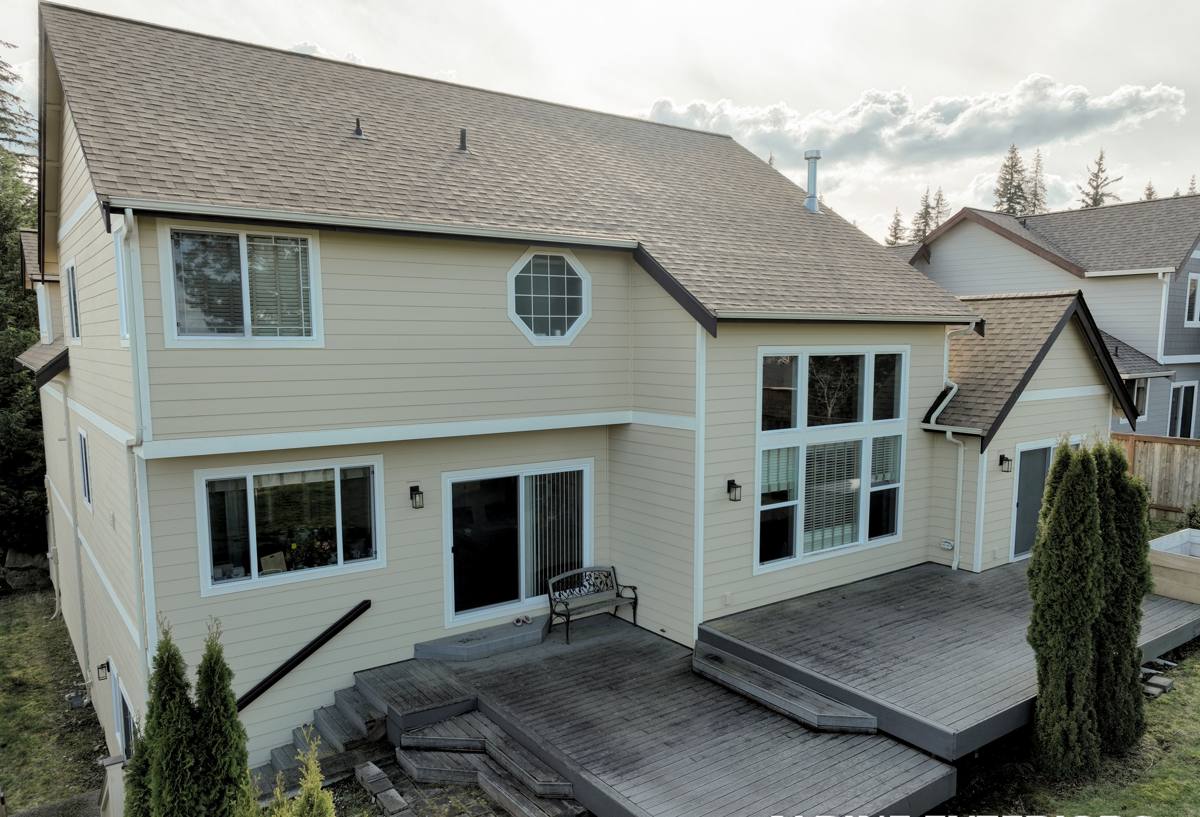
What St. Petersburg's Climate Does to a Deck
St. Petersburg and the rest of Pinellas County sit in a subtropical climate with a few specific stressors that shorten the life of a poorly built deck:
- Hurricane-force wind: Ledger attachments, joist hangers, and railing posts all need to be rated and fastened for wind uplift and lateral load, not just fastened "solid."
- Intense year-round UV: Florida sun degrades sealers, fades wood tone, and dries out surface fibers faster than almost anywhere else in the country. UV exposure is close to constant, not seasonal.
- Wind-driven rain: Afternoon storms don't just fall straight down here — they blow sideways under rail caps, into end grain, and behind poorly flashed ledger boards.
- Salt air: Even set back from the immediate coastline, Historic Kenwood gets salt-laden air off Tampa Bay. Salt accelerates corrosion in fasteners, brackets, and any metal hardware that isn't coated for coastal use.
None of these are exotic problems — they're just the baseline conditions any deck in this part of St. Petersburg has to survive, year after year, without special treatment or babying from the homeowner.
Why This Matters More in an Older Neighborhood
Historic Kenwood's housing stock tends to be older, which means the structures a deck attaches to — sill plates, foundation walls, existing porches — were often built to different standards, if any formal deck standard existed at all. A ledger board bolted into a house that's had decades of settling and moisture exposure needs a more careful inspection than one going onto new construction. We check the condition of the framing we're attaching to before we ever talk about decking material.
Choosing the Right Decking Material
There's no single "best" decking material — there's a best material for your budget, your maintenance tolerance, and how much direct sun and rain the specific spot on your lot gets. Here's how the common options compare for a Gulf Coast environment like St. Petersburg:
| Material | Upfront Cost | Maintenance | Coastal/Humidity Performance |
|---|---|---|---|
| Pressure-treated pine | Lowest | Annual sealing recommended | Good if sealed consistently; end grain and cut edges need re-treatment |
| Composite decking | Mid to high | Low — no staining or sealing | Very good; resists moisture and UV fade better than wood, though quality varies by brand |
| Tropical hardwoods (ipe, similar) | High | Periodic oiling to maintain color | Excellent density and rot resistance; heavy, so framing must be sized accordingly |
| PVC decking | Mid to high | Lowest — essentially inert to moisture | Excellent; doesn't absorb water, immune to rot, handles salt air well |
For a shaded, tree-covered lot typical of Historic Kenwood, moisture retention matters as much as UV resistance — decking under a mature canopy dries slower after a storm than decking in full sun, which changes the maintenance math. We'll walk your specific lot with you and give you an honest read on which material fits before you commit.
Hardware and Fasteners: Where Corner-Cutting Shows Up First
The decking boards are the part homeowners look at. The hardware is the part that determines whether the deck is still safe in ten years. In a salt-air, high-humidity environment like St. Petersburg, we standardize on:
- Stainless steel or heavy hot-dip galvanized fasteners rated for coastal exposure — not standard zinc-coated screws that streak and corrode
- Structural screws or through-bolts at the ledger, sized and spaced to current Florida Building Code wind and load requirements
- Joist hangers and post bases rated for the same coastal exposure class as the fasteners
- Flashing behind and above the ledger board so wind-driven rain can't work its way into the house framing
Mismatched metals — for example, standard steel hardware paired with certain treated lumber chemicals — cause accelerated corrosion. We match hardware to lumber chemistry and to the coastal environment, not just to whatever's cheapest at the yard.
Permitting and Historic District Considerations
Any new deck attached to your home in St. Petersburg requires a building permit, and the design has to meet current Florida Building Code wind load requirements for Pinellas County. If your property falls within a designated historic district or is subject to neighborhood design guidelines, there may be additional review on visible elements like railing style, height, or materials facing the street. We handle the permit application and any required documentation as part of the job, and we'll flag early if your project needs an extra layer of review so there are no surprises mid-build.
Working Around Mature Trees
Kenwood's tree canopy is part of what makes the neighborhood what it is, but root systems near a build site affect where footings can go. We adjust footing placement and, when needed, use pier or helical designs that avoid major roots rather than cutting through them — cutting large roots can destabilize a mature tree and is something we try to avoid.
Our Process for a Historic Kenwood Deck Project
- On-site walk and design conversation: We look at your lot, existing structure, tree placement, and sun/shade pattern, and talk through what you actually want to use the space for.
- Material and layout proposal: You get a clear, written scope — material choice, dimensions, railing style, and an honest cost range, no vague allowances.
- Permitting: We pull the required City of St. Petersburg permit and handle any historic-district review before work begins.
- Structural work first: Footings, framing, ledger attachment, and flashing get done and inspected before a single deck board goes down.
- Decking, railing, and finish work: Boards, railings, stairs, and any built-ins go in last, with fasteners and hardware matched to the material.
- Final walkthrough: We go over care and maintenance specific to the material you chose so you know what upkeep actually looks like here.
What a Correct Deck Build Includes — Checklist
- Ledger board properly flashed and bolted, not just nailed, into sound framing
- Footings sized and depth-set to Pinellas County code, placed to avoid major tree roots
- Coastal-rated, corrosion-resistant fasteners and hardware throughout
- Joist spacing and beam sizing matched to your chosen decking material's weight and span rating
- Railing height and baluster spacing meeting current code, especially on any elevated deck
- Proper gapping between boards for drainage and material expansion in heat and humidity
- Stair stringers and treads built to code if the deck is elevated
- A written maintenance plan specific to your decking material
Maintenance in a Humid, Sunny Climate
Whatever material you choose, St. Petersburg's combination of UV and humidity means deck maintenance isn't optional — it's just different depending on the material. Wood decking generally needs sealing or staining on a roughly annual basis to hold up against sun bleaching and moisture cycling. Composite and PVC decking need far less attention but still benefit from periodic cleaning to keep organic growth from taking hold in shaded, humid spots. Hardware and connections are worth a visual check once or twice a year, particularly after hurricane season, since that's when wind and rain put the most stress on fasteners and framing.
Why a Crew That Already Works Historic Kenwood Matters
Every neighborhood in St. Petersburg has its own quirks, and Historic Kenwood's combination of older framing, mature trees, and historic-district considerations isn't something you want a crew learning on your project. A contractor who's already built decks in this neighborhood knows the typical foundation conditions, has a working relationship with the city's permitting process for this area, and knows how to design around the tree canopy without a lot of back-and-forth. That familiarity shows up in fewer surprises during construction and a design that actually fits the character of your street.
If you're considering a custom deck for your Historic Kenwood home, we're happy to walk the property with you and give you a straightforward, no-pressure estimate — just fill out the form below to get started.