 St. Petersburg Roofing
 Custom Decks Built for Pinellas Park Homes
Pinellas Park sits inland from the immediate coastline, but it doesn't escape what Pinellas County throws at outdoor structures. Homes here still deal with the same year-round UV load, sudden downpours, and hurricane-season wind gusts that hit the rest of the St. Petersburg area, plus the humidity that never really lets up. A deck built without those conditions in mind will show it within a few seasons — cupped boards, rusted fasteners, footings that shift after heavy rain. A deck built for this climate holds its shape and keeps paying off for years.
We build custom decks for homeowners throughout Pinellas Park and the surrounding St. Petersburg area, and we design every one around how this specific stretch of Florida actually treats outdoor lumber and hardware — not a generic spec sheet.
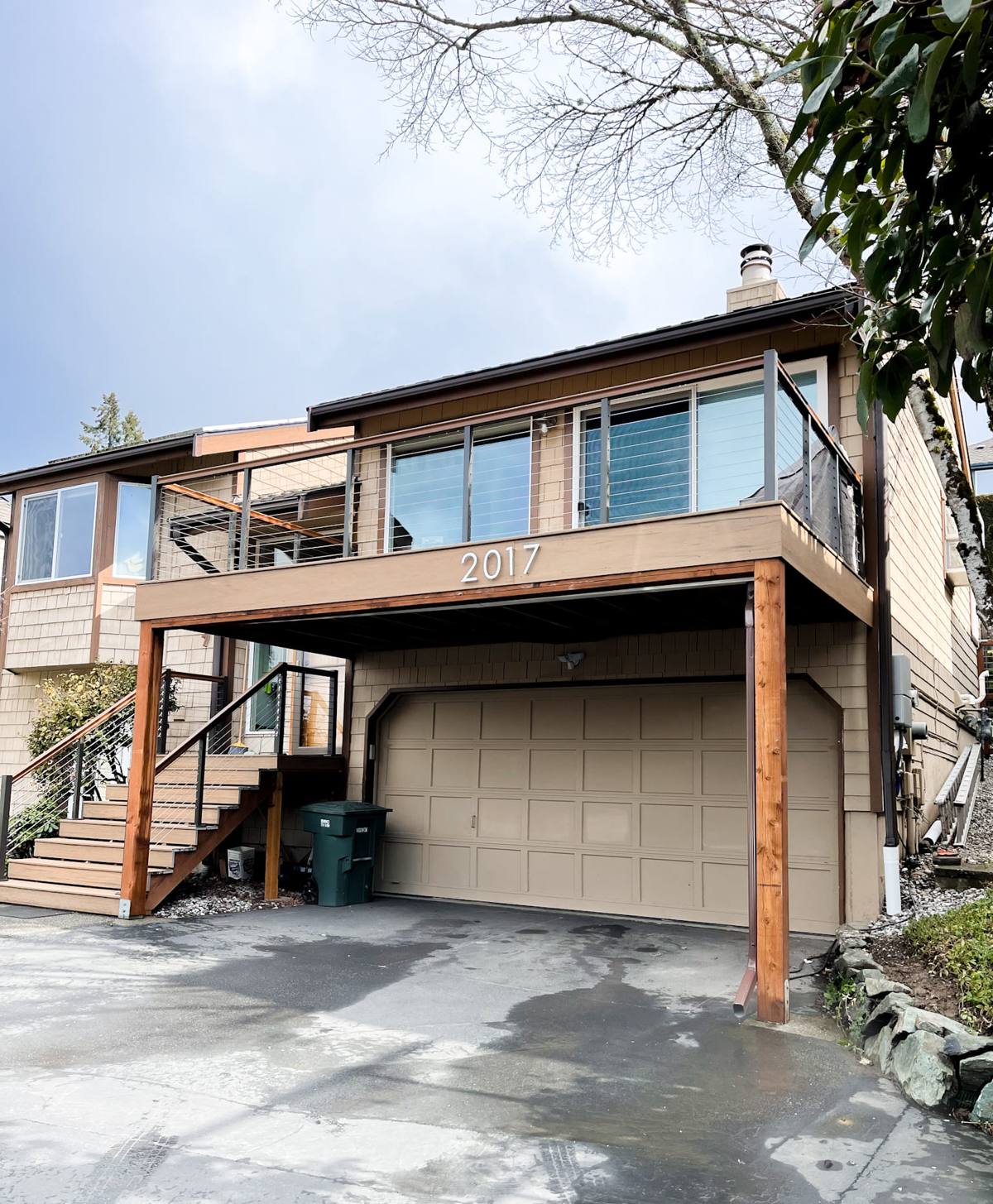
What Pinellas Park's Climate Does to an Outdoor Deck
Before we talk materials or process, it's worth understanding what a deck is actually up against here. This isn't scare talk — it's just the honest baseline for anyone planning an outdoor structure in this part of Florida.
Sun and Heat
Pinellas County gets intense, direct UV exposure nearly every day of the year. On uncoated or poorly sealed wood, that sun bleaches color, dries out natural oils, and accelerates surface checking — the small cracks that let moisture in later. Composite decking isn't immune either; lower-grade composites can fade or feel noticeably hotter underfoot than better-formulated boards.
Wind-Driven Rain and Humidity
Florida rain rarely falls straight down. Wind-driven rain gets up under rail caps, into end-grain cuts, and behind ledger boards if flashing isn't done correctly. Combine that with our humidity, and any spot where water can collect or linger becomes a slow rot problem — often hidden until a board is already compromised.
Hurricane-Force Wind
Even away from the immediate coast, Pinellas Park is well within range of tropical storm and hurricane wind loads. A deck attached to the house, a set of stairs, or a rail system that isn't fastened and blocked correctly can rack, loosen, or fail under sustained wind — long before a named storm even makes direct landfall nearby.
Salt Air
Pinellas Park is inland relative to the beaches, but salt-laden air still moves across the whole county on Gulf breezes. Standard fasteners and low-grade hardware corrode faster here than in drier, non-coastal climates, which is why fastener selection matters even for homes that aren't waterfront.
What a Deck Built for This Area Actually Needs
Given all of that, a correctly built Pinellas Park deck isn't just "any deck" — it's one where a handful of decisions were made deliberately instead of defaulted to whatever's cheapest or fastest to install.
- Framing lumber that's properly rated for ground contact or exposure where applicable, not just treated pine used interchangeably everywhere
- Corrosion-resistant fasteners and connectors rated for coastal or near-coastal exposure, not standard interior-grade hardware
- Ledger board flashing and attachment detailed to keep wind-driven rain from tracking behind the house's siding or sheathing
- Joist spacing and blocking that accounts for both foot traffic load and regional wind uplift requirements
- Decking material — wood or composite — chosen for how it actually performs under sustained Florida sun and humidity, not just how it looks on day one
- Rail and post connections built to resist racking under wind load, not just gravity load
- Proper drainage and grading underneath the deck so standing water doesn't sit against footings or framing
Decking Material Options
There's no single "correct" decking material for every homeowner — it depends on budget, maintenance appetite, and how the space will be used. Here's how the common options compare for a Pinellas Park install specifically.
| Material | Upfront Cost | Maintenance | How It Handles This Climate |
|---|---|---|---|
| Pressure-treated pine | Lowest | Needs re-sealing every 1-2 years | Affordable and strong, but UV and humidity will dry, warp, or check the surface faster without consistent upkeep |
| Tropical hardwoods (e.g. ipe) | High | Periodic oiling to maintain color | Naturally dense and rot-resistant, holds up well to humidity, but requires correct fastening due to hardness |
| Capped composite | Mid-to-high | Low — occasional washing | Strong resistance to fading and moisture absorption when it's a quality capped product; lower-grade composites can underperform in direct sun |
| PVC decking | Highest | Very low | Fully moisture-resistant, doesn't rot or splinter, but can expand/contract more with heat swings — needs correct fastening detail |
We'll walk through these trade-offs honestly during your estimate. Our job is to tell you what fits your budget and how you'll actually use the deck — not to upsell the most expensive option by default.
Our Custom Deck Process
Every project starts with understanding your property and how you want to use the space, then works through design, permitting, and build in a sequence that avoids surprises.
1. On-Site Assessment
We look at your existing structure (if any), the attachment point to your home, drainage patterns in the yard, and sun/shade exposure throughout the day. This is also where we flag anything that affects design — slope, existing structures, setback considerations.
2. Design and Material Selection
We talk through layout, size, decking material, and rail style based on your budget and how you plan to use the deck — entertaining, grilling, a quiet spot off the primary bedroom, whatever it is. We're honest about what each material and design choice costs and how it performs long-term here.
3. Permitting
Deck construction in Pinellas County and the City of Pinellas Park typically requires a permit, especially for attached structures or anything above a certain height. We handle the permitting process so you're not stuck deciphering code requirements yourself.
4. Framing and Structural Work
This is where the climate-specific decisions actually get built in — footing depth, ledger flashing, joist spacing, hardware grade, and blocking for wind resistance. It's the part of the job that's invisible once the deck is finished, and it's the part that determines whether the deck is still solid in ten years.
5. Decking, Rails, and Finish Work
Once framing is inspected and approved, we install the decking surface, railing, stairs, and any additional features like built-in seating or lighting.
6. Final Walkthrough
We walk the finished deck with you, cover any care and maintenance specifics for the material you chose, and make sure everything meets what we discussed at the start.
Maintenance That Actually Matters Here
Every decking material needs some level of upkeep in this climate — the question is how much and how often. Skipping it is the single biggest reason decks age poorly in Florida.
- Sweep debris and standing water off the surface regularly, especially after storms
- Check railing and stair connections annually for looseness — humidity and wind cycles work fasteners loose over time
- Re-seal wood decking on the schedule appropriate to that species, don't wait until it visibly fades
- Inspect under the deck periodically for drainage issues or moisture pooling near footings
- Rinse composite and PVC decking to prevent mildew buildup in shaded or low-airflow areas
- Have ledger board attachment and flashing checked every few years — it's the connection point most exposed to wind-driven rain
Common Mistakes We See on Existing Decks
A lot of our Pinellas Park deck calls start as repair or replacement jobs on decks that were built without this climate in mind. The patterns repeat often enough to be worth mentioning.
Undersized or Skipped Flashing
Ledger boards attached directly to a house without proper flashing let water track behind the siding during wind-driven rain, leading to rot that's often hidden until it's advanced.
Standard Hardware Instead of Corrosion-Resistant
Fasteners and joist hangers that aren't rated for this environment corrode from the inside out, weakening connections long before the deck surface shows any wear.
Decking Installed Too Tight
Boards installed without accounting for expansion and contraction from heat and humidity swings can buckle or cup over time.
Poor Drainage Underneath
Decks built low to grade without adequate slope or drainage trap moisture against footings and framing, accelerating rot and corrosion in that hidden structural zone.
Why a Locally Established Crew Matters for This Job
Deck construction isn't just carpentry — it's a structural, permitted build that has to hold up to Pinellas County's specific wind and moisture conditions. A crew that already works in St. Petersburg and Pinellas Park understands the local permitting process, knows what inspectors are looking for, and has already seen how different materials and details perform in this exact climate over time — not in a lab spec sheet from somewhere else. That local track record is what keeps a deck project from turning into a series of guesses.
If you're considering a custom deck for your Pinellas Park property, we're happy to walk your property, talk through material options honestly, and give you a straightforward, no-pressure estimate using the form below.