 St. Petersburg Roofing
 Siding Built for Disston Heights, Not Just Installed There
Disston Heights is one of St. Petersburg's older, well-established residential neighborhoods — a mix of mid-century homes and newer renovations sitting inland from the bay but still fully exposed to everything Pinellas County weather throws at a house. That matters when you're choosing siding. A product and installation method that works fine in a mild, dry climate can fail here in half the time, because Florida doesn't give exterior materials any easy years. Every summer brings intense, near-constant UV. Every storm season brings wind-driven rain that gets pushed sideways into seams and laps most products aren't detailed to handle. And even this far from the immediate coastline, salt-laden air still moves through the area and works on anything with exposed metal fasteners or a finish that isn't built to resist it.
We install siding across St. Petersburg and Pinellas County, and Disston Heights homes see the same failure patterns as everywhere else in the region: siding that cups, delaminates, or fades unevenly within a handful of years, trim that rots from the inside out, and finishes that chalk and streak long before the homeowner expected to think about siding again. Almost all of it traces back to one of two things — the wrong material for this climate, or a correct material installed with shortcuts. We only address both problems by installing one product system, done to spec, every time.
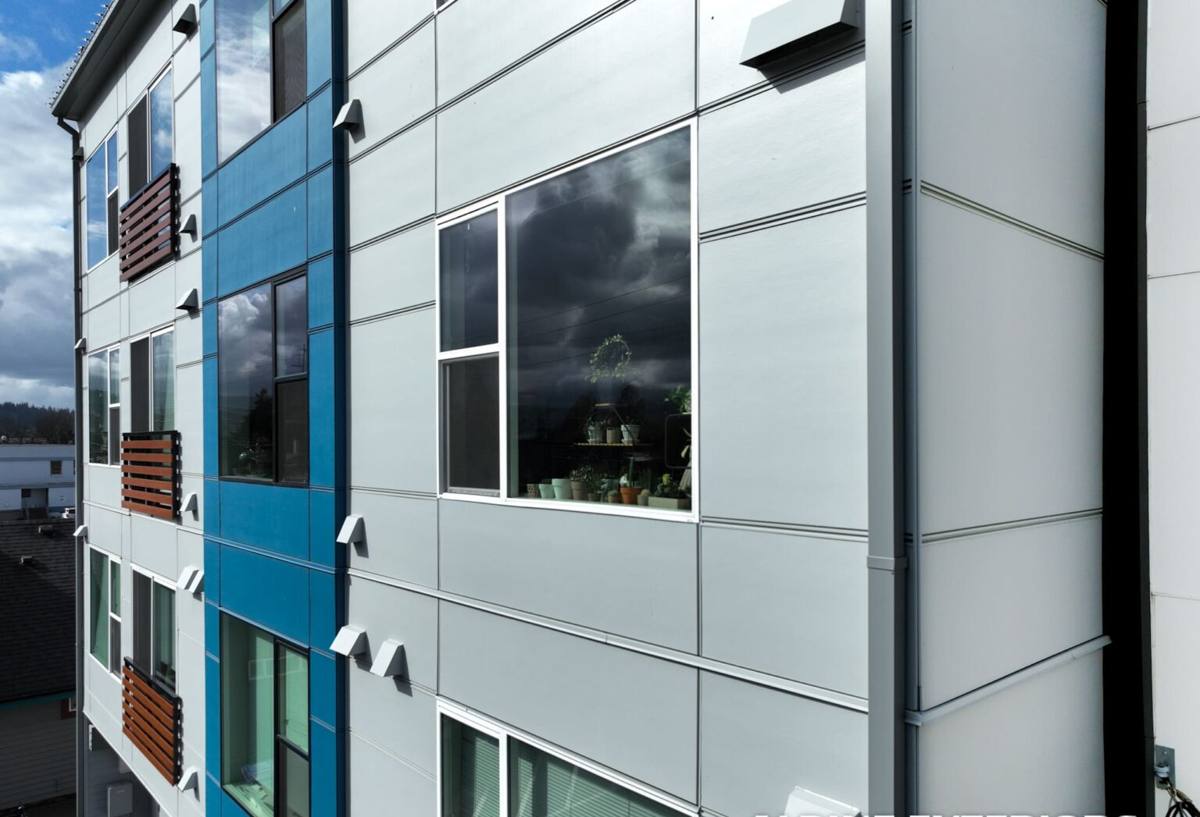
What St. Petersburg's Climate Actually Does to Siding
Heat and UV
Florida sun is not the same stress a siding product faces in most of the country. Prolonged UV exposure breaks down pigments and surface coatings faster here than almost anywhere else in the continental U.S., which is why fading and chalking show up early on lower-grade or improperly finished siding. Heat cycling — hot days, sudden afternoon storms, humid nights — also puts repeated expansion-and-contraction stress on any material that isn't dimensionally stable.
Wind-Driven Rain
Pinellas County sees intense, sideways rain events, not just gentle vertical rainfall. That means water gets driven up under laps, into seams, and behind trim in ways a lot of siding systems and installation details simply aren't built to shed. Once moisture gets behind the cladding, the problem usually isn't visible until the sheathing or framing underneath is already compromised.
Humidity and Salt Air
Even inland neighborhoods like Disston Heights sit inside a humid, salt-influenced air mass most of the year. That combination accelerates corrosion on exposed fasteners and trim hardware, and it keeps moisture-sensitive materials from ever fully drying out between rain events — which is exactly the condition that leads to swelling, soft spots, and rot in the wrong products.
Why We Install Only James Hardie Fiber Cement
We made a deliberate decision years ago to stop installing vinyl siding, LP SmartSide, primed wood siding, and other fiber cement brands, and to install James Hardie exclusively. That's not a marketing angle — it's a response to what actually holds up under Florida conditions and what doesn't.
- Non-combustible material — fiber cement doesn't feed a fire the way wood-based or vinyl products can, which matters for insurance and for peace of mind.
- Climate-engineered product lines — Hardie's HZ5 formulation is specifically engineered for humid, high-moisture climates like ours, rather than a generic national product.
- Factory-applied ColorPlus finish — baked on under controlled conditions, it resists the fading and chalking that hits field-painted or lower-grade finishes hard under Florida sun.
- Dimensional stability — fiber cement doesn't expand, contract, warp, or absorb water the way engineered wood or vinyl can, which is critical through our heat-and-rain cycling.
- A strong, transferable warranty — backed by a large manufacturer with decades of track record in coastal and Gulf climates, not a product line we'd have to explain away in five years.
We're not going to tell you every other product on the market is worthless — vinyl is inexpensive and low-maintenance in mild climates, and engineered wood siding has real fans in drier parts of the country. But we've seen how those products age in Pinellas County humidity, UV, and storms, and we're not willing to put our name on an installation we don't believe will still look and perform well a decade from now. James Hardie is the one system we've found that consistently does.
How Siding Materials Compare for This Climate
| Factor | James Hardie Fiber Cement | Vinyl | Engineered Wood (e.g. LP SmartSide) |
|---|---|---|---|
| UV / fade resistance | Factory-baked ColorPlus finish, engineered for long-term color retention | Prone to fading and can warp or distort in high heat | Field paint fades faster; repainting needed on a cycle |
| Moisture behavior | Doesn't absorb, swell, or rot; HZ5 formulated for humid climates | Doesn't rot, but seams and J-channels trap water if not detailed well | Wood core can swell, soften, or rot if moisture gets past the coating |
| Wind / storm performance | Rigid, heavy, holds up well to wind-driven rain when correctly flashed | Lightweight; can crack or blow off in high wind if under-fastened | Performs adequately but edge/seam moisture intrusion is the weak point |
| Fire resistance | Non-combustible | Combustible, can melt/deform near heat sources | Combustible wood-based core |
| Typical warranty | Strong, transferable manufacturer warranty | Varies widely by manufacturer/grade | Manufacturer warranty, often with moisture-related exclusions |
What Correct Installation Involves
Even the right product fails early if it's installed wrong, and siding installation is one of those trades where the parts nobody sees matter more than the parts that get admired from the street. On every Disston Heights job, correct installation means:
Water-Resistive Barrier First
The house wrap or weather barrier underneath the siding is what actually keeps bulk water out of the wall assembly — the siding itself is the first line of defense, not the only one. We install and lap it correctly before a single piece of siding goes up, because wind-driven rain in this region will find any gap in that layer.
Flashing and Trim Details
Windows, doors, and any penetration through the siding are where water intrusion actually starts. Proper head flashing, kick-out flashing at roof-to-wall intersections, and correctly lapped trim are non-negotiable — this is the detail work that separates an installation that lasts twenty-plus years from one that starts showing rot behind the trim in five.
Fastening to Manufacturer Spec
James Hardie has specific fastener spacing, type, and clearance requirements — including gaps at the bottom of the siding and around penetrations to allow for drainage and airflow. Skipping these specs is the single most common cause of premature Hardie failures we see on homes where someone else did the original install.
Caulking and Sealant Discipline
Sealant belongs at specific joints, not everywhere, and it has to be a product rated for the movement and UV exposure it'll face. Over-caulking traps moisture; under-caulking lets it in. Both are common mistakes from crews that don't specialize in this system.
Our Process on a Disston Heights Home
- On-site assessment — we look at your current siding, trim, and any moisture or rot issues, and check what's happening underneath if we can access it.
- Removal and inspection of sheathing — once the old siding is off, we inspect the sheathing and framing for hidden water damage before anything new goes up.
- Repairs as needed — any compromised sheathing or framing gets repaired before we move forward, not covered over.
- Water-resistive barrier installation — correctly lapped and sealed, sized to actually manage the wind-driven rain this area gets.
- James Hardie installation to manufacturer spec — proper fastening, clearances, and flashing at every window, door, and penetration.
- Trim, caulk, and final finish — detail work that determines how the home looks and performs for the next couple of decades.
- Final walkthrough — we go over the finished work with you before we consider the job done.
Signs Your Disston Heights Home May Need New Siding
- Visible cracking, warping, or buckling in the siding panels
- Soft spots when you press on the siding near the bottom edge or around windows
- Paint or finish that's chalking, peeling, or fading unevenly
- Rot or discoloration around trim, corners, or window frames
- Rising energy bills that suggest the wall assembly is no longer sealing well
- Visible gaps, loose panels, or fasteners backing out
- Mold, mildew, or musty smells along interior walls that back up to exterior siding
If you're seeing more than one of these on a Disston Heights home, it's worth having someone look at what's happening behind the siding, not just the surface — by the time damage is visible outside, it's often been developing for a while underneath.
Why Hiring a Crew That Already Works This Neighborhood Matters
Siding installation isn't uniform across St. Petersburg. A crew that mostly works new construction in dry inland climates doesn't necessarily know how to detail flashing for a Gulf Coast wind-driven rain event, or how humidity here changes drying times and sequencing on a job. A crew that regularly works Pinellas County neighborhoods like Disston Heights has already seen how the local housing stock — older framing, varied past renovations, different roof-to-wall conditions — interacts with a proper Hardie installation, and adjusts for it instead of running a one-size-fits-all process.
There's also a practical side: a local crew can respond faster if something needs a follow-up look, understands St. Petersburg permitting and inspection expectations, and isn't guessing at wind-load and code requirements that apply to Pinellas County specifically.
Maintenance After Installation
Correctly installed James Hardie siding is low-maintenance, not zero-maintenance. A periodic rinse to clear salt residue and organic buildup, an annual look at caulking and trim for any gaps opening up, and prompt attention if a storm causes any impact damage will keep the system performing for the long haul. Because the ColorPlus finish is factory-applied, you're not on a repainting cycle the way you would be with field-painted trim or engineered wood — that alone removes one of the biggest recurring costs of siding ownership in this climate.
Get a Straight Answer for Your Home
If you're weighing a siding replacement in Disston Heights, we're happy to take a look, tell you honestly what condition your current siding and sheathing are in, and walk you through what a proper James Hardie installation would look like for your home — no pressure, no inflated urgency. Use the form below to request a free estimate.