 St. Petersburg Roofing
 Deck Building in Old Northeast: A Neighborhood With Its Own Rules
Old Northeast is one of St. Petersburg's older, more established neighborhoods — mature oak canopy, older lot lines, a mix of historic bungalows and updated homes, and a location close enough to Tampa Bay that salt air is a daily fact of life, not an occasional visitor. A deck built here has to satisfy two masters at once: it has to fit a house and streetscape that often has real architectural character, and it has to survive a coastal Florida climate that is genuinely hard on outdoor structures. Decks built with generic, one-size-fits-all specs tend to show their age fast in this part of Pinellas County. Decks built for the actual conditions here hold up.
This page is specifically about deck building for homes in and around Old Northeast — what the climate demands, what a correctly engineered and installed deck actually involves, and how our process works from first estimate to finished structure.
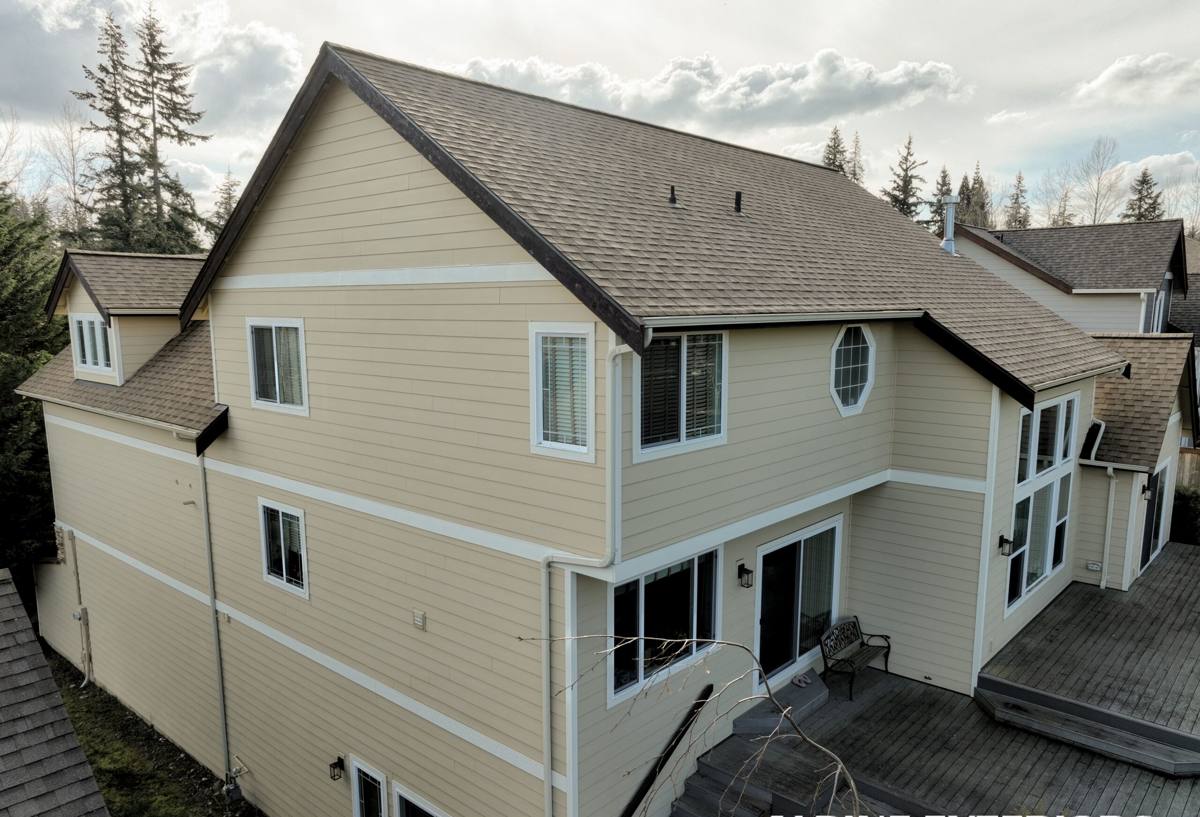
What the Climate Actually Does to a Deck Here
St. Petersburg homeowners already know the broad strokes, but it's worth spelling out exactly how each factor attacks a deck, because the right build responds to each one differently.
Hurricane-Force Wind
Wind doesn't just push on a deck — it gets underneath it, pulls up on railings, and puts uplift and lateral loads on ledger connections, posts, and footings that a lot of older or poorly built decks were never designed to handle. Ledger attachment to the house, post-to-footing connections, and railing anchoring are the places wind failures show up first, and they're also the places that are cheapest to get right the first time and most expensive to fix after a storm.
Year-Round, Intense UV
Florida sun is relentless on exposed wood and on the finishes applied to it. UV breaks down surface fibers on wood decking, fades and chalks composite and PVC boards over time (all of them, to varying degrees), and degrades sealants, fasteners' coatings, and railing finishes faster than in most of the country. A deck here needs materials and finishes chosen with that in mind, not products spec'd for a milder climate.
Wind-Driven Rain
Rain in St. Petersburg rarely falls straight down. Wind-driven rain gets pushed sideways into ledger boards, post bases, and any gap or seam in the decking, which means water management — flashing, proper slope, gaps between boards, ventilation underneath — matters more here than it would in a drier or calmer climate. Trapped moisture is the single biggest cause of early deck failure we see, and it's almost always a water-management problem, not a material problem.
Salt Air
Being close to Tampa Bay means airborne salt is a constant, low-grade corrosive on every metal component of a deck — fasteners, structural hardware, railing brackets, and connectors. Standard hardware corrodes faster here than it would inland, which is why fastener and hardware selection is a real decision on every deck we build in this area, not an afterthought.
Choosing Decking Material for an Old Northeast Home
There's no single "best" decking material — there's a best fit for the house, the budget, and how much maintenance the homeowner actually wants to do. Here's how the common options stack up under this specific climate.
| Material | Upfront Cost | Maintenance in This Climate | Salt Air / Moisture Behavior | Typical Lifespan Here |
|---|---|---|---|---|
| Pressure-treated wood | Lowest | Annual cleaning + resealing recommended | Needs stainless or coated coastal-rated fasteners; prone to cupping/splitting if not maintained | 10–15 years with upkeep |
| Composite decking | Mid to upper-mid | Occasional washing, no staining/sealing | Handles moisture well; some fading/chalking from UV over time | 20–25+ years |
| PVC/capped polymer decking | Highest | Minimal — washing only | Excellent moisture and salt resistance; most UV-stable option | 25–30 years |
| Tropical hardwood (e.g., ipe) | High | Regular oiling to maintain color, or allowed to gray naturally | Naturally dense and rot-resistant; still needs coastal-rated hardware | 25+ years structurally |
For a lot of Old Northeast homes, where curb appeal and matching the house's character matters, we talk through composite or capped polymer boards for low-maintenance living, or a well-detailed wood deck for homeowners who want that traditional look and don't mind the upkeep. There's no wrong answer here — there's an honest conversation about trade-offs, and we'll give it to you straight rather than pushing whatever's easiest for us to install.
What a Correctly Built Deck Actually Involves
A deck that's going to hold up to hurricane wind, salt air, and wind-driven rain isn't just decking boards nailed to a frame. The parts nobody sees are the parts that determine whether the deck is still solid in fifteen years.
Footings and Framing
Footings need to be sized and set to local soil conditions and depth requirements, not guessed at. Framing lumber should be rated for ground contact or exposure as appropriate, and joist spacing and beam sizing need to actually match the span and load — including the added wind uplift load this area sees.
Ledger Attachment
Where the deck attaches to the house is the single highest-stakes connection on the whole structure. It needs proper flashing to keep wind-driven rain from getting behind the ledger and into the house's rim joist, and it needs fasteners sized and spaced to resist both gravity load and wind uplift.
Fasteners and Hardware
In a salt-air environment, standard galvanized hardware corrodes faster than it should. We use coastal-rated, corrosion-resistant fasteners and structural connectors throughout — hangers, post bases, hurricane ties, and screws — because replacing corroded hardware later means tearing into a finished deck.
Railings and Guards
Railings take direct wind load and need to be anchored into structural framing, not just surface-mounted. Height, baluster spacing, and load capacity all need to meet code, not just look right.
Ventilation and Drainage
Proper gapping between boards and airflow underneath the deck keeps moisture from sitting against wood or framing after our frequent afternoon storms — this is one of the most overlooked details in decks that fail early.
Permitting in St. Petersburg and Pinellas County
Most new decks and many deck replacements require a building permit and inspection in St. Petersburg and unincorporated Pinellas County, particularly when the deck is attached to the house or elevated above a certain height. Permitted work means the footings, framing, and connections get checked against current wind-load and building code requirements before they're covered up — which matters a great deal in a hurricane-exposed area. We handle the permitting process as part of the job, so you're not left navigating that on your own, and so the finished deck is something an inspector, an insurance adjuster, or a future buyer's inspector will sign off on without issue.
Our Process, Start to Finish
- Free on-site estimate. We look at your existing structure or the space you want to build in, talk through material and layout options, and give you honest numbers.
- Design and material selection. We finalize size, layout, decking material, railing style, and any features like built-in seating or steps, matched to your home and budget.
- Permitting. We prepare and submit the permit package required by the local jurisdiction and schedule inspections at the appropriate stages.
- Demolition or site prep. If we're replacing an existing deck, we remove it and inspect the ledger and house framing underneath before building new.
- Footings and framing. Footings are set to the required depth, and the frame is built with coastal-rated hardware and proper ledger flashing.
- Decking, railings, and finish work. Boards, railings, and any stairs or accents go on, with attention to proper gapping and fastening.
- Final inspection and walkthrough. We schedule the final inspection and walk the finished deck with you before calling the job done.
Keeping a Deck Sound in a Canopy and Coastal Environment
Old Northeast's oak canopy is one of the neighborhood's best features, but leaf litter, shade, and moisture retention around a deck all interact with our coastal humidity in ways that shorten a poorly maintained deck's life. A little routine care goes a long way.
- Sweep leaves and debris off the deck surface regularly, especially between and under boards where they trap moisture
- Rinse off salt residue periodically, particularly after storms with onshore wind
- Check railing posts and stair connections yearly for looseness or corrosion at hardware points
- Keep gutters and downspouts near the deck clear so runoff doesn't dump directly onto or under it
- Reseal or restain wood decking on the schedule appropriate to the product — don't wait until it looks gray and dry
- Trim back overhanging branches that keep the deck surface damp and shaded longer than necessary
- Have the structure looked at after any major storm, even if nothing looks obviously wrong
Why a Crew That Already Works This Neighborhood Matters
A deck builder who works Old Northeast regularly already knows the permitting expectations for this jurisdiction, has a feel for the older lot layouts and house-to-property-line setbacks common in the neighborhood, and has seen firsthand how wind, sun, and salt air treat different materials and details over years, not just on paper. That local track record shows up in fewer surprises during the permit process, fewer callbacks for water intrusion or hardware corrosion, and a finished deck that's actually built for the conditions it has to survive — not a generic spec pulled from a manual written for a different climate.
If you're planning a new deck or need to replace one that's showing its age, we'd be glad to take a look and talk through what makes sense for your home. Reach out for a free, no-pressure estimate using the form below.