 St. Petersburg Roofing
 Decks Built for Shore Acres' Waterfront Reality
Shore Acres sits close to the water, with canal-front and near-canal lots that put a deck through more than most Pinellas County backyards ever see. Between the humidity, the salt-laden air coming off the intracoastal waterways, and the intense Florida sun overhead nearly year-round, a deck built here needs to be planned differently than one going up a few miles inland. We build custom decks specifically with Shore Acres conditions in mind — not a generic deck dropped into a waterfront lot and hoped to hold up.
This page covers what actually matters for a deck in this neighborhood: the materials that make sense, the parts of the build that get skipped by crews unfamiliar with waterfront work, and how our process is set up to get it right the first time.
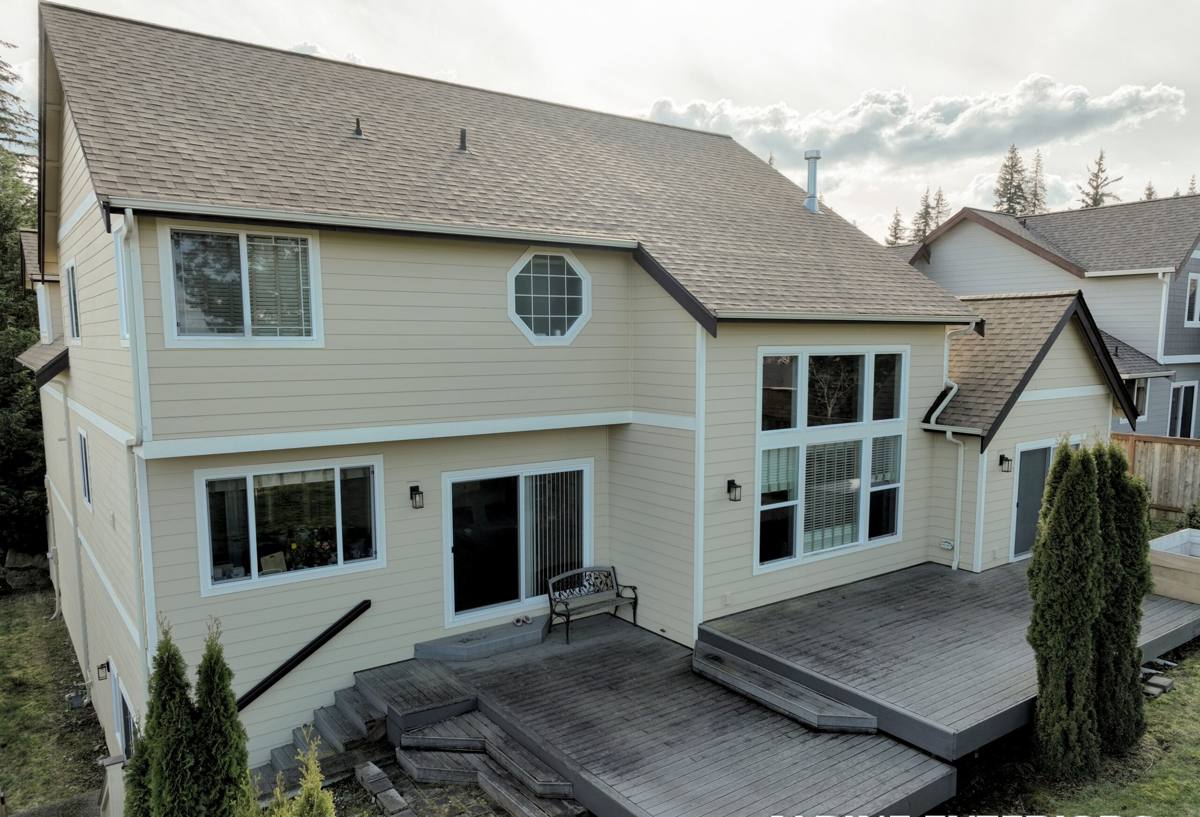
Why Shore Acres Homes Need a Different Deck Approach
A handful of conditions stack up in this part of St. Petersburg that don't hit every deck project the same way:
- Salt air corrosion: Being near canal water and the open bay means airborne salt settles on everything, including fasteners, brackets, and any exposed metal. Standard hardware corrodes faster here than it would on an inland lot.
- Wind exposure: Waterfront and near-waterfront lots tend to see stronger, more consistent wind, and hurricane season brings the risk of sustained high winds and gusts that a poorly fastened deck simply won't survive intact.
- Wind-driven rain: Rain here rarely falls straight down during a storm. It drives sideways into ledger connections, under flashing, and into end grain — spots that don't get wet on calmer days but take on water during every squall.
- UV load: Central Florida sun is relentless on any exposed surface, decking included. Boards that aren't rated for it fade, chalk, or become brittle years ahead of their expected lifespan.
- Ground and drainage conditions: Low-lying, water-adjacent lots often have higher water tables and slower-draining soil, which affects how footings are set and how a deck's substructure handles standing water after a heavy rain event.
None of these are exotic problems — they're just the normal cost of building this close to the water in Pinellas County. The fix isn't a special product line; it's choosing the right materials and installing them correctly for what this specific location will throw at the structure.
Material Choices That Hold Up Here
Decking Surface
For Shore Acres, we steer most homeowners away from untreated or lower-grade wood as a primary decking surface. Wood isn't off the table entirely — some homeowners want the look and are willing to keep up with the maintenance — but it demands real upkeep in this climate: regular sealing, more frequent board replacement, and closer attention to moisture trapped between boards. Capped composite and PVC decking cost more upfront but shed water, resist salt exposure, and don't need to be refinished, which matters a lot on a waterfront lot where humidity never really lets up.
Framing and Substructure
The framing underneath is where a lot of corner-cutting happens because nobody sees it once the boards go down. Pressure-treated lumber rated for ground contact is the baseline, but in a salt-air environment the fasteners and connectors matter just as much as the lumber grade — see the hardware section below.
Railings
Aluminum and glass railing systems tend to perform best on waterfront decks because they don't corrode the way lower-grade metal railings do and they don't need repainting. Wood railings are workable but require the same maintenance commitment as wood decking.
| Material | Salt-air performance | Maintenance | Typical lifespan (this climate) |
|---|---|---|---|
| Pressure-treated wood | Fair — needs sealing | Annual cleaning/sealing | 10–15 years with upkeep |
| Capped composite | Good | Occasional washing | 25+ years |
| PVC decking | Very good | Occasional washing | 25–30+ years |
| Aluminum railing | Very good | Minimal | 25+ years |
| Standard steel hardware | Poor near canals | Replace as it corrodes | Shortened significantly |
| Stainless/hot-dip galvanized hardware | Good to very good | Minimal | Matches deck lifespan |
Permits, Setbacks, and Flood Considerations
Decks in St. Petersburg require a building permit, and that process gets more involved close to the water. Shore Acres has areas that fall within FEMA-designated flood zones, and waterfront or canal-adjacent lots can carry setback requirements from the water's edge in addition to standard property line setbacks. Elevation of the deck structure, how it ties into an existing seawall or bulkhead if one is present, and how footings are engineered for the local soil conditions are all things the City of St. Petersburg and Pinellas County will want documented before work begins.
We handle the permit submission as part of the project rather than leaving it to the homeowner, and we design around the actual zone and setback requirements for the specific lot rather than assuming a generic backyard build will pass as-is.
What a Correctly Built Deck Involves
A deck that's actually built to last in this environment comes down to a handful of details done right, not a long list of upgrades:
- Proper footings: Sized and set to local soil and frost-free depth requirements, accounting for higher water tables common on low-lying lots.
- Ledger attachment done correctly: Properly flashed and lag-bolted or through-bolted into structural framing — not just nailed to siding — since this connection point is one of the most common failure spots on older or poorly built decks.
- Joist spacing matched to the decking product: Composite and PVC boards often call for tighter joist spacing than traditional wood, especially on diagonal layouts.
- Corrosion-resistant fasteners throughout: Stainless steel or hot-dip galvanized hardware, particularly for anything close to grade or facing the water.
- Flashing at every ledger and post connection: Keeps wind-driven rain from working into the structure over time.
- Code-compliant guardrails and stair construction: Rail height, baluster spacing, and stair rise/run all have to meet current Florida Building Code requirements, and inspectors here check them closely.
Our Process for Shore Acres Deck Projects
- Site visit and assessment: We look at the lot's exposure, drainage, existing structure (if replacing a deck), and any waterfront-specific factors like proximity to a seawall or canal.
- Design and material selection: We walk through decking, railing, and framing options based on how much maintenance you want to take on long-term versus upfront cost.
- Permitting: We prepare and submit the permit package to the City of St. Petersburg, including any flood zone or setback documentation required for the lot.
- Construction: Footings, framing, decking, and railings are installed in sequence, with inspections at the points the permit requires.
- Final walkthrough: We go over the finished deck with you, including basic care guidance specific to the materials chosen.
Maintenance in a Salt-Air Environment
Even the best materials benefit from a little routine attention when they're this close to the water. A simple maintenance rhythm goes a long way:
- Rinse the deck surface periodically to clear off salt residue, especially after storms or high-wind days.
- Check railing posts and hardware once or twice a year for early signs of corrosion, particularly on any non-stainless fasteners.
- Keep gutters and nearby drainage clear so water isn't sheeting across the deck surface or pooling underneath it.
- Inspect the ledger board connection annually — it's the single most important structural point on the deck and the one most affected by wind-driven rain over time.
- If you chose wood decking, plan on resealing on the schedule the product calls for; skipping a cycle in this climate shows up fast.
Cost Factors for Custom Decks in Shore Acres
Every deck is priced around the specific lot and design, but the factors that move the number up or down are consistent:
| Factor | Why it affects cost |
|---|---|
| Decking material | Wood costs less upfront; composite and PVC cost more but need less long-term maintenance |
| Deck height/elevation | Taller decks need deeper footings and more substructure bracing |
| Size and shape | Multi-level decks, curves, and larger footprints add framing and labor |
| Railing type | Aluminum and glass systems cost more than basic wood railing |
| Permit and flood zone complexity | Waterfront lots can require additional engineering or documentation |
| Site access | Tight canal-front lots can complicate material delivery and equipment access |
We give a real, itemized number after seeing the lot and understanding what you want out of the space — not a rough guess pulled from a generic price list.
Why Local Experience in Shore Acres Matters
A crew that's only ever built decks a few miles inland doesn't always think about salt-air hardware, flood zone documentation, or how wind-driven rain gets into a ledger connection near open water — because those aren't problems they run into as often. Working regularly in neighborhoods like Shore Acres means we've already built around the flood zone requirements, the permitting steps specific to St. Petersburg's waterfront areas, and the material choices that actually hold up under Pinellas County's combination of sun, salt, and hurricane-season wind. That familiarity shows up in fewer surprises during the permit process and a deck that's still solid years after it's built, not just on the day it's finished.
If you're planning a custom deck in Shore Acres, we're happy to walk your property, talk through material and design options, and give you a straightforward, no-pressure estimate using the form below.